Obesity Diet: Foods That May Help and Foods to Limit
Medical note: This article discusses foods and researched botanicals. It does not claim to prevent, treat, or cure disease. Supplements are not a substitute for food, and studied amounts are not personal prescriptions.
People searching “obesity diet foods that help or worsen” usually want a sustainable eating pattern that may support weight and related health markers—not a claim that one food melts fat, cures obesity, or replaces clinician-guided care when medicines or procedures are appropriate. MedlinePlus describes obesity as a disease that means having too much body fat, different from overweight (weighing too much), and says an adult BMI of 30 or more is considered obesity, while severe obesity is a BMI of 40 or higher. NIDDK notes that obesity affects more than 1 in 3 U.S. adults, about 1 in 6 children and adolescents ages 2 to 19 are considered to have obesity, and another 1 in 3 adults is considered overweight. NHLBI adds that nearly 3 in 4 U.S. adults age 20 or older have either overweight or obesity. Kitchen pattern changes may help; they do not replace individualized medical care.
What this obesity diet guide covers (and what it does not)
This guide is for adults with overweight or obesity who want practical food-pattern information from public health pages. Anchors: MedlinePlus — Obesity, NIDDK — Understanding Adult Overweight & Obesity plus its Treatment and Eating & Physical Activity pages, and NHLBI — Overweight and Obesity with its Treatment and Causes pages.
MedlinePlus and NHLBI emphasize that BMI is only a screening tool: it does not distinguish fat, muscle, and bone. Waist size also matters because extra abdominal fat raises risk for certain problems. This page is not a crash-diet manual or a surgery protocol (see diet after bariatric surgery guide if you already had surgery). Related reading: type 2 diabetes diet guide, insulin resistance diet guide, metabolic syndrome diet guide, high blood pressure diet guide, high cholesterol diet guide, NAFLD fatty liver diet guide, and sleep apnea diet guide.
Evidence snapshot: obesity diet claims vs public sources
| Claim people hope for | What public sources actually say | Confidence |
|---|---|---|
| “Willpower alone explains who develops obesity” | MedlinePlus encyclopedia: biology is a big reason some people cannot keep weight off. NHLBI lists genes, medicines, sleep, stress, and neighborhood food environments among risk factors | Strong against blame-only explanations |
| “You must lose a large amount of weight for any benefit” | NIDDK: losing 5% of body weight over about 6 months may be a good initial goal (10 pounds if you weigh 200). MedlinePlus: losing even 5 to 10% of your weight can delay or reduce risk of some related conditions. NHLBI: a 5% to 10% loss can significantly improve health | Strong that modest loss can matter |
| “Any very low-calorie fad diet is the official plan” | NIDDK points to the Dietary Guidelines pattern: vegetables, whole fruits, whole grains, low-fat or fat-free dairy or fortified soy, varied proteins, and certain oils, with limits on added sugars, saturated fat, and sodium. NHLBI highlights heart-healthy eating and DASH | Strong for pattern-based eating |
| “Exercise is optional if you change food” | NIDDK: healthy adults should aim for at least 150 minutes a week of moderate-intensity aerobic activity plus muscle-strengthening on two or more days; to help prevent weight regain, aim for at least 300 minutes a week | Strong that activity supports loss and maintenance |
| “Food is the only treatment” | NIDDK and NHLBI describe lifestyle change as usual first-line care, with medicines, devices, or surgery as additional options for some people | Strong that care can be multi-modal |
Foods and patterns that may help with weight-aware eating
“May help” means dietary patterns public agencies recommend for a calorie deficit you can maintain—not a promise of a specific number on the scale.
The pattern NIDDK quotes from the Dietary Guidelines
NIDDK summarizes a healthy eating plan that includes vegetables of all types; whole fruits rather than juices; whole grains such as brown rice, oats, and whole-wheat bread; fat-free or low-fat dairy or fortified soy drinks; proteins such as lean meats, poultry, eggs, seafood, beans, lentils, nuts, seeds, and soy foods; and oils such as olive oil and the oils in seafood, nuts, and avocados.
The same guidelines, as cited by NIDDK, say adults should limit added sugars to less than 10% of calories, saturated fat to less than 10% of calories, and sodium to less than 2,300 milligrams a day. NHLBI points people to the DASH eating plan to estimate calorie needs.
Kitchen habits that make a calorie gap more realistic
NIDDK suggests eating at a table, keeping higher-calorie snacks out of easy sight, and using a tracker if it helps. After a setback, regroup and return to the plan. A specific goal, such as a 15- to 30-minute walk on named days, beats a vague plan to “be more active.”
Why sleep and stress belong in a food article
NHLBI reports a link between poor sleep and obesity and says adults should aim for 7 to 8 hours a night; regularly getting less than 7 hours can affect hunger hormones. Stress can also raise hormones such as cortisol that affect hunger and fat storage. See sleep apnea diet guide if sleep apnea may be involved.
Foods and habits that often work against weight and metabolic health
- – Sugar-sweetened drinks and other added sugars above the Dietary Guidelines limit of less than 10% of daily calories (NIDDK).
- – Eating patterns high in saturated fat above the same 10% limit; NHLBI’s example on a 2,000-calorie diet is about 22 grams of saturated fat a day.
- – Sodium-heavy restaurant meals and packaged foods that push intake over 2,300 milligrams a day.
- – Liquid calories and alcohol. MedlinePlus encyclopedia lists drinking too much alcohol among causes of unused calories stored as fat.
- – Very large portions of refined snacks and fast food that make an energy surplus easy (NHLBI).
- – Stopping prescribed medicines on your own because of weight gain. NHLBI lists antidepressants, antipsychotics, beta-blockers, birth control, glucocorticoids, and insulin among medicines that can affect weight—ask about alternatives rather than stopping a needed drug.
- – All-or-nothing detoxes you cannot maintain. NIDDK’s key line is choosing a plan you can stay on over time.
“Limit” means reducing calorie-dense, low-nutrient patterns that public guidelines flag—not a ban on every favorite food.
Practical kitchen protocol: a weight-aware week
1. Set a modest, supervised target
If you weigh 200 pounds, NIDDK’s example of a 5% loss is 10 pounds over about 6 months; MedlinePlus uses a similar 5 to 10% range. Work with a clinician on a time frame that fits your other conditions.
2. Shopping list that matches the public pattern
Leafy greens, frozen vegetables, beans, oats, brown rice, fruit, yogurt, eggs, fish, chicken, tofu, pre-portioned nuts, olive oil, and unsweetened drinks to replace sugary ones.
3. Default plate template
- – Half nonstarchy vegetables
- – Quarter protein (fish, poultry, beans, eggs, tofu, or lean meat)
- – Quarter whole grains or starchy vegetables
- – Water, unsweetened tea, or another drink without added sugar
- – Measure oils and nut butters; they are recommended foods that are also calorie-dense
4. Sample day (illustrative)
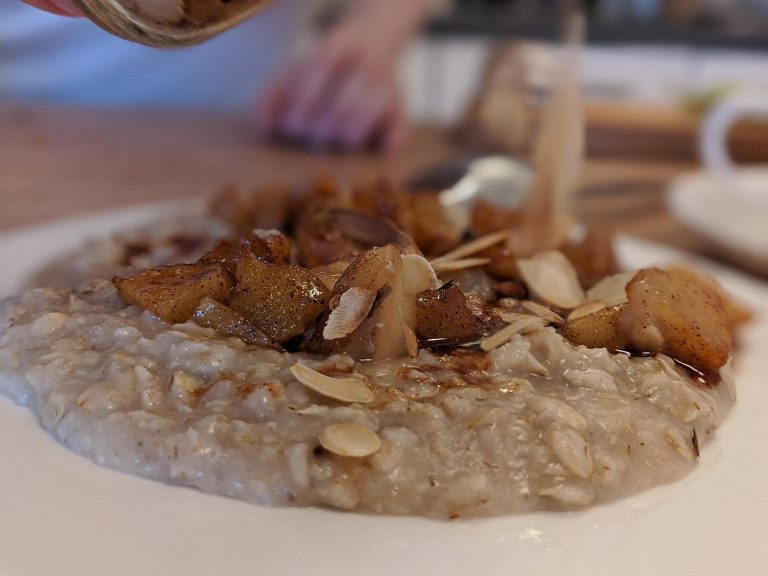
- – Breakfast: oatmeal cooked with low-fat milk or fortified soy drink, topped with berries and a small spoon of nuts
- – Lunch: large salad or cooked vegetable bowl with beans or chicken, olive-oil vinaigrette measured rather than poured freely, and fruit
- – Snack: yogurt or an apple with a planned amount of peanut butter
- – Dinner: baked fish, brown rice, and a generous serving of broccoli or mixed vegetables
- – Evening: herbal tea; avoid grazing in front of a screen if that is your usual extra-calorie window
5. Activity that supports the plate
NIDDK: at least 150 minutes a week of moderate-intensity aerobic activity such as brisk walking, plus muscle-strengthening on two or more days. Ask your clinician what is safe if you have heart disease, high blood pressure, or diabetes. For maintenance after loss, NIDDK cites at least 300 minutes a week.
6. If related conditions are already present
Similar patterns appear in type 2 diabetes diet guide, high blood pressure diet guide, high cholesterol diet guide, and NAFLD fatty liver diet guide. Treat those pages as companions, not competing “cures.”
Safety, interactions, and who should ask a clinician first
- – Rapid, unsupervised very-low-calorie diets can be unsafe in pregnancy, eating disorders, advanced kidney or liver disease, and some heart conditions.
- – MedlinePlus lists higher risk for type 2 diabetes, heart disease, high blood pressure, stroke, metabolic syndrome, osteoarthritis, sleep apnea, pregnancy and fertility problems, and some cancers—another reason to involve a clinician.
- – NHLBI: weight-loss medicines are not recommended as a single treatment; review all medicines and plans if you are pregnant, breastfeeding, or have cardiovascular risk.
- – NIDDK: surgery may be discussed if BMI is 35 or higher, or at a lower BMI when serious problems such as type 2 diabetes or sleep apnea are present—this is a specialist decision.
- – Children need age-appropriate plans. Regain is common because metabolism slows after weight loss (NIDDK).
FAQ
Is obesity just about eating too much? Energy imbalance matters, but MedlinePlus and NHLBI also list genes, medicines, sleep, stress, and environment.
How much weight loss is “enough” to matter? Public pages repeatedly mention about 5 to 10% of body weight as a meaningful initial range for many adults. Your clinician can tailor that number.
Do I have to cut out all fat? No. NIDDK’s guideline summary includes oils such as olive oil and the oils in seafood, nuts, and avocados, while limiting saturated fat to less than 10% of calories.
Can I ignore exercise if my meals are careful? Food changes can reduce calories in; NIDDK still recommends regular activity, including a higher target to help keep lost weight off.
Are weight-loss medicines or surgery a failure of diet? No. NIDDK and NHLBI present them as additional tools when lifestyle changes are not enough, always combined with eating and activity plans.
When should I see a clinician? If BMI or waist size is in a higher-risk range, if you have weight-related conditions, if medicines may be contributing, or before you start a highly restrictive diet, a new supplement stack, or intense exercise.
How this differs from related OTCFood topics
This page is an obesity-bound diet guide focused on Dietary Guidelines and DASH-style patterns, modest loss targets, and activity and sleep supports. It is not a diabetes tutorial or a post-bariatric protocol.
Medical disclaimer
Medical disclaimer: This article is for general information only. It is not medical advice, diagnosis, or a treatment plan. Obesity care depends on your overall health, medicines, other conditions, and your clinician’s judgment. Talk with a clinician or registered dietitian before starting, stopping, or changing any eating plan, supplement, medicine, or exercise program. Seek urgent care for chest pain, severe shortness of breath, fainting, or other emergency symptoms.