Psoriasis Diet: Foods That May Help and Foods to Limit
Medical note: This article discusses foods and researched botanicals. It does not claim to prevent, treat, or cure disease. Supplements are not a substitute for food, and studied amounts are not personal prescriptions.
The strongest public evidence for a psoriasis diet is not a superfood list—it is weight reduction with a lower-calorie eating plan for people who are overweight, plus a Mediterranean-style pattern, moderate or no alcohol, and not smoking. A 2018 systematic review from the National Psoriasis Foundation (NPF) Medical Board strongly recommended dietary weight reduction in overweight and obese adults with psoriasis, and NIAMS (the NIH skin and joint institute) says the Mediterranean diet has been shown to be helpful in several psoriasis studies. Diet supports your skin plan; NPF is explicit that dietary changes should always be used together with standard medical therapy.
What this psoriasis diet guide covers (and what it does not)
This guide is for adults with plaque psoriasis or psoriatic arthritis and the people who cook with them. Anchors: NIAMS — Psoriasis overview, NIAMS — Psoriasis: Diagnosis, Treatment, and Steps to Take, the NHS psoriasis page, and the NPF Medical Board review (Ford et al., JAMA Dermatology 2018).
NIAMS describes psoriasis as a long-lasting immune-mediated disease in which skin cells multiply too quickly, producing scaly, inflamed patches. Symptoms often cycle through flares and calmer periods. NIAMS also notes that people with psoriasis carry higher risk of psoriatic arthritis, heart attacks and strokes, and conditions such as diabetes, metabolic syndrome, obesity, Crohn’s disease, and liver disease—one reason a heart-friendly eating pattern makes sense here. This page does not cover creams, phototherapy, or systemic medicines; those decisions belong with your dermatologist.
Evidence snapshot: psoriasis diet claims vs public sources
| Claim people hope for | What public sources actually say | Confidence |
|---|---|---|
| “Losing weight can make psoriasis milder” | NPF review (55 studies, 77,557 participants, 4,534 with psoriasis): strongly recommends dietary weight reduction with a hypocaloric diet in overweight and obese patients; NIAMS: obesity makes symptoms worse | Strong for people with excess weight |
| “The Mediterranean diet helps psoriasis” | NIAMS: the Mediterranean diet has been shown to be helpful in several psoriasis studies | Moderate |
| “Everyone with psoriasis should go gluten-free” | NPF: weakly recommends a gluten-free diet only for people who test positive for serologic markers of gluten sensitivity | Low outside that group |
| “Specific superfoods calm plaques” | NPF: based on low-quality data, select foods, nutrients, and dietary patterns may affect psoriasis | Low / preliminary |
| “Vitamin D pills help psoriatic arthritis” | NPF: weakly recommends vitamin D supplementation for psoriatic arthritis; ODS adult upper limit is 100 mcg (4,000 IU)/day | Low; ask your clinician |
| “Alcohol doesn’t matter for skin” | NIAMS: some studies suggest excessive alcohol aggravates symptoms; NHS lists drinking alcohol and smoking among triggers | Moderate |
Foods and patterns that may help with psoriasis
“May help” here means a default way of eating that supports weight, heart health, and overall wellbeing alongside your prescribed care.
A Mediterranean-style plate
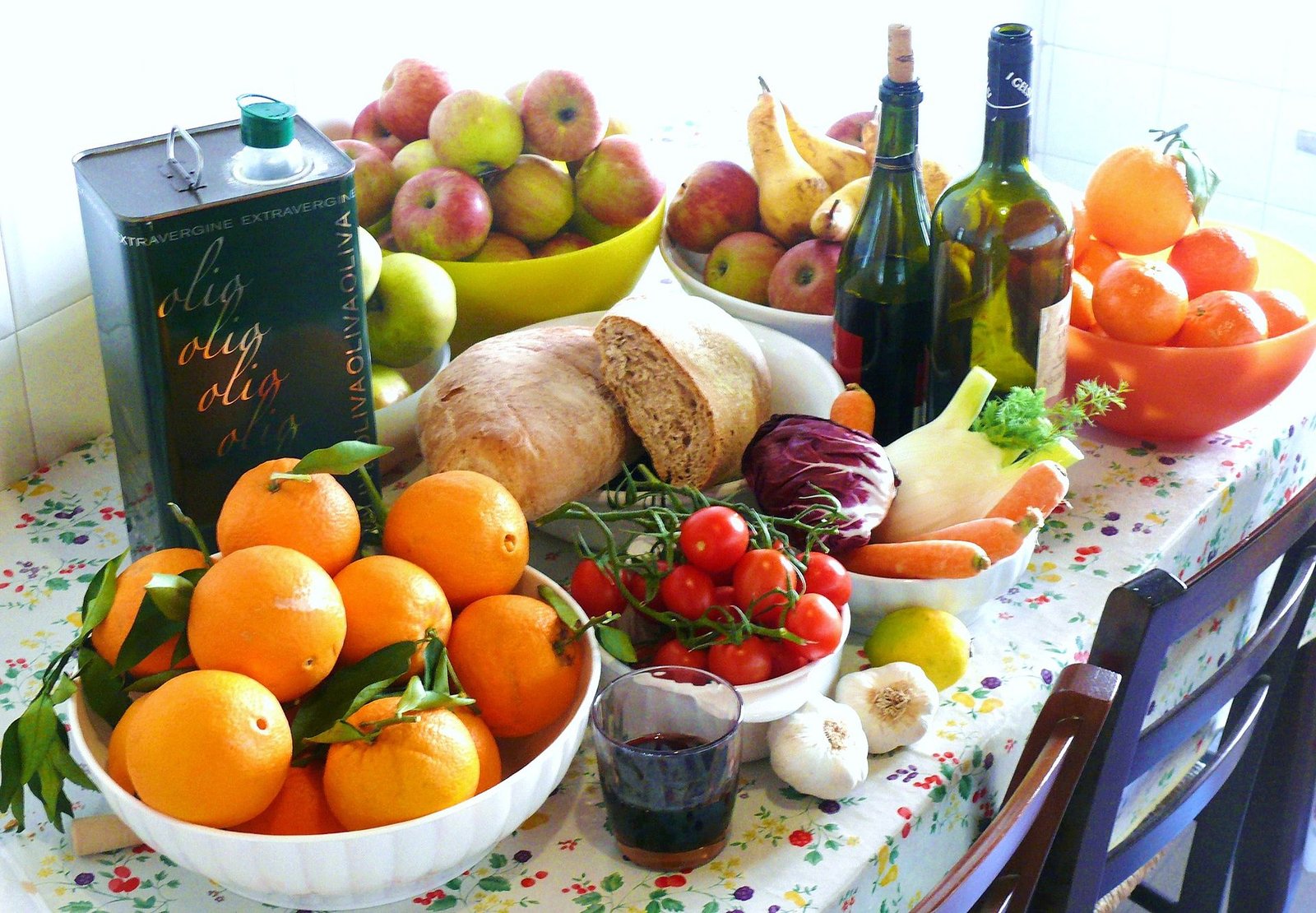
The American Heart Association describes the Mediterranean pattern as plenty of fruits, vegetables, bread and other grains, potatoes, beans, nuts, and seeds; olive oil as the main fat; dairy, eggs, fish, and poultry in low to moderate amounts; fish and poultry more often than red meat; and fruit as a common dessert. In practice:
- – Vegetables at most meals—salads, roasted trays, soups, and stir-fries.
- – Legumes several times a week—chickpeas, lentils, white beans.
- – Whole grains—oats, whole-wheat bread, brown rice, bulgur.
- – Extra-virgin olive oil as the everyday cooking and dressing fat.
- – Nuts and seeds as snacks or salad toppers.
Fish and omega-3 foods
NIH Office of Dietary Supplements (ODS) lists cold-water fatty fish—salmon, mackerel, tuna, herring, sardines—plus flaxseed, chia seeds, walnuts, and canola or soybean oil as omega-3 sources. These fit naturally into a Mediterranean pattern; the NPF review does not support relying on any single supplement for skin results.
Portions that support gradual weight loss
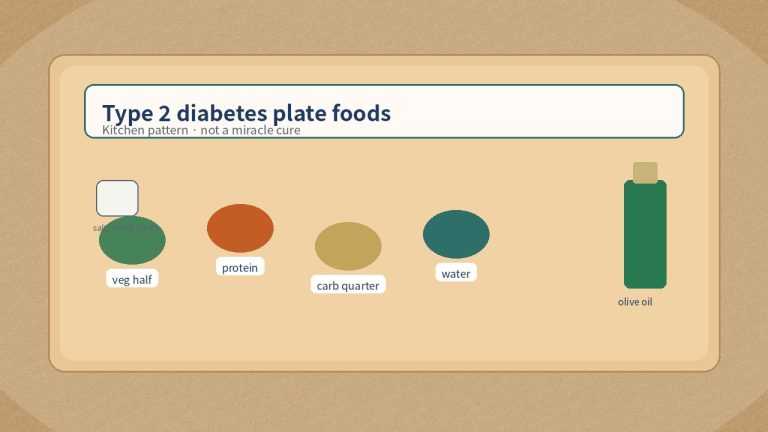
Because the strongest recommendation is calorie reduction for people with excess weight, the most useful “food that may help” is often a smaller, vegetable-heavy plate. Fill half with vegetables, a quarter with lean protein (fish, poultry, beans, tofu), and a quarter with whole grains or potatoes.
Foods and habits to limit with psoriasis
- – Excess calories from ultra-processed snacks, sugary drinks, and large portions—these make weight loss, the best-supported diet goal, harder.
- – Heavy drinking: NIAMS says excessive alcohol may aggravate symptoms, and the NHS lists alcohol as a trigger. If you take methotrexate, MedlinePlus notes it may cause serious liver damage and asks you to discuss the safe use of alcohol with your doctor.
- – Frequent red and processed meat: the AHA’s Mediterranean description places fish and poultry ahead of red meat.
- – Unnecessary strict elimination diets: NPF supports gluten-free eating only for those with positive gluten-sensitivity blood markers. Going gluten-free “just in case” adds cost and effort without clear benefit for most people.
- – Smoking: NIAMS reports that the more a person smokes, the worse symptoms tend to be.
“Limit” means reduce how often and how much—not that a single meal causes a flare.
Practical kitchen protocol: a psoriasis diet week
1. Set one measurable goal
If your clinician agrees weight loss is appropriate, set a modest, trackable target (for example, a steady loss over several months). Ask whether a registered dietitian can build a calorie level that suits you. Crash diets are hard to keep up and can leave meals low in protein.
2. Build the default Mediterranean plate
- – Breakfast: oats or whole-grain toast, fruit, and yogurt or eggs.
- – Lunch: a big vegetable-and-bean salad or lentil soup with olive oil.
- – Dinner: fish or poultry, two vegetables, and a modest grain or potato portion.
- – Dessert: fruit most nights.
3. Two fish meals a week
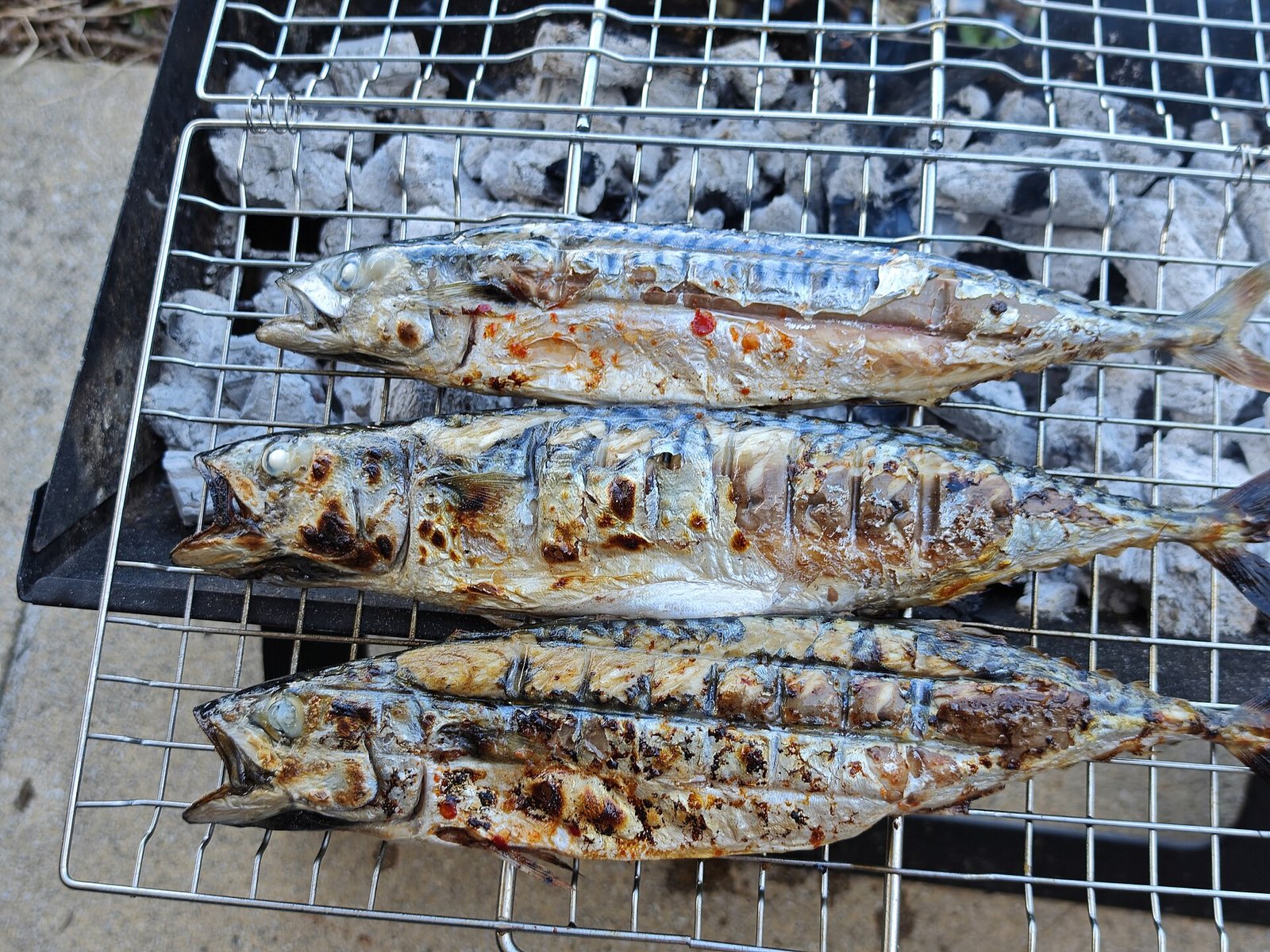
Rotate salmon, mackerel, sardines, and canned tuna. Grill, bake, or pan-cook with olive oil and lemon. For non-fish eaters, use walnuts, ground flaxseed, and chia seeds more often.
4. Make alcohol a deliberate choice
Decide in advance how many alcohol-free days you’ll have each week. Keep sparkling water, herbal tea, or alcohol-free drinks on hand for social occasions. If you are on methotrexate or have liver concerns, follow your prescriber’s alcohol advice.
5. Track flares, not just food
NIAMS lists stress, cold weather, skin injuries, certain medicines, and infections as common triggers, and the NHS adds pregnancy and sunlight for some people. Keep a simple log of flares alongside meals, sleep, stress, and illness. Many “food” flares turn out to line up with a cold, a stressful week, or a new medicine.
6. Shopping list default
Leafy greens and salad vegetables, tomatoes, peppers, onions, frozen mixed vegetables, apples, berries and citrus, canned chickpeas and lentils, oats, whole-grain bread, brown rice, extra-virgin olive oil, walnuts, ground flaxseed, eggs, plain yogurt, salmon fillets, canned sardines or tuna, and chicken breast.
7. Sample day (illustrative)
- – Breakfast: overnight oats with yogurt, berries, and ground flaxseed.
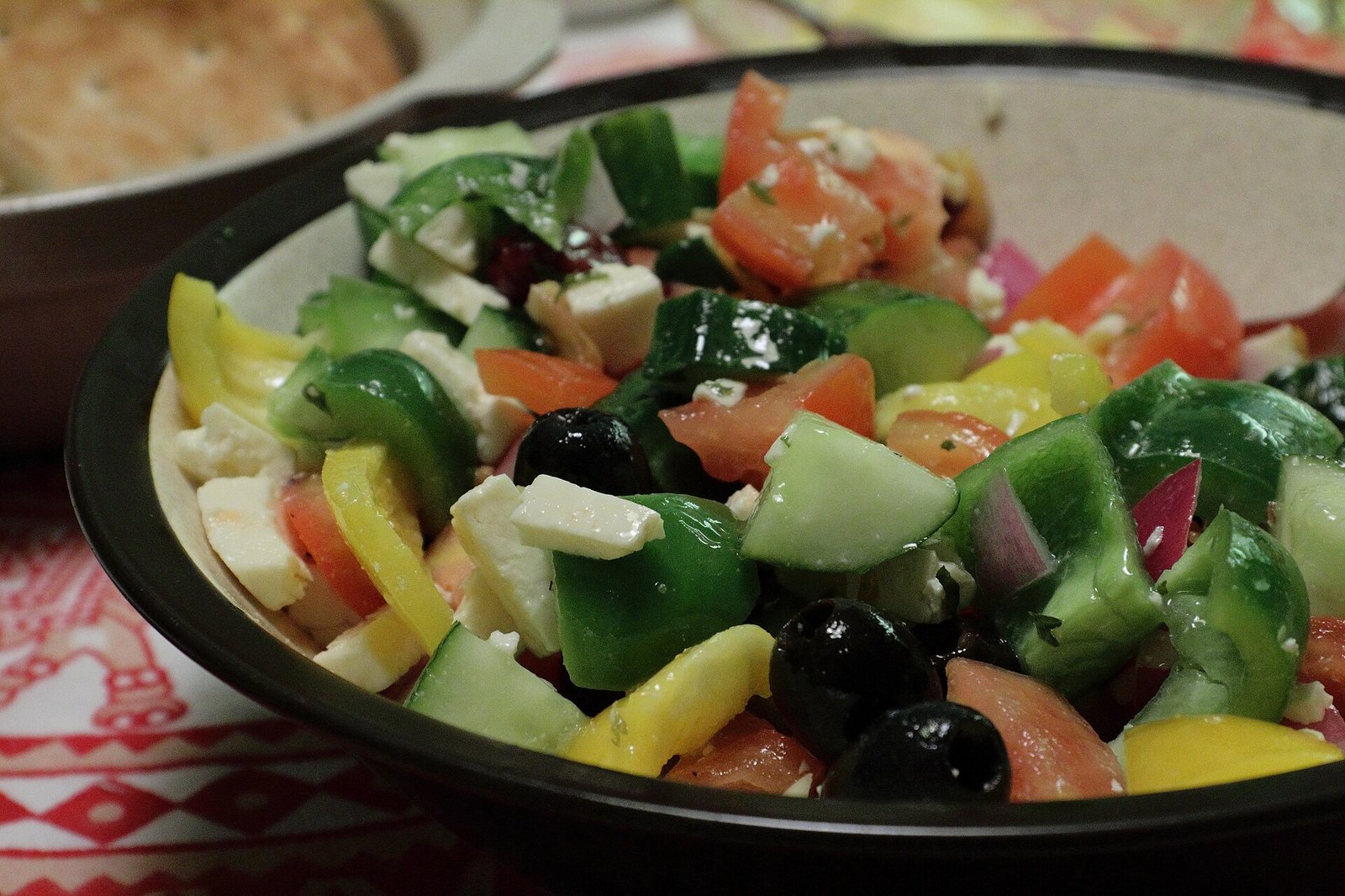
- – Lunch: Greek-style salad with tomatoes, cucumber, peppers, olives, chickpeas, and an olive-oil dressing.
- – Snack: an apple and a small handful of walnuts.
- – Dinner: grilled mackerel or salmon, roasted vegetables, and a small portion of brown rice.
8. Eating out
Choose grilled fish or chicken, swap fries for a side salad or vegetables, ask for dressings on the side, and keep dessert and alcohol occasional rather than routine.
Safety, interactions, and who should talk to a doctor first
- – Do not stop or skip prescribed medicines because of a diet change; NPF says dietary interventions should always be used with standard medical therapy.
- – Methotrexate: MedlinePlus says it may cause severe liver damage, asks you to discuss alcohol with your doctor, and notes your doctor will probably prescribe folic acid to reduce side effects—take it exactly as directed and don’t add other supplements without asking.
- – Vitamin D: NPF weakly recommends vitamin D supplements for psoriatic arthritis; ODS sets the adult upper limit at 100 mcg (4,000 IU) daily unless your clinician directs otherwise.
- – Fish oil: ODS warns that high-dose omega-3 supplements may cause bleeding problems with warfarin or other anticoagulants.
- – Gluten-free trials: ask about gluten-sensitivity blood tests before cutting out gluten, since the NPF recommendation applies only to people who test positive.
- – Joint symptoms: NIAMS advises seeing your doctor soon for stiff, swollen, or painful joints, neck or back pain, or heel pain, because psoriatic arthritis that is not managed can lead to lasting joint damage.
- – Red-skin emergency: red, scaly skin over most of the body can signal erythrodermic psoriasis, which NIAMS says can be very serious—seek prompt care.
FAQ
What is the best diet for psoriasis? No single diet is proven best. Public sources support a Mediterranean-style pattern (NIAMS) and, for people who are overweight, calorie reduction to lose weight (NPF’s strongest dietary recommendation), always alongside standard therapy.
Does gluten make psoriasis worse? For most people there is not clear evidence. The NPF Medical Board weakly recommends a gluten-free diet only for people who test positive for serologic markers of gluten sensitivity.
Can alcohol trigger psoriasis flares? It can for some people. NIAMS says some studies suggest excessive alcohol aggravates symptoms, and the NHS lists drinking alcohol as a trigger. Moderating or avoiding alcohol is a reasonable step.
Should I take vitamin D or fish oil for psoriasis? Ask first. The NPF review weakly recommends vitamin D for psoriatic arthritis, while evidence for most individual nutrients is low quality. ODS lists upper limits and interactions—especially fish oil with blood thinners.
Will losing weight help my psoriasis? For people who are overweight or obese, the NPF Medical Board strongly recommends dietary weight reduction, and NIAMS notes that obesity makes symptoms worse.
How this differs from related OTCFood topics
This is a disease-bound psoriasis diet guide centered on weight, Mediterranean eating, alcohol, and supplement safety. For another itchy inflammatory skin condition with a different trigger profile, see our eczema diet guide. If joint symptoms are your main concern, compare the rheumatoid arthritis diet guide, and because psoriasis is linked with heart risk, the high cholesterol diet guide shows how the same plate supports cardiovascular health.
Medical disclaimer
Medical disclaimer: This article is for general information only and is not medical advice, diagnosis, or a care plan. Psoriasis and psoriatic arthritis management depends on type, severity, joint involvement, other health conditions, and medicines. Talk with your dermatologist, rheumatologist, or a registered dietitian before changing your eating plan or starting supplements, and seek prompt care for widespread red skin, signs of infection, or painful, swollen joints.