Type 2 Diabetes Plate: Foods to Emphasize and Limit
Medical note: This article discusses foods and researched botanicals. It does not claim to prevent, treat, or cure disease. Supplements are not a substitute for food, and studied amounts are not personal prescriptions.
For many people with type 2 diabetes, a consistent plate pattern—vegetables, lean protein, measured carbohydrate portions, and fewer sugar-sweetened drinks—may help support glucose targets alongside prescribed medicines, activity, and monitoring. Food is a daily tool, not a replacement for metformin or other therapies your clinician has recommended.
What this guide covers (and what it does not)
This article reflects themes from American Diabetes Association (ADA) style plate methods, NIDDK diabetes nutrition education, and clinic teaching pages. It is general education—not an insulin dosing calculator, not a ketogenic prescription, and not advice to stop medicines after one “good” CGM week.
Carbohydrate needs differ by age, kidney function, pregnancy status, cultural foods, and drug regimen. A registered dietitian (especially a diabetes care and education specialist) is the gold-standard personalizer.
Evidence snapshot
| Claim people hope for | What public sources actually say | Confidence |
|---|---|---|
| “Never eat fruit” | Fruit can fit; juice and large sweetened portions are different | Moderate for including whole fruit thoughtfully |
| “Carb-free is mandatory” | Multiple eating patterns can work; carb quality/quantity management matters | Moderate for individualized carb management |
| “Cinnamon replaces medicine” | Supplement evidence is limited/mixed; not a drug substitute | Insufficient as replacement |
| “Plate method helps portions” | Plate methods are widely used in diabetes education | Moderate as teaching tool |
Anchors: ADA / diabetes.org nutrition guidance, NIDDK diabetes diet, CDC diabetes meal planning.
Foods to emphasize on the plate
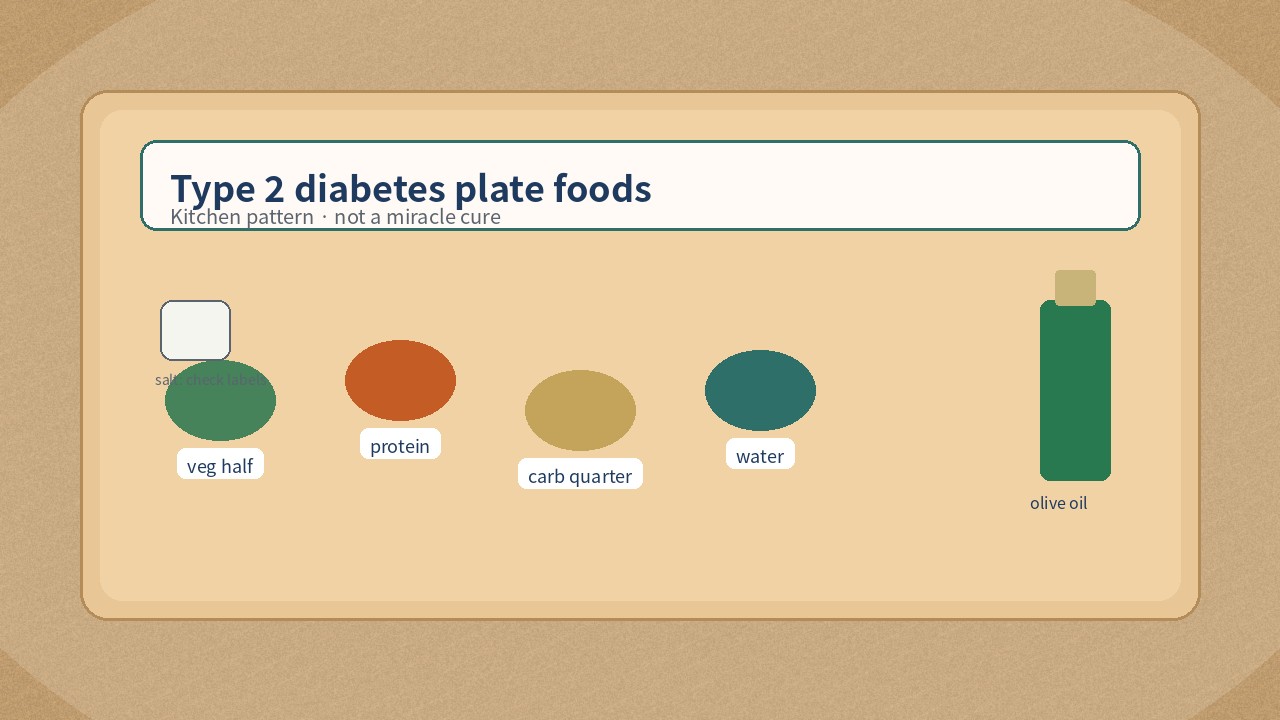
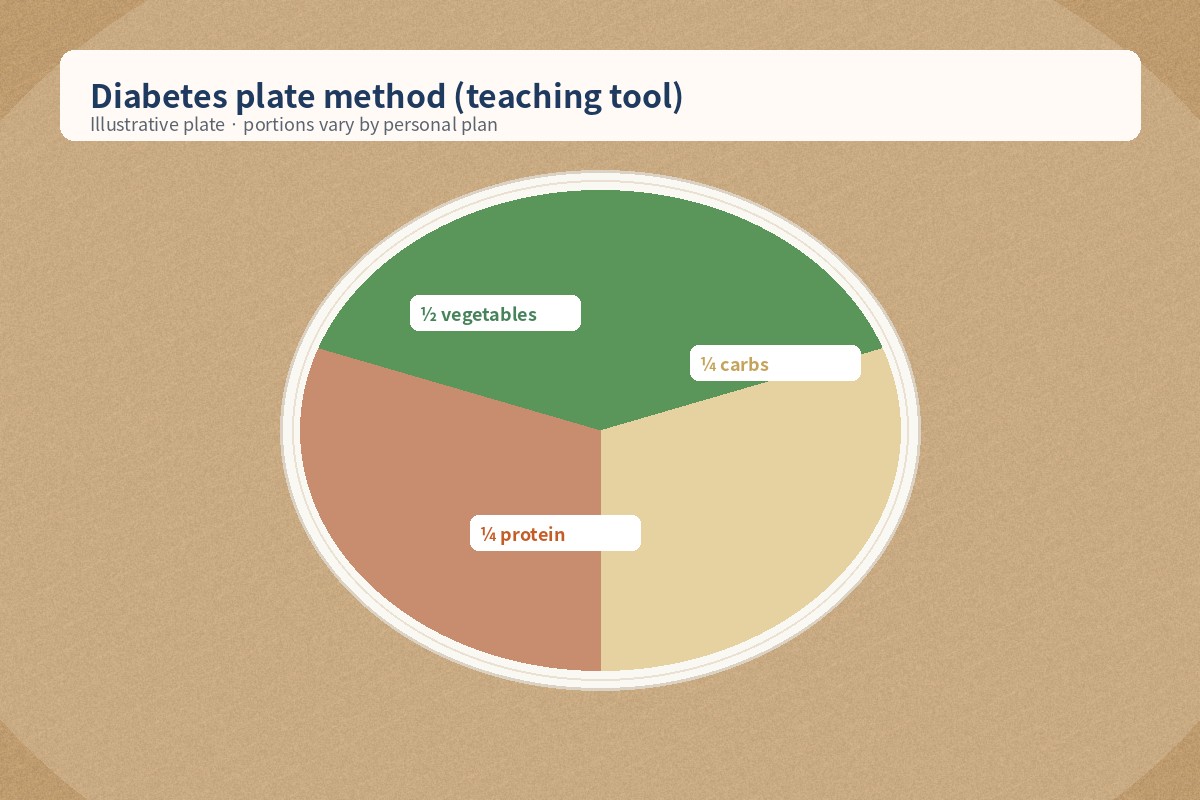
Use a simple plate (for many adults, roughly a 9-inch plate teaching tool):
- – ½ non-starchy vegetables: salad greens, broccoli, cauliflower, zucchini, peppers, mushrooms, eggplant.
- – ¼ protein: fish, skinless poultry, eggs, tofu, tempeh, beans/lentils (count beans in your carb plan if taught that way), low-fat dairy proteins.
- – ¼ carbohydrate foods: whole grains, starchy vegetables (potato, corn, peas), fruit, or dairy—portion sizes personalized.
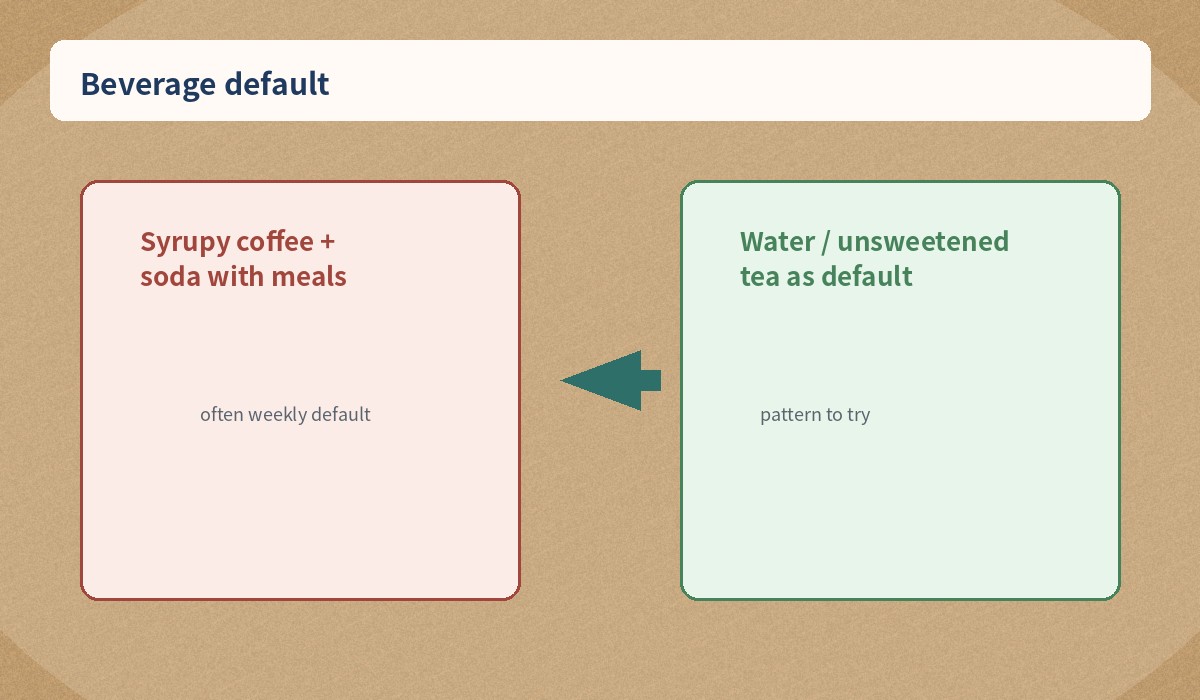
- – Water or unsweetened drinks as the default beverage.
- – Healthy fats in small amounts: olive oil, avocado, nuts—measured, not free-poured.
Fiber-rich foods often support steadier post-meal responses for many people compared with refined sweets eaten alone.
Foods and habits to limit
- – Sugar-sweetened beverages, sweet tea, specialty coffee drinks with syrup
- – Large refined-carb portions without protein/fiber (giant white-baguette sandwiches, big bowls of sugary cereal)
- – Frequent desserts as nightly defaults
- – Ultra-processed “diabetic” cookies in unlimited amounts—marketing ≠ free pass
- – Alcohol without a plan—risk of delayed hypoglycemia with some medicines; follow clinician guidance
- – Skipping meals then overeating if that destabilizes your readings
“Limit” is about pattern and portion, not moral failure over one birthday cake slice. Log, learn, continue.
Practical kitchen protocol: build the plate
1. Learn your carb budget
If you use carb counting or exchanges, keep the teaching sheet on your phone. If you use the plate method only, keep the visual consistent at lunch and dinner first.
2. Sample day (illustrative—not personalized)
- – Breakfast: eggs + sautéed spinach + 1 slice whole-grain toast + berries
- – Lunch: large salad with chickpeas, tuna, olive-oil vinegar; small fruit
- – Snack (if needed): yogurt or a small handful of nuts
- – Dinner: baked chicken, roasted broccoli and carrots, ½–1 cup cooked brown rice (adjust to your plan)
- – Drinks: water, sparkling water, unsweetened tea
3. Grocery list
Non-starchy vegetables (fresh/frozen), eggs, fish, chicken, tofu, beans, plain yogurt, oats, brown rice, berries, olive oil, nuts, herbs.
4. Label skills that matter
Total carbohydrate, added sugars, serving size, and fiber. “Net carb” marketing can be inconsistent—prefer the Nutrition Facts panel your educator taught you to use.
5. Eating out
Scan for grilled proteins and vegetable sides first. Ask for sauces on the side. Consider splitting starch portions. Sweet cocktails add both alcohol and sugar.
6. Sick-day and low-blood-sugar readiness
Keep clinician-approved hypo treatments available if you use insulin or certain other agents. Diet articles do not replace your sick-day rules.
Cultural foods can fit—portion and pairing are the skills
Rice, noodles, tortillas, injera, potatoes, and breads are not moral failures. Diabetes education increasingly emphasizes fitting cultural staples with vegetable volume, protein pairing, and portion awareness rather than erasing cuisine. If a food is important to your identity, bring it to a dietitian visit and ask how to keep it in the plan.
Breakfast deserts (skipping food then over-correcting at night) destabilize many glucose graphs. A protein-forward breakfast often helps people who otherwise graze sweets by mid-morning—test what your meter or CGM shows rather than copying influencers.
Travel days: carry a backup snack that fits your plan (nuts, cheese stick, or whatever your educator approved), know how time zones affect insulin if relevant, and treat airport juices as liquid sugar unless they fit a hypo protocol.
Safety, medicines, and special situations
- – Insulin and sulfonylureas: carbohydrate changes can alter hypo risk—coordinate with your care team.
- – Kidney disease: protein and mineral limits may apply.
- – Gastroparesis: meal texture and timing need specialist input.
- – Pregnancy / gestational diabetes: needs obstetric diabetes care—do not copy generic internet plates.
- – Supplements (cinnamon, bitter melon, berberine, etc.): can interact with drugs and are not FDA-approved diabetes cures—ask before combining.
Seek urgent care for severe hypoglycemia, vomiting preventing intake, very high readings with ketones (as instructed), chest pain, or confusion.
FAQ
Can I eat rice or noodles? Often yes, in planned portions, especially when paired with vegetables and protein. Cultural foods can fit diabetes meal plans.
Are sugar-free desserts unlimited? No. Many still contain carbohydrates or cause GI upset (sugar alcohols).
Is keto required? No. Some people use lower-carb patterns under supervision; others succeed with Mediterranean or plate-method patterns.
Does walking after meals help? Light activity after eating is commonly encouraged when medically appropriate and may help post-meal glucose for many people.
How this differs from related OTCFood topics
This is a type 2 diabetes plate and food pattern guide. It is not a fenugreek or berberine supplement evidence page (fenugreek and blood sugar, berberine and weight). Those discuss limited extract data; this teaches everyday meals.
Medical disclaimer
Medical disclaimer: This article is for general information only. It is not medical advice, diagnosis, or a treatment plan. Dietary patterns can interact with medicines and medical conditions and are not appropriate for everyone in the same way. Talk with a licensed clinician or diabetes educator before starting, stopping, or changing any eating plan or medication—especially if you use insulin or other glucose-lowering drugs.