IBS Diet: Foods That May Help or Worsen Symptoms
Medical note: This article discusses foods and researched botanicals. It does not claim to prevent, treat, or cure disease. Supplements are not a substitute for food, and studied amounts are not personal prescriptions.
People searching “IBS diet foods that help or worsen” usually want a workable kitchen pattern—not a miracle cure list. For irritable bowel syndrome (IBS), diet changes may help some people ease bloating, pain, diarrhea, or constipation when guided by a clinician or dietitian. Food patterns do not replace prescription medicines, do not rule out other diagnoses, and do not “cure” IBS.
What this guide covers (and what it does not)
This article summarizes eating approaches often recommended in public education from the NIH NIDDK IBS diet page, NCCIH’s IBS overview, and Mayo Clinic’s IBS diagnosis-and-treatment diet section. It is general kitchen guidance. It is not a personal low-FODMAP prescription, not a celiac-disease workup, and not advice to stop medicines.
IBS is a disorder of how the brain and gut work together. Symptoms include repeated abdominal pain with changes in bowel habits (diarrhea, constipation, or both). Triggers differ widely. What calms one person can flare another. Use a structured trial—with professional support when symptoms are moderate or severe—rather than lifelong bans copied from social media.
Red flags needing prompt care (not more diet blogs): unexplained weight loss, bleeding, fever, anemia, persistent vomiting, symptom onset after age 50, or pain that wakes you from sleep.
Evidence snapshot
| Claim people hope for | What public sources actually say | Confidence |
|---|---|---|
| “Just eat more fiber and IBS improves” | NIDDK notes fiber may help constipation; soluble fiber (beans, fruit, oats) is often described as more helpful than insoluble; add slowly (about 2–3 g/day) because too much at once can worsen gas | Moderate for constipation-predominant patterns; individual |
| “Everyone with IBS must go gluten-free forever” | Some people with IBS report fewer symptoms when they avoid gluten even without celiac disease; this is a trial under clinical advice, not a universal rule | Low–moderate (individual) |
| “Low FODMAP is a lifelong diet” | NIDDK and clinical education frame low FODMAP as a short supervised trial, then careful reintroduction—not permanent extreme restriction | Moderate for short trial with dietitian support |
| “Probiotics fix IBS for everyone” | NCCIH: some evidence certain probiotics may improve symptoms, but which products help is unclear; ACG-related summaries note evidence quality is weak/mixed | Insufficient to name one “best” product |
| “Peppermint oil cures IBS” | NCCIH: some evidence enteric-coated peppermint oil may reduce short-term global IBS symptoms; not a cure; GERD/hernia caution | Low–moderate for short-term symptom support |
Primary public anchors: NIDDK — Eating, Diet, & Nutrition for IBS, NCCIH — Irritable Bowel Syndrome In Depth, Mayo Clinic — IBS diagnosis & treatment (diet section).
Foods and patterns that may help comfort
Dietary education for IBS often emphasizes testing what your gut tolerates, not one universal “safe list.” Patterns commonly discussed:
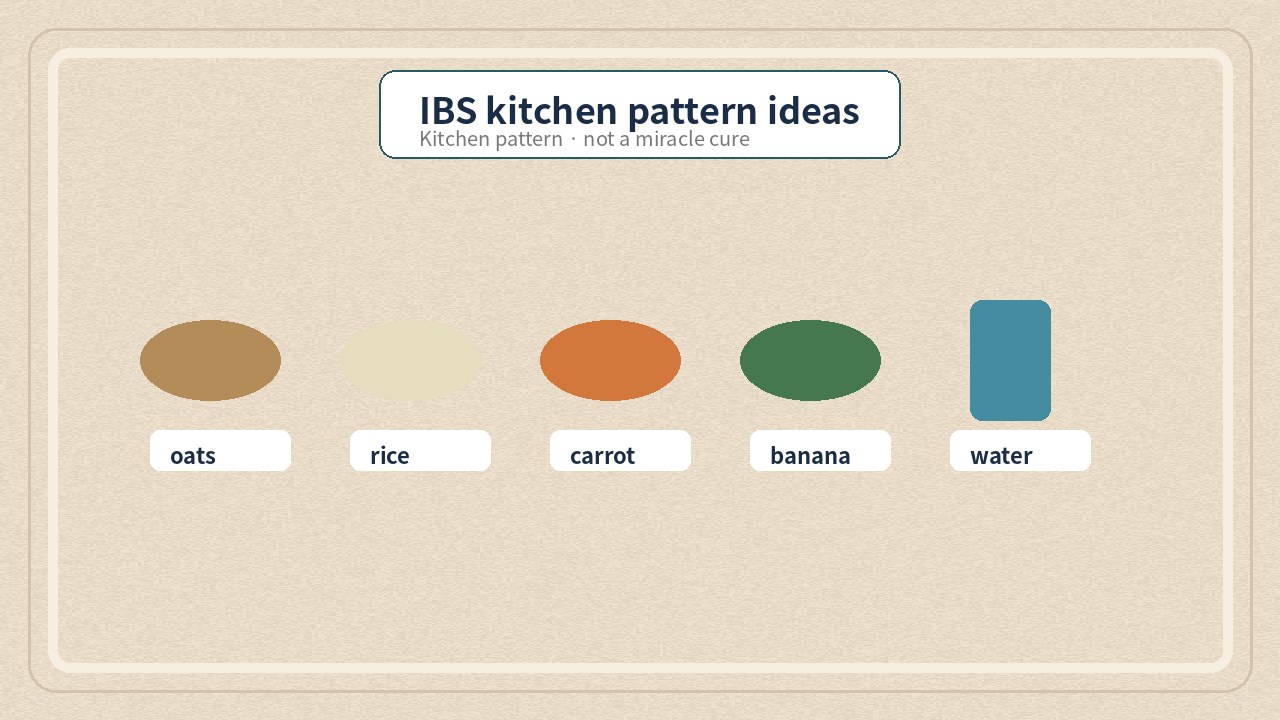
- – Soluble-fiber foods, introduced gradually: oats and oat products, peeled fruits that you tolerate, and beans/lentils if your subtype and FODMAP plan allow—NIDDK notes research suggests soluble fiber may be more helpful for IBS symptoms than insoluble fiber alone.
- – Adequate fluids alongside fiber changes, especially if constipation is part of your pattern.
- – Regular meal timing: Mayo Clinic lifestyle notes suggest eating at regular times; smaller, more frequent meals sometimes feel better with diarrhea-predominant days; larger fiber-containing meals may help some people with constipation—personalize.
- – Lower-gas defaults when bloating dominates: reducing carbonated drinks and known personal gas triggers while you map patterns.
- – Gluten trial only if clinically appropriate: wheat, barley, and rye products for a time-limited test if your clinician suggests it and celiac disease has been considered when indicated.
- – Low-FODMAP foods during a supervised elimination phase (examples NIDDK lists as higher-FODMAP include apples, pears, watermelon, onions, garlic, beans, wheat/rye products, milk/soft cheeses/yogurt for lactose-sensitive people, honey, HFCS, and polyol sweeteners ending in “-ol”). The helpful pattern is the structured trial, not memorizing every fruit forever.
- – Stress and sleep hygiene as co-factors: not “food,” but public pages repeatedly pair lifestyle with diet because IBS is brain–gut related.
Peppermint tea is not the same as enteric-coated peppermint oil capsules discussed in complementary-medicine summaries. Capsules are a separate evidence conversation (enteric-coated peppermint oil for IBS).
Foods and habits that often worsen symptoms
Commonly reported triggers (individual—not a mandatory forever ban):
- – Sudden large fiber jumps: whole bran piles, huge bean portions, or “healthy” salads overnight can increase gas and pain.
- – High-FODMAP loads in sensitive people: onions and garlic (including powders), large servings of apple/pear/mango/watermelon, cauliflower, mushrooms, sugar alcohols in sugar-free gum/candy, and large juice or dried-fruit servings.
- – Lactose-containing dairy if you are lactose intolerant or FODMAP-sensitive to lactose.
- – Gluten-containing grains for the subset who notice diarrhea or pain after wheat/barley/rye even without celiac disease.
- – Carbonated beverages and alcohol when gas or loose stools are active.
- – Very high-fat fried meals that some people link with urgency or cramping.
- – Irregular “starve then binge” days, skipped breakfasts followed by a huge dinner, or eating while highly rushed—timing matters for many.
- – Unsupervised extreme restriction that removes so many foods you lose weight, miss nutrients, or increase food anxiety—counterproductive for long-term IBS management.
“Limit” means reduce frequency/portion while you test, not that one bite ruins a month.
Practical kitchen protocol: a symptom-mapping week
1. Pick one lever for seven days
Do not change fiber, FODMAPs, gluten, dairy, and supplements all at once. Choose a single experiment: for example, slow soluble-fiber increase or a clinician-guided low-FODMAP start or a caffeine/carbonation cut. Write a one-line daily log: meal pattern → bloating/pain/stool form (Bristol-style words are enough).
2. Add fiber the NIDDK way if constipation is your main issue
Target food sources first. Increase by roughly 2–3 grams of fiber per day, not a full “high-fiber overhaul” overnight. Oats at breakfast, then a small bean portion later in the week if tolerated, beats a giant wheat-bran muffin on day one. Adults in U.S. dietary guidelines are often discussed in the 22–34 g fiber/day range overall—your personal IBS target may differ; ask a dietitian if you have mixed or diarrhea-predominant IBS.
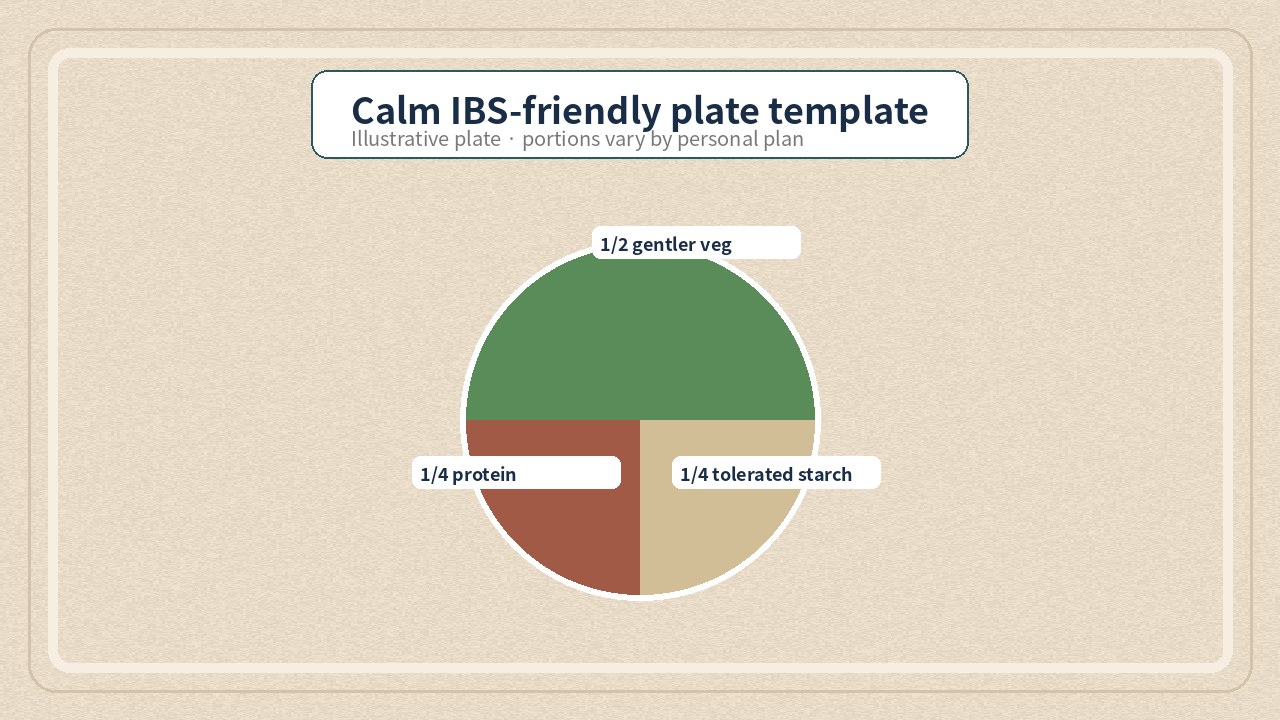
3. Build a “calm default” plate template
- – Protein: eggs, firm tofu, plain chicken/turkey/fish prepared simply (bake/poach/grill).
- – Starch you tolerate: oats, rice, potatoes without heavy cream sauces—or sourdough/wheat only if they are not your trigger.
- – Produce: start with generally lower-FODMAP options many people trial (e.g., firm bananas, blueberries, carrots, cucumber, spinach, zucchini) and expand with reintroduction—not forever limitation.
- – Fat: modest olive oil; skip deep-fried takeout as the weekday default.
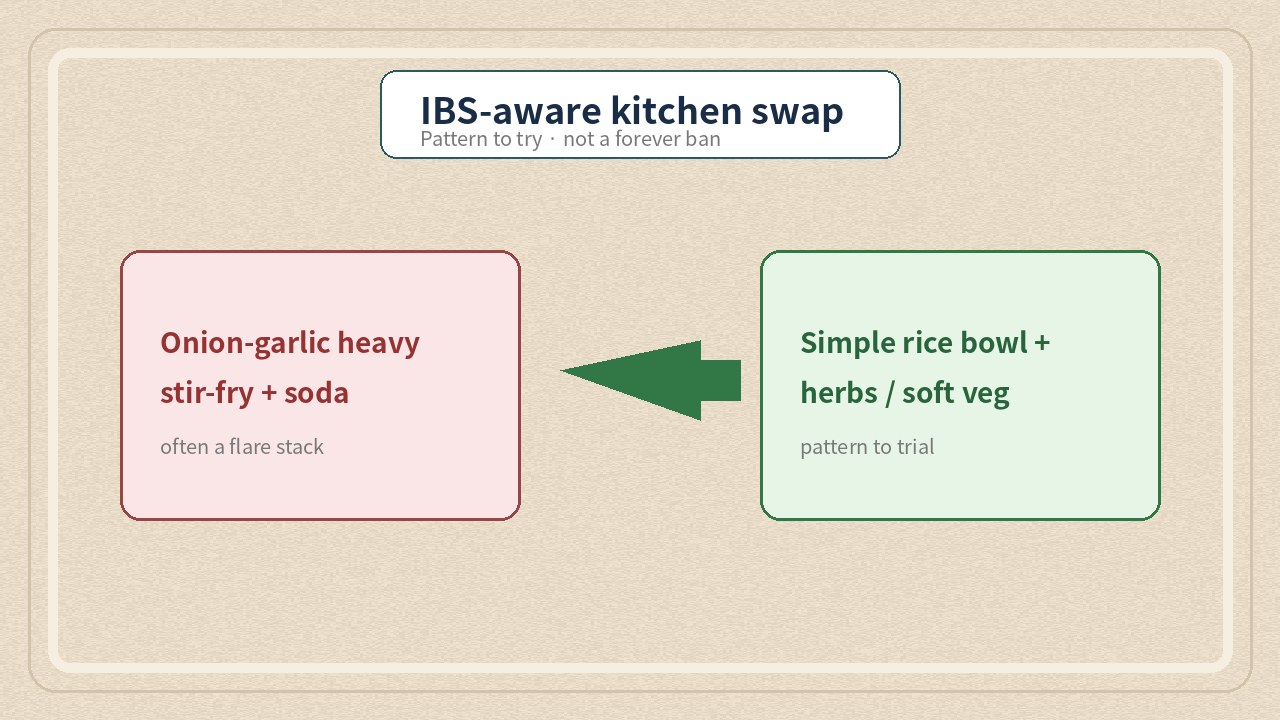
4. Run three kitchen swaps
- – Onion-garlic stir-fry base → green onion tops / chives / garlic-infused oil (if your plan allows the fat but not the FODMAP solids)—confirm with a dietitian on infused oils.
- – Sugar-free gum with sorbitol/xylitol → xylitol-free gum or stop gum during the trial week.
- – Large apple + juice breakfast → firm banana or strawberries with oats (if those suit your phase).
5. Sample day (illustrative, not personalized)
- – Breakfast: oatmeal cooked in lactose-free milk or water; firm banana slices; teaspoon peanut butter if tolerated.
- – Lunch: rice bowl with baked chicken or tofu, carrots, cucumber, spinach; olive-oil lemon if citrus is okay for you (citrus is more a GERD issue than a universal IBS rule—GERD diet: foods that may help or worsen reflux).
- – Snack: lactose-free yogurt if dairy fat/lactose bothers you, or a small handful of peanuts if tolerated; skip sugar-alcohol mints.
- – Dinner: grilled fish or eggs, potatoes, zucchini; herbs instead of onion-heavy sauces.
- – Evening: earlier finish if late meals worsen cramps.
6. Low-FODMAP is a process, not a personality
If recommended: a few weeks of reduction, then reintroduce to learn dose thresholds. NIDDK describes adding FODMAP foods back if symptoms improve—permanent ultra-low FODMAP without reintroduction is not the goal.
7. Probiotics and eating out
NCCIH: evidence is mixed; which products help which subtype is unclear—time-limited trials with notes beat brand stacking (probiotics research: which products help is still unclear). Eating out in elimination: sauces on the side, no onion/garlic in the pan, plain starch + simple protein + soft vegetables, plus a tolerated backup snack.
Safety, interactions, and who should ask a clinician first
- – Do not self-diagnose IBS after reading diet lists—similar symptoms occur with celiac disease, IBD, bile acid diarrhea, infection, and medication effects.
- – Low-FODMAP long-term without reintroduction can unnecessarily restrict diet quality; work with a GI dietitian when possible.
- – Peppermint oil capsules: NCCIH notes reflux/heartburn risk especially if not enteric-coated; people with GERD or hernia should be cautious; discuss with a clinician.
- – Fiber supplements (e.g., psyllium): Mayo Clinic mentions they may help constipation for some and sometimes cause less gas than large food fiber jumps—still introduce slowly with fluids.
- – Probiotics in seriously ill or immunocompromised people: higher risk of harm; get medical advice first.
- – Unexplained alarm features: bleeding, progressive pain, fever, iron-deficiency anemia, or nocturnal diarrhea—seek care promptly.
- – Medicines for IBS (antispasmodics, specific IBS drugs, antidepressants used for gut pain) are clinician decisions; diet experiments should not silently replace them.
FAQ
Is IBS the same as IBD or celiac disease? No. IBS is a functional brain–gut disorder diagnosed after other conditions are considered. IBD (Crohn’s/ulcerative colitis) and celiac disease need different medical evaluation. Diet tips for IBS do not substitute for those workups.
Should I start low FODMAP today on my own? Many people try informal cuts, but the evidence-based pattern is a short, structured trial—ideally with a dietitian—followed by reintroduction. Jumping into months of extreme restriction without a plan is a common pitfall.
Will cutting all dairy cure my IBS? Only if lactose (or another dairy component) is your trigger. Blind lifelong dairy removal is unnecessary for many people and can reduce calcium intake. Test with guidance.
Can stress alone cause IBS symptoms even if I eat “perfectly”? Stress and sleep can amplify gut symptoms because IBS involves brain–gut signaling. Diet still matters, but it is one lever among several—public education also mentions exercise, sleep, and sometimes gut-directed psychological therapies.
How this differs from related OTCFood topics
This page is a disease-bound IBS diet pattern guide for searchers comparing foods that may help or worsen symptoms. It is not a deep dive on enteric-coated peppermint oil (enteric-coated peppermint oil for IBS), not a GERD reflux plate guide (GERD diet: foods that may help or worsen reflux), and not a probiotics product review (probiotics research: which products help is still unclear). Those pieces cover narrower evidence questions; this one focuses on everyday eating experiments.
Medical disclaimer
Medical disclaimer: This article is for general information only. It is not medical advice, diagnosis, or a treatment plan. Dietary patterns can interact with medicines and medical conditions and are not appropriate for everyone in the same way. Talk with a licensed clinician or registered dietitian before starting, stopping, or changing any eating plan or medication—especially if you are pregnant, nursing, immunocompromised, have alarm symptoms, or take prescription drugs. Do not ignore emergency warning signs.