Fatty Liver Diet Basics: Foods to Emphasize and Limit
Medical note: This article discusses foods and researched botanicals. It does not claim to prevent, treat, or cure disease. Supplements are not a substitute for food, and studied amounts are not personal prescriptions.
Metabolic dysfunction–associated steatotic liver disease (MASLD, formerly often called NAFLD / “fatty liver”) is closely tied to overall metabolic health. Dietary patterns that support gradual weight loss when needed, limit sugar-sweetened drinks, and emphasize vegetables, whole grains, and unsaturated fats may help liver fat and metabolic markers for many people. Food is not a pharmaceutical “liver cleanse,” and it does not replace medical evaluation.
What this guide covers (and what it does not)
This summary follows themes in public education from NIDDK, American Liver Foundation-style patient materials, and major clinic pages (e.g., Mayo Clinic on NAFLD). It is general kitchen guidance—not a fibrosis staging plan, not an alcohol-use disorder treatment program, and not advice to buy detox teas.
Alcohol-related liver disease and MASLD overlap in real life; if you drink, be honest with your clinician. Some people need complete abstinence.
Evidence snapshot
| Claim people hope for | What public sources actually say | Confidence |
|---|---|---|
| “Detox juice flushes fat from the liver” | No reputable guideline endorses juice cleanses as liver therapy | Insufficient / avoid hype |
| “Lose 7–10% body weight if overweight” | Gradual weight loss is a cornerstone in many NAFLD education summaries | Moderate for lifestyle pattern |
| “Cut all carbs” | Reducing sugar-sweetened beverages and refined carbs helps many; extreme diets need supervision | Moderate for sugar/SSB reduction |
| “Coffee is protective” | Observational literature is discussed in reviews; not a prescription to start heavy coffee | Low–moderate observational |
Anchors: NIDDK NAFLD, Mayo Clinic NAFLD.
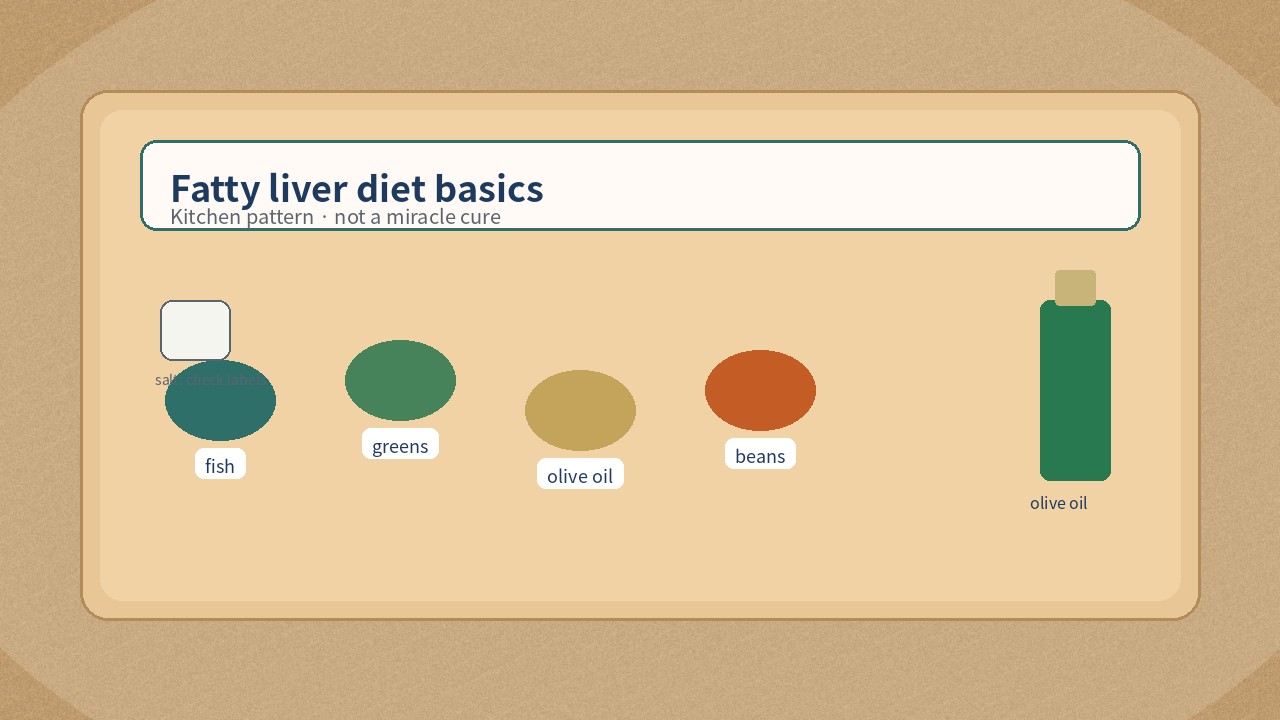
Foods dietary patterns often emphasize
- – Vegetables and fruit (prefer whole fruit over juice)
- – Whole grains: oats, brown rice, whole-wheat products, barley
- – Legumes: beans, lentils, chickpeas
- – Fish, especially those providing omega-3 fats, within seafood guidance
- – Nuts and olive oil in modest amounts
- – Coffee if already consumed and tolerated (without sugar bombs)
- – Adequate protein to preserve muscle during weight loss—discuss targets with a clinician or dietitian
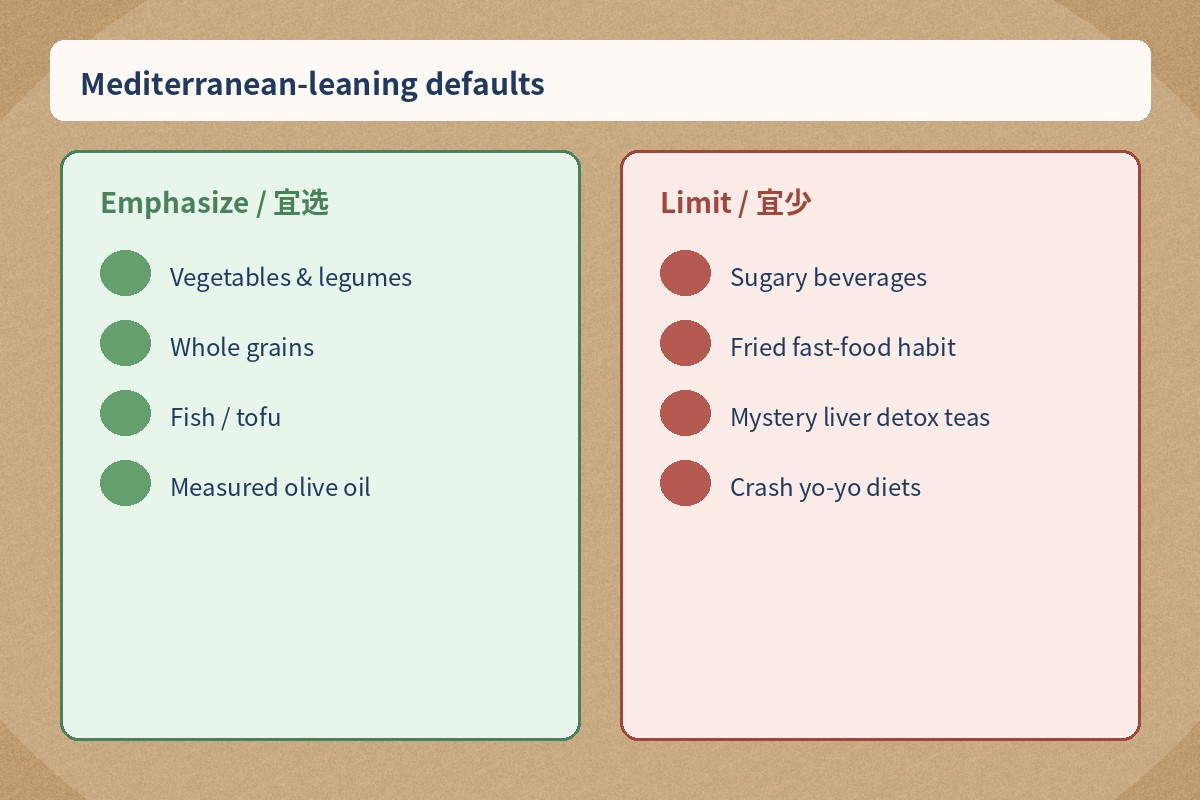
Mediterranean-style patterns appear frequently in fatty-liver lifestyle discussions: plants first, olive oil, fish, limited sweets.
Foods and habits to limit
- – Sugar-sweetened beverages, energy drinks, sweetened coffees
- – Fructose-heavy sweets and large dessert habits
- – Ultra-processed snacks as daily defaults
- – Excess alcohol—for many with fatty liver, less or none is the safer path; follow clinician advice
- – Fried fast food as a routine lunch pattern
- – Rapid crash diets that cycle weight up and down
Supplements sold as “liver detox” (high-dose herbs, mystery blends) can rarely harm the liver—ironic and important. Prefer food pattern change unless your hepatologist agrees to a specific product.
Practical kitchen protocol: fatty liver basics
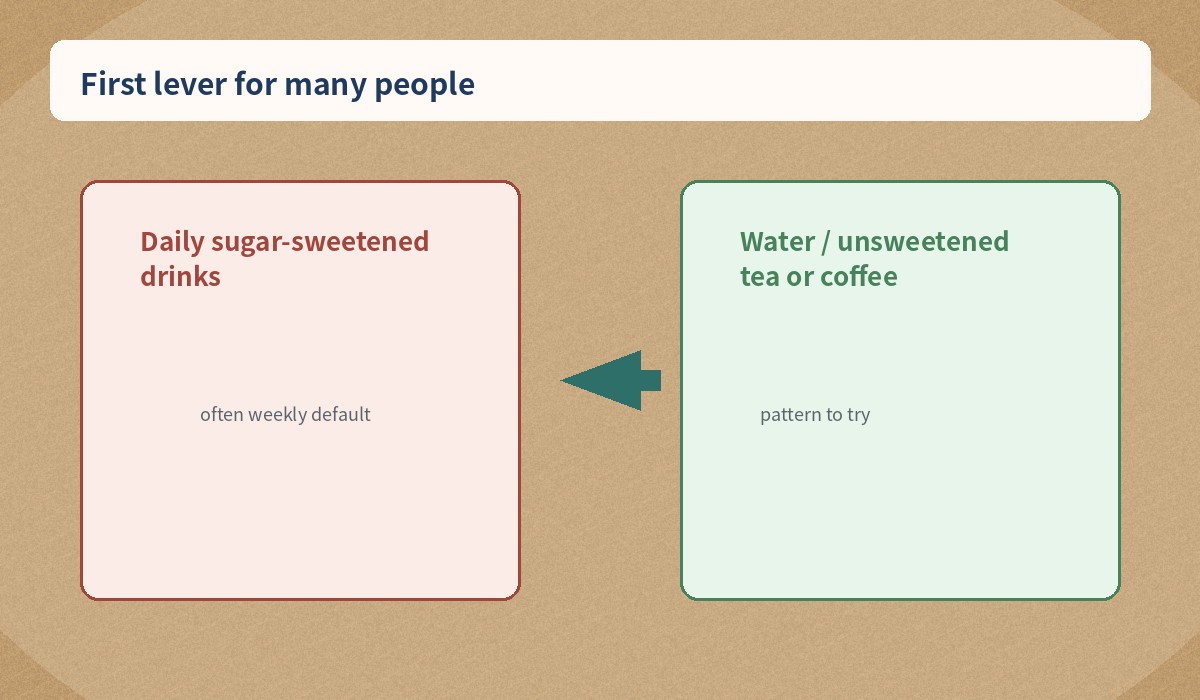
1. Pick one primary lever for 4 weeks
Usually: eliminate daily sugar-sweetened drinks or cut evening dessert most nights or walk after meals. Stacking five perfect rules often fails; one sticky habit compounds.
2. Build a Mediterranean-leaning plate
Half vegetables, quarter whole grains or starchy veg, quarter protein (fish, legumes, poultry). Cook with olive oil measured, not poured freely.
3. Sample day
- – Breakfast: oatmeal, berries, plain yogurt
- – Lunch: lentil salad with olive oil, tomatoes, cucumber, whole-grain bread
- – Snack: handful of walnuts or an apple
- – Dinner: baked salmon or tofu, quinoa, roasted broccoli
- – Drink: water, unsweetened tea; coffee without syrup if used
4. Shopping list
Leafy greens, frozen mixed vegetables, oats, beans, lentils, olive oil, walnuts, berries, yogurt, fish, brown rice, herbs.
5. Weight-loss pacing
When weight loss is recommended, many education pages discuss gradual loss (often on the order of several percent of body weight over months)—not crash ketosis without medical oversight. Preserve protein and resistance activity if cleared by your clinician.
6. Alcohol decision
Ask your clinician for a clear personal limit (including zero). “Fatty liver” is not a green light for weekend binge drinking.
What “basics” looks like across cultures
Fatty-liver meal patterns do not have to be Euro-centric. Steamed fish with vegetables and rice in measured portions, tofu-vegetable stir-fries with less oil, dals with salads, bean-and-vegetable soups, and grilled meats with large vegetable sides can all fit. The recurring themes are fewer sugary drinks, fewer fried ultra-processed defaults, enough protein during weight loss, and a plant-forward plate.
If family meals are shared, change shared defaults—water on the table, fruit for dessert most nights, oil measured in the wok—rather than cooking a separate “sick diet” that isolates one person. Sustainable household patterns beat lone heroics.
Workday tactics: pack lunch twice a week, keep unsalted nuts at the desk instead of pastries, and walk 10–15 minutes after meals when your clinician says activity is appropriate.
Safety and when to get medical care
- – Abnormal liver enzymes need proper workup—viral hepatitis, medications, alcohol, autoimmune disease, and iron overload are among differentials.
- – Diabetes, sleep apnea, and high triglycerides often travel with MASLD—coordinate care.
- – Herbal “liver cleanses,” bodybuilding androgen stacks, and megadose vitamins can injure the liver.
- – Right-upper-quadrant pain, jaundice, swelling, confusion, or vomiting blood: urgent evaluation.
FAQ
Is fruit sugar bad for fatty liver? Whole fruit in ordinary amounts is generally part of healthy patterns; fruit juice and sweetened drinks are the bigger educational target.
Do I need a zero-fat diet? No. Emphasize better fat quality and overall calorie balance when weight loss is advised.
Can milk thistle replace lifestyle change? Evidence for supplements is limited/mixed; lifestyle remains foundational in public education. Discuss any supplement with your clinician.
Is intermittent fasting required? Not required. Some people use time-restricted eating; safety depends on diabetes medicines and other conditions—ask first.
How this differs from related OTCFood topics
This is a fatty-liver lifestyle food pattern page. It is not a milk-thistle evidence brief (milk thistle evidence) and not a supplement cholesterol story. Those cover limited extract data; this covers kitchen defaults.
Medical disclaimer
Medical disclaimer: This article is for general information only. It is not medical advice, diagnosis, or a treatment plan. Dietary patterns can interact with medicines and medical conditions and are not appropriate for everyone in the same way. Talk with a licensed clinician before starting, stopping, or changing any eating plan, alcohol use, or medication—especially if you have elevated liver enzymes, diabetes, or take prescription drugs.