Diet After Total Ankle Replacement: Foods That May Help and Foods to Limit
Medical note: This article discusses foods and researched botanicals. It does not claim to prevent, treat, or cure disease. Supplements are not a substitute for food, and studied amounts are not personal prescriptions.
People searching “diet after total ankle replacement foods that help or worsen” usually want protein-forward, easy-prep meals that support wound healing and limit constipation while they stay non-weight-bearing—not a claim that food seats the prosthesis faster than MedlinePlus timelines or replaces elevation, casting, or physical therapy. MedlinePlus describes ankle replacement (total ankle arthroplasty) as surgery that removes damaged bone and cartilage and implants an artificial joint; successful replacements often reduce pain and restore up-and-down motion, and many implants last 10 or more years depending on activity and health. Discharge guidance notes the ankle may feel warm and tender for 4 to 6 weeks, help with daily chores (including making meals) may be needed for up to 6 weeks, weight should stay off the foot for about 10 to 12 weeks, and recovery can take 3 to 6 months.
What this after-total-ankle-replacement diet guide covers (and what it does not)

This guide is for adults recovering from total ankle arthroplasty who want practical nutrition while following strict elevation and non-weight-bearing rules. Anchors: MedlinePlus — Ankle replacement, MedlinePlus — Ankle replacement discharge, OrthoInfo — Arthritis of the foot and ankle, and NIAMS — Osteoarthritis.
Food does not replace wound checks, VTE precautions when prescribed, smoking cessation, or your surgeon’s cast/boot schedule. Related reading: Diet After Ankle Fracture Surgery, Diet After Knee Replacement, Diet After Hip Replacement, Osteoarthritis Diet, and Constipation Diet.
Evidence snapshot: after-total-ankle-replacement diet claims vs public sources
| Claim people hope for | What public sources actually say | Confidence |
|---|---|---|
| “A bone broth cleanse locks the implant in place early” | Orthopedic success depends on surgical technique, protection, and rehab—not culinary cures | Strong: food is supportive |
| “Protein-containing meals support tissue recovery fueling” | General joint-replacement recovery nutrition emphasizes adequate protein while mobility is limited | Moderate as supportive |
| “Elevation matters more than any ‘anti-swelling’ smoothie” | MedlinePlus stresses elevating the leg above heart level; swelling can impair wound healing | Strong for elevation priority |
| “You can stand to cook if you feel motivated” | Discharge instructions: keep weight off the foot 10–12 weeks; use walker, crutches, or knee scooter; avoid long standing | Strong: follow activity limits |
| “PT is optional if collagen intake is high” | Range-of-motion and strengthening progressions are therapist-directed after clearance | Strong: rehab is primary |
Foods and patterns that may help after total ankle replacement day to day
“May help” means supporting energy, protein, hydration, and bowel softness during a long non-weight-bearing window—not guaranteeing earlier walking clearance.
Protein-forward, recliner-friendly meals
- – Eggs, Greek yogurt, cottage cheese, canned fish (when food-safety rules allow), poultry, tofu, beans, and sheet-pan dinners helpers can assemble.
- – Keep a cooler bag and high-protein snacks at scooter height so you are not hopping to cabinets.
Fiber and fluids while opioids and immobility slow the bowels
- – Constipation is common when walking is banned for weeks: oats, fruit, cooked vegetables, prune puree, and water as tolerated—see Constipation Diet.
- – Ask about scheduled stool softeners when opioids are prescribed rather than waiting for concrete stool.
Calcium- and vitamin D–aware patterns for bone and joint health context
- – Many ankle replacements are done for end-stage arthritis; long-term bone-health habits may overlap Osteoporosis Diet and Osteoarthritis Diet themes—dairy or fortified plant milks, tofu with calcium sulfate, and fatty fish can appear in meal plans. Supplement doses belong with your clinician.
Produce and micronutrient coverage without marathon standing
- – Pre-cut fruit, frozen vegetables, tomato soups, and salad kits (if someone else washes/chops) keep vitamin C–containing foods available for general tissue-repair nutrition.
- – Smoothies with yogurt and fruit work when sitting time is limited—watch added sugar if diabetes is present.
Anti-constipation breakfast template worth repeating
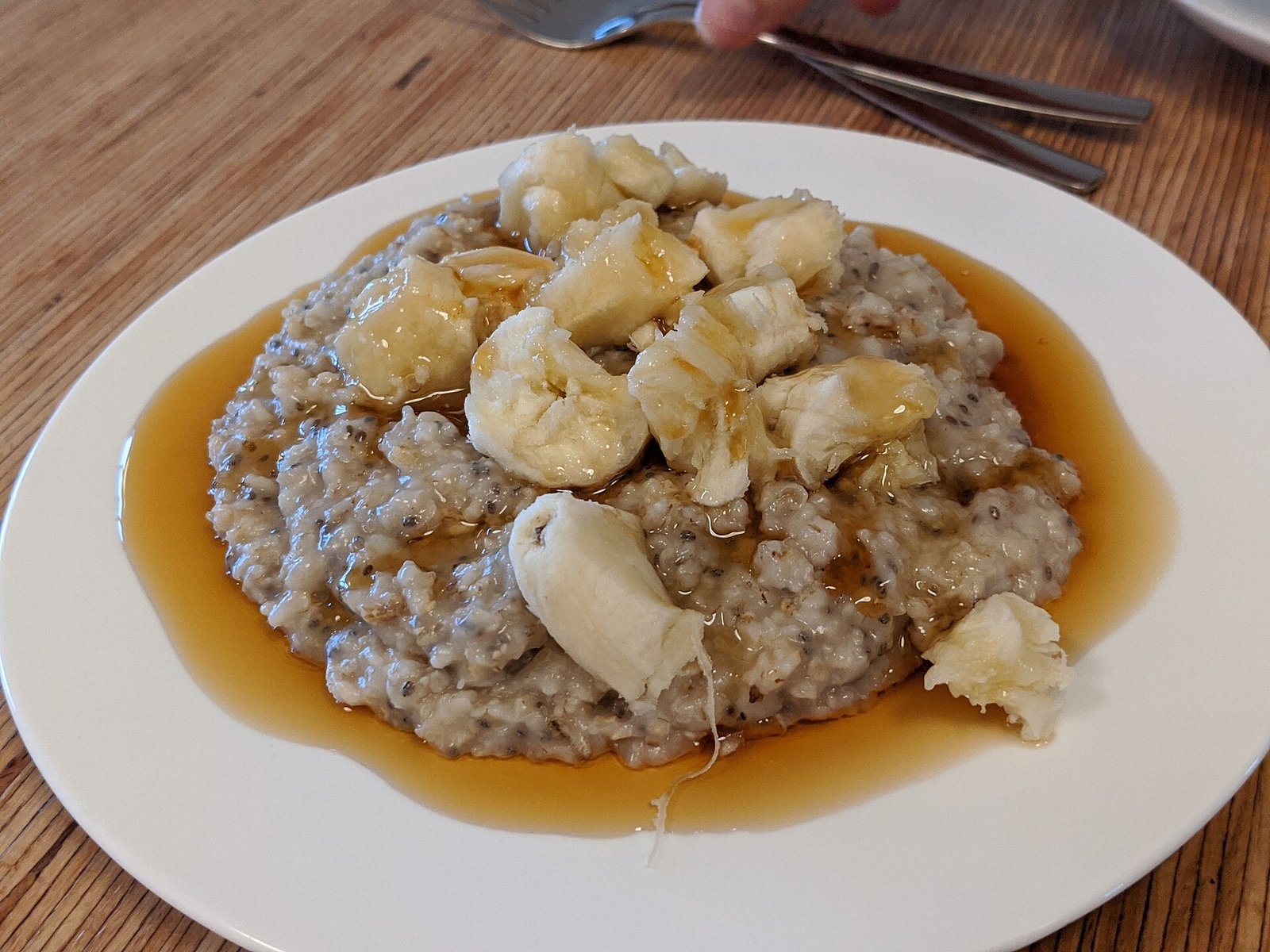
- – Oatmeal or high-fiber cereal, fruit, fluid, and a protein side (eggs or yogurt) often start the day better than coffee-only patterns that dehydrate.
Foods and habits that often worsen after-total-ankle-replacement kitchen patterns
- – Standing long periods to cook or clean against discharge advice—swelling harms wounds.
- – Ultra-processed, low-fiber snack patterns that harden stool while you cannot easily reach the bathroom.
- – Heavy alcohol that impairs sleep, hydration, and medicine safety.
- – Skipping meals for days because grocery trips are hard—arrange delivery or helpers early.
- – Smoking or nicotine vaping while hoping diet alone heals soft tissue around an implant.
- – Unprescribed stimulant laxative stacks without surgeon clearance.
- – Expecting kitchen changes to fix fever, wound drainage, calf pain, dusky toes, chest pain, or a joint that feels unstable—MedlinePlus lists these as call-your-surgeon triggers.
- – Starting jogging, swimming, or aerobics early because “nutrition is dialed”—activity advances only with provider/therapist OK.
Practical kitchen protocol: an after-total-ankle-replacement diet week
1. Keep the medical spine first
Confirm non-weight-bearing duration, cast/splint rules, elevation targets, wound care (keep incision clean/dry early; shower only when cleared), VTE prophylaxis, pain plan, and PT start date. MedlinePlus: do not scrub the incision; do not soak in baths/hot tubs until allowed.
2. Shopping list for 10–12 weeks of limited mobility
Eggs; yogurt; oats; frozen berries; bananas; canned beans; frozen vegetables; whole-grain bread if tolerated; olive oil; poultry/fish portions; oral fluids; fiber cereal; prune puree; easy-open snacks; trash bags staged near the recliner path.
3. Default plate template
- – Soft lean protein
- – High-fiber carbohydrate
- – Fruit or cooked vegetables
- – Fluid at every meal
- – Rest with ankle elevated after eating rather than standing to wash every dish immediately
4. Sample day (illustrative)
- – Breakfast: oatmeal with berries; eggs; water.
- – Lunch: lentil soup; yogurt; fruit.
- – Snack: cheese or hummus with soft crackers if appropriate; water.
- – Dinner: baked fish, sweet potato, cooked greens; water.
- – Evening: warm fluid; bowel plan; elevate while reading—not long kitchen standing.
5. Home setup tips
Knee scooter or walker routes cleared of rugs; shower chair when cleared to shower; meal prep station you can reach from a seated position; ask helpers for sheet-pan cooking twice weekly.
6. If rheumatoid arthritis or osteoarthritis is the background disease
Long-term patterns may overlap Rheumatoid Arthritis Diet or Osteoarthritis Diet, but implant protection and wound rules stay with your orthopedic team. Compare also Diet After Knee Replacement and Diet After Hip Replacement for other arthroplasty kitchen themes.
Safety, interactions, and who should ask a clinician first
- – Opioids: plan softeners and fluids early.
- – Blood thinners if used for clot prevention: keep eating patterns consistent with medication counseling; never stop anticoagulants for a diet experiment.
- – Kidney, heart failure, or liver disease: individualize fluid and sodium—see Heart Failure Diet if applicable rather than forcing high fluid intake.
- – Diabetes: immobility can change glucose patterns—monitor as advised.
- – Contact the surgeon for fever >101°F (38.3°C) per MedlinePlus discharge wording, wound drainage, calf swelling/pain, cool or dark toes, shortness of breath, chest pain, or a joint that feels out of position.
FAQ
Can diet speed how soon I walk on the new ankle? No. MedlinePlus cites about 10–12 weeks with no weight on the foot and months of recovery; food supports healing fueling inside that orthopedic timeline.
How long will I need help making meals? Discharge education notes help with chores including meal preparation for up to about 6 weeks for many people—individualize with your surgeon.
Do I need expensive collagen or joint powders? Not required by public MedlinePlus ankle-replacement pages. Adequate mixed protein foods are the practical base; ask before supplement stacks, especially if you take other medicines.
Should I avoid all salt after ankle replacement? Only if you have another condition that needs sodium limits. Elevation and activity rules matter more for surgical swelling than a universal salt ban.
How is this different from ankle fracture surgery diet content? Both involve non-weight-bearing kitchen logistics, but total ankle replacement is an arthroplasty with implant-specific longevity and arthritis background. See Diet After Ankle Fracture Surgery for fracture-fixation pages.
How this differs from related OTCFood topics
This page is a total ankle replacement–bound diet guide focused on protein, constipation control, easy prep, and respecting long non-weight-bearing rules after arthroplasty. It is not a DIY implant protocol, not a sports-return meal plan, and not a substitute for OrthoInfo-style surgical counseling or PT.
Medical disclaimer
Medical disclaimer: This article is for general information only. It is not medical advice, diagnosis, or a treatment plan. Care after total ankle replacement depends on implant type, bone quality, other medical conditions, and your surgeon’s protocol. Talk with a clinician or registered dietitian before starting, stopping, or changing any eating plan, supplement, or medicine. Seek urgent care for fever, wound problems, calf swelling, chest symptoms, or sudden changes in foot color or temperature.