Small Fiber Neuropathy Diet: Foods That May Help and Foods to Limit
Medical note: This article discusses foods and researched botanicals. It does not claim to prevent, treat, or cure disease. Supplements are not a substitute for food, and studied amounts are not personal prescriptions.
People searching “small fiber neuropathy diet foods that help or worsen” usually want kitchen habits that support blood-sugar control when diabetes is involved, correct proven nutrient gaps, and avoid alcohol excess—not a claim that food regenerates small nerve fibers or replaces neurology care. MedlinePlus explains peripheral neuropathy as one or more peripheral nerves not working properly; diabetes is the most common cause of this type of nerve problem, and low levels of vitamins such as B12 (among other B vitamins) are listed among health conditions that may contribute. NINDS describes peripheral neuropathy as disrupted signaling in the peripheral nervous system, with many types and sensory symptoms that often start in the feet in length-dependent patterns.
What this small fiber neuropathy diet guide covers (and what it does not)
This guide is for adults with clinician-diagnosed or suspected small-fiber neuropathy who want practical eating patterns while they pursue cause evaluation. Anchors: MedlinePlus — Peripheral neuropathy, NINDS — Peripheral neuropathy, and ODS — Vitamin B12.
Small-fiber neuropathy typically affects thinly myelinated and unmyelinated fibers that carry pain and temperature sensation and can involve autonomic symptoms; diagnosis and cause-finding belong to clinicians (glucose disorders, autoimmune disease, idiopathic cases, toxins, and nutrient deficiencies are among considerations on public neurology pages). Kitchen changes do not replace glucose medicines, immunotherapy when indicated, or pain plans. B12 supplementation is appropriate when deficiency is documented—not as a blanket neuropathy “nerve food.” Related pages: vitamin B12 deficiency diet guide, type 2 diabetes diet guide, prediabetes diet guide, and chronic kidney disease diet guide.
Evidence snapshot: SFN diet claims vs public sources
| Claim people hope for | What public sources actually say | Confidence |
|---|---|---|
| “A special diet regenerates small fibers” | MedlinePlus/NINDS focus on causes, symptom patterns, and medical evaluation—not culinary nerve regrowth protocols | Strong: no food-cure claim |
| “Everyone with SFN needs high-dose B12” | ODS: B12 keeps blood and nerve cells healthy; deficiency can cause neurologic problems; treat deficiency per labs/clinician—not automatic megadoses for all neuropathy | Strong: test first |
| “Cutting all carbs cures diabetic neuropathy” | MedlinePlus: long-term high blood sugar can damage nerves; glucose management is medical; extreme DIY carb elimination is not a MedlinePlus SFN protocol | Strong: clinician-led glucose care |
| “Alcohol is fine if vitamins are high” | MedlinePlus lists long-term heavy alcohol use among contributors to nerve damage | Strong: limit heavy alcohol |
| “If burning feet continue, diet failed” | Neuropathy courses vary; many causes need non-diet care | Strong: expectations |
Foods and patterns that may help with small fiber neuropathy day to day
“May help” means supporting metabolic health, correcting documented deficiencies, and steady meal patterns—not promising remyelination or pain erasure.
Glucose-aware plates when diabetes or prediabetes is present
- – Emphasize non-starchy vegetables, lean proteins, beans if tolerated, and measured portions of whole grains or starchy vegetables consistent with your diabetes plan.
- – Pair carbohydrates with protein or fat to blunt spikes if that fits your clinician’s teaching—see type 2 diabetes diet guide and prediabetes diet guide.
- – Keep sugary drinks uncommon; hydrate with water or unsweetened options unless otherwise directed.
B12-containing foods (especially if risk factors exist)
- – ODS lists fish, meat, poultry, eggs, milk/dairy, and fortified cereals or nutritional yeast as B12 sources; plant foods lack B12 unless fortified.
- – Adults generally need about 2.4 mcg/day from food/supplements combined unless pregnant/breastfeeding needs differ—ODS table.
- – If you are vegan, older, on metformin long-term, have pernicious anemia risk, or post-bariatric anatomy, ask for B12 labs before self-supplementing high doses—related kitchen context: diet after bariatric surgery guide and vitamin B12 deficiency diet guide.
Anti-inflammatory pattern language without miracle claims
- – A generally heart-healthy pattern (vegetables, fruit, fish, nuts in portions that fit your plan, limited ultra-processed meats) supports overall metabolic health that often coexists with neuropathy risk factors.
- – Omega-3–rich fish can fit that pattern; it is not marketed here as fiber regeneration.
Foot-safe kitchen habits
- – Check bath water with a thermometer or uninvolved skin if feet are numb—MedlinePlus notes reduced awareness of hot/cold and unnoticed sores.
- – Store sharp tools carefully; neuropathy is not a reason to skip foot checks taught in diabetes care.
Foods and habits that often worsen SFN kitchen patterns
- – Heavy long-term alcohol listed among neuropathy contributors on MedlinePlus.
- – Sugar-sweetened beverage patterns that undermine glucose goals when diabetes drives symptoms.
- – Unprescribed megavitamin stacks (very high B6 over time can itself relate to neuropathy concerns in clinical practice—do not invent doses here; ask a clinician before high-dose B complexes).
- – Expecting kitchen changes to replace cause workups for autoimmune, toxic, or idiopathic SFN.
- – Ignoring red flags—rapidly progressive weakness, bowel/bladder change, or systemic illness needs prompt medical review.
“Limit” means reducing metabolic and toxic stressors—not blaming one dessert for nerve physiology.
Practical kitchen protocol: a small-fiber-neuropathy diet week
1. Keep the medical spine first
Confirm whether glucose disorders, B12 status, thyroid, kidney disease, alcohol use, or other causes are being evaluated. Bring a medication/supplement list to neurology visits.
2. Shopping list
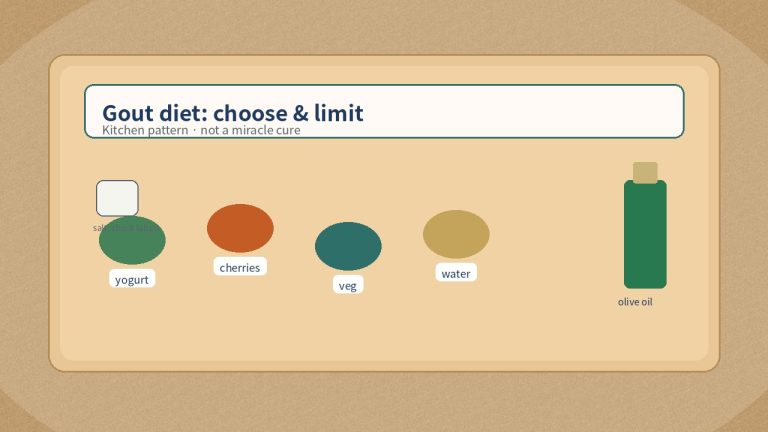
Leafy greens and mixed vegetables; berries and other fruit; eggs; yogurt; fish (salmon/tuna); poultry; beans; fortified cereal if used; whole grains per plan; olive oil; nuts/seeds if chewing and calories allow; water.
3. Default plate template
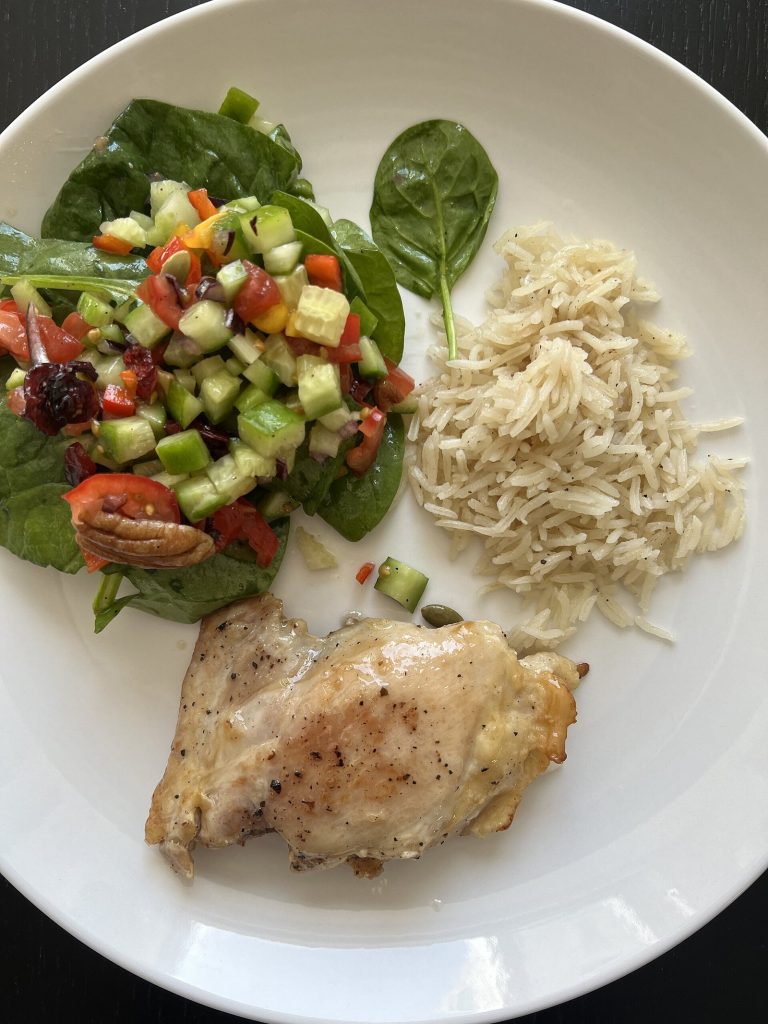
- – Half non-starchy vegetables
- – Quarter lean protein (include B12 food sources if omnivorous)
- – Quarter high-fiber carbohydrate as allowed
- – Flavor with herbs/spices rather than sugary sauces
4. Sample day (illustrative)
- – Breakfast: fortified cereal or eggs with vegetables; berries; water or unsweetened tea.
- – Lunch: grilled chicken salad with beans; fruit.
- – Snack: yogurt or a small handful of nuts if it fits your plan.
- – Dinner: baked salmon, quinoa or potato portion, roasted vegetables; milk if appropriate.
5. Lab-linked supplements only
If B12 is low, follow the form and dose your clinician chooses (oral, sublingual, nasal, or injection per ODS discussion of options). Food-first still matters for overall diet quality.
Travel and restaurant tactics
- – Choose grilled fish or chicken with vegetables over sugary drinks and deep-fried sides when glucose control matters.
- – Carry a card listing allergies and B12 or diabetes medicines for caregivers if neuropathy affects hands or fatigue.
- – On long flights or drives, move ankles periodically if advised for circulation—diet does not replace mobility plans.
6. Alcohol plan
If you drink, ask neurology what “limit” means for your case; abstinence may be advised when alcohol is a suspected contributor.
Safety, interactions, and who should ask a clinician first
- – Documented B12 deficiency: treat under supervision—ODS notes prescription injections/nasal gel exist for deficiency care.
- – Chronic kidney disease: protein/mineral limits may apply—chronic kidney disease diet guide.
- – Metformin, acid-reducing therapy, or vegan diets: higher B12 monitoring needs are common discussion points—confirm with your clinician.
- – Pain medicines: diet does not replace prescribed neuropathic pain strategies.
- – Sudden unilateral weakness, speech change, or chest pain is emergency care—not a nutrition tweak.
FAQ
Can diet cure small fiber neuropathy? No. Public NIH consumer pages do not present food as regenerating small fibers. Addressing causes (glucose, deficiency, toxins) may help the overall picture under medical care.
Should I start 1000 mcg B12 today because of burning feet? Not automatically. ODS supports adequate B12 for nerve and blood cell health; deficiency treatment is lab-guided. Unnecessary megadoses are not a substitute for diagnosis.
Do gluten-free diets fix SFN? Only pursue gluten-free eating if celiac disease or another clinician-directed indication exists—see celiac disease diet guide when relevant. Blind restriction can worsen diet quality.
Is fasting good for “nerve inflammation”? Unsupervised fasting can destabilize glucose and nutrient intake. Follow clinician guidance only.
How is this different from diabetic foot diet care? Overlap when diabetes is present, but SFN also has non-diabetic causes. Foot skin care remains essential—nutrition alone does not protect numb feet.
How this differs from related OTCFood topics
This page is an SFN/peripheral-neuropathy-bound diet guide emphasizing glucose patterns when relevant, B12 only if deficient, alcohol limits, and neurology follow-up. It does not claim food cures neuropathy.
Medical disclaimer
Medical disclaimer: This article is for general information only. It is not medical advice, diagnosis, or a treatment plan. Small fiber neuropathy evaluation and management depend on cause, labs, and neurologic findings. Talk with a clinician or registered dietitian before starting, stopping, or changing supplements, medicines, or restrictive diets. Seek urgent care for rapidly worsening weakness, breathing trouble, or signs of severe infection in numb feet.