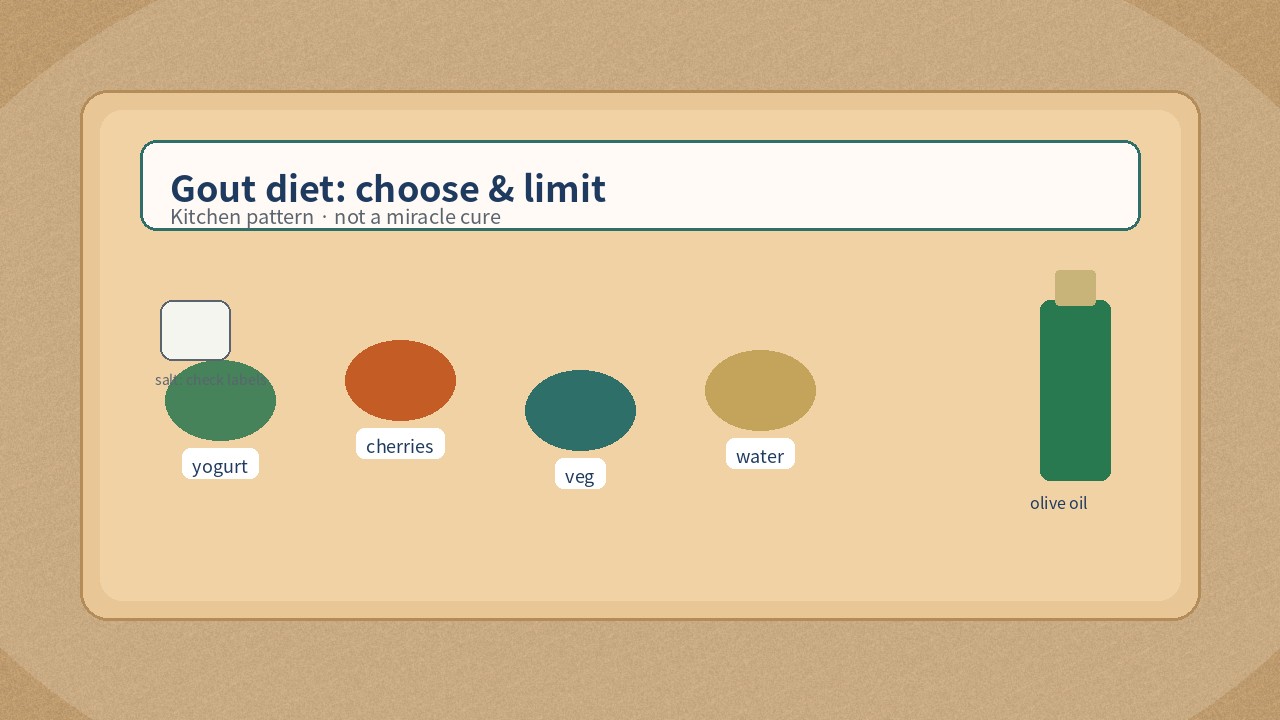
Gout Diet: Foods to Choose and Avoid Without the Myths
Medical note: This article discusses foods and researched botanicals. It does not claim to prevent, treat, or cure disease. Supplements are not a substitute for food, and studied amounts are not personal prescriptions.
A gout flare is driven by urate crystals; diet is only one piece of long-term management. People typing “gout diet foods to choose and avoid” need a realistic map: lower-purine patterns and fewer sugar-sweetened drinks may help reduce flare risk for some people, while medicines and medical follow-up remain central. Food does not replace urate-lowering therapy when a clinician has prescribed it.
What this guide covers (and what it does not)
This page summarizes dietary patterns often recommended in patient education from sources such as the American College of Rheumatology (ACR) lifestyle discussion, NIH/MedlinePlus gout overviews, and major clinic education pages (for example Mayo Clinic). It is not a flare-treatment protocol and not a reason to ignore prescribed colchicine, NSAIDs, corticosteroids, or urate-lowering drugs.
Gout risk also tracks genetics, kidney function, body weight, alcohol, and metabolic health. Diet sits beside those factors—not above them.
Evidence snapshot
| Claim people hope for | What public sources actually say | Confidence |
|---|---|---|
| “Avoid all meat forever” | Organ meats and some seafood are higher purine; lean meats in moderation are often discussed differently than daily organ meat | Moderate for limiting highest-purine animal foods |
| “Cherries cure gout” | Some studies explore cherries/cherry extract and flare risk; evidence is limited and not a substitute for medicines | Low–insufficient as a cure claim |
| “Beer is worse than wine” | Alcohol, especially beer and spirits in excess, is linked with higher flare risk in educational materials | Moderate for limiting alcohol |
| “Stop all protein” | Total starvation or crash dieting can raise urate; balanced weight loss is preferred when weight is a factor | Moderate caution against crash diets |
Anchors: MedlinePlus / NIH gout, Mayo Clinic gout diet, ACR gout guideline patient-facing summaries.
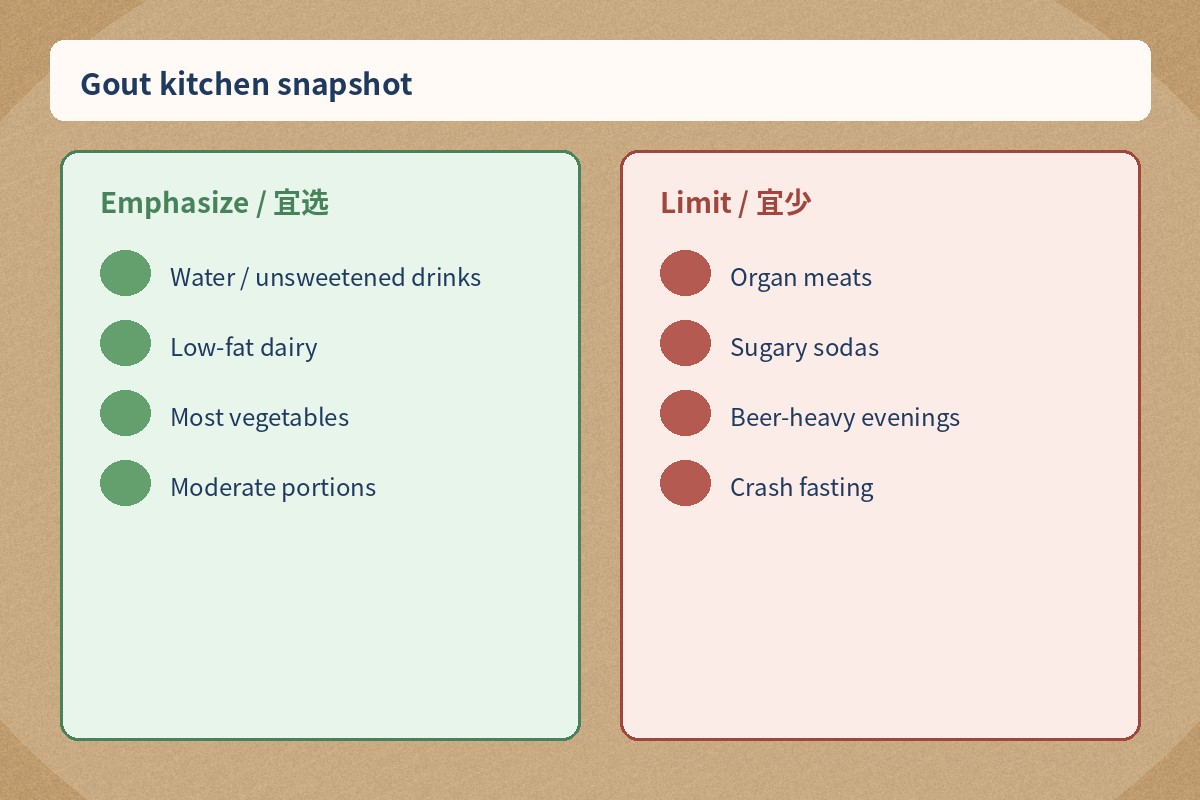
Foods dietary patterns often emphasize
- – Water and unsweetened fluids: hydration is commonly encouraged unless fluid is restricted for another condition.
- – Low-fat dairy: milk and yogurt appear in some observational and educational materials as relatively favorable choices.
- – Vegetables: most vegetables are fine; older myths about banning all “purine vegetables” are generally not the modern emphasis.
- – Cherries and berries as food: enjoyable additions; treat concentrated supplements cautiously and discuss with a clinician.
- – Whole grains, eggs, nuts, seeds in ordinary portions.
- – Coffee (if you already drink it): some observational data are discussed in reviews, but do not start high caffeine solely for gout.
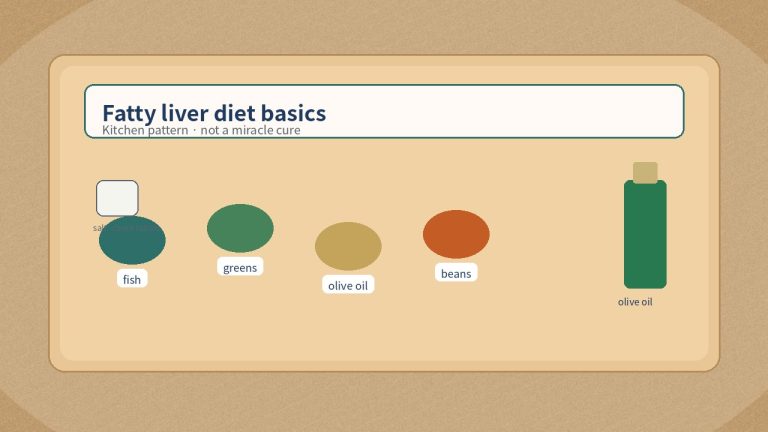
Plant proteins (beans, lentils) contain purines but are usually framed more gently than organ meats in modern education—individual tolerance and flare history matter; ask your clinician or dietitian if flares cluster after large legume meals.
Foods and habits to limit
- – Organ meats: liver, kidney, sweetbreads—classic high-purine items to limit.
- – Certain seafood: anchovies, sardines, mussels, scallops, tuna, trout are often listed among higher-purine choices—portion control rather than lifelong bans for many people.
- – Sugar-sweetened beverages and high-fructose drinks: soft drinks and some juices are frequently flagged in gout education.
- – Alcohol: beer is repeatedly highlighted; heavy drinking in general is discouraged during prevention strategies.
- – Crash diets and fasting: rapid weight loss can temporarily raise uric acid.
“Limit” means reduce frequency and portion size in the weekly pattern—not panic over one bite.
Practical kitchen protocol: choose-and-swap list
Build a gout-aware plate
Half non-starchy vegetables, a moderate protein serving (eggs, low-fat dairy, tofu, or modest poultry/fish), and a whole-grain side. Keep fried bar foods and beer-heavy evenings rare.
Swaps that usually help the pattern
- – Liver pâté / organ-meat dishes → roasted chicken breast or tofu stir-fry
- – Large seafood thali / seafood boil → smaller fish portion plus extra vegetables
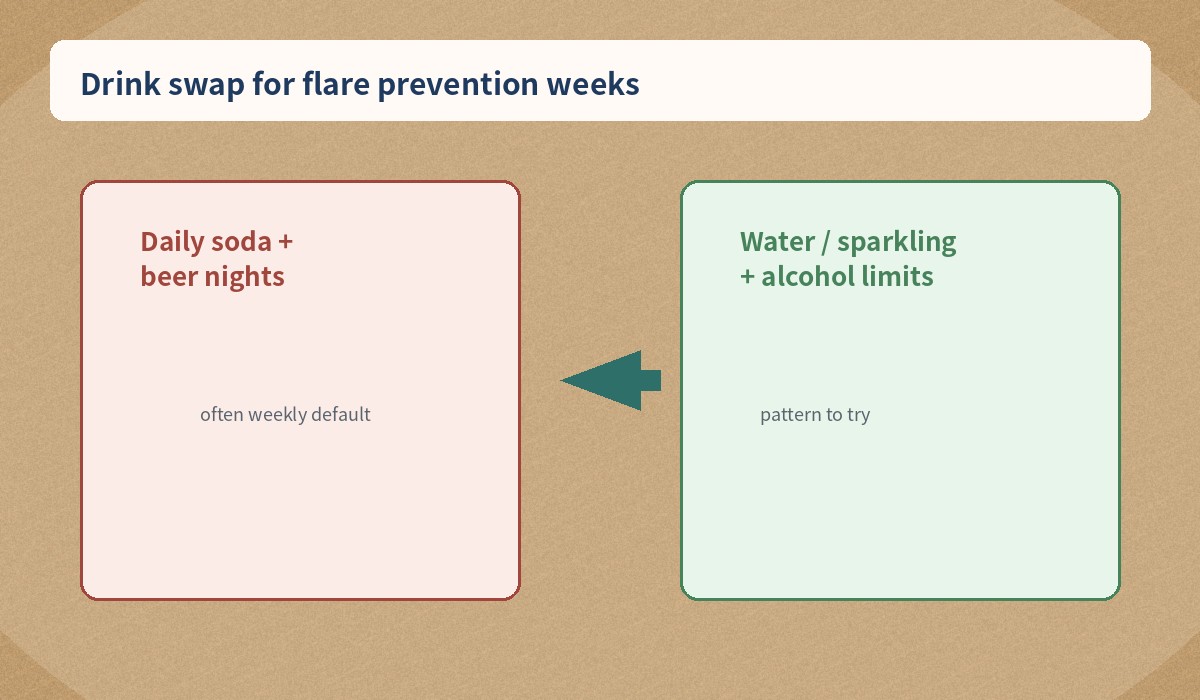
- – Soda with meals → water, sparkling water, or unsweetened tea
- – Friday beer flight → alcohol-free options or fewer drinks, spaced with food and water
Grocery checklist
Plain yogurt, eggs, oats, frozen vegetables, cherries (fresh/frozen), berries, tofu, chicken, brown rice, olive oil, herbal tea, sparkling water.
Flare-week vs prevention-week
During an acute flare, follow your clinician’s medication plan first. Diet tweaks are supportive, not the primary rescue. Between flares, focus on weight if recommended, alcohol limits, sugar-sweetened drink reduction, and avoiding habitual organ meats.
Eating out
Skip “offal specials,” go easy on gravy made from meat drippings, and watch sweet cocktails. Ask for steamed vegetables and plain starch sides.
A realistic week, not a purine spreadsheet
Day-to-day life rarely allows milligram-perfect purine counting. Aim for themes: water bottle filled twice daily, soda most days zero, organ meats off the regular menu, alcohol limited to clinician-agreed amounts, and dinners built around vegetables plus moderate protein. If you track flares in a notes app, tag meals that preceded pain within 24–48 hours—patterns beat folklore.
Athletes and heavy laborers sometimes under-drink and over-rely on sugary sports beverages. For gout-prone people, unsweetened fluids plus normal meals are usually a better default than fructose-heavy recovery drinks, unless a clinician or sports dietitian designs otherwise.
Myths that waste energy
Myth: “One tomato caused my flare.” Tomatoes are not classic organ-meat-level purine bombs; individual anecdotes exist, but population education focuses more on alcohol, sugar-sweetened drinks, organ meats, and some seafood. Myth: “I must go zero-protein.” Inadequate protein can sabotage satiety and muscle. Myth: “Apple cider vinegar dissolves crystals overnight.” No. Keep expectations aligned with rheumatology education: medicines manage urate; diet supports the plan.
Safety, who should ask a clinician, and medicine notes
- – Kidney disease: purine and fluid advice must be individualized.
- – Urate-lowering therapy: allopurinol, febuxostat, and related drugs need medical supervision; diet is adjunctive.
- – Diuretics and other medicines: some drugs raise urate—never stop them on your own; ask the prescriber.
- – Supplements marketed for “uric acid cleanse”: quality and evidence vary; potential interactions exist.
- – Rapid weight-loss programs: discuss safer pacing with a clinician.
Urgent care: sudden severe joint pain with swelling/redness can be infection or crystal arthritis—get evaluated rather than self-diagnosing every flare.
FAQ
Can I eat shrimp? Many education pages list some shellfish as higher purine. Small portions occasionally may fit some people’s plans; frequent large servings are riskier for flare-prone individuals—personalize with your clinician.
Are beans forbidden? Modern guidance is usually more nuanced than a total ban. If beans clearly trigger you, limit them; otherwise moderate plant proteins are often workable.
Does cherry juice replace medicine? No. Food products are not urate-lowering prescriptions.
Is a vegetarian diet required? Not required. A balanced pattern with fewer highest-purine animal foods and less alcohol/soda is the usual message.
How this differs from related OTCFood topics
This is a gout-bound kitchen pattern article. It is not a joint-supplement evidence review (turmeric and joint comfort) and not a general sleep or stress botanical page. Those pieces discuss limited trial signals for extracts; this one stays on everyday foods and drinks.
Medical disclaimer
Medical disclaimer: This article is for general information only. It is not medical advice, diagnosis, or a treatment plan. Dietary patterns can interact with medicines and medical conditions and are not appropriate for everyone in the same way. Talk with a licensed clinician before starting, stopping, or changing any eating plan or medication—especially during a flare, if you have kidney disease, or if you take prescription urate-lowering or diuretic drugs.