How to Choose an Ashwagandha Supplement (KSM-66, Sensoril, Labels)
Medical note: This article discusses foods and researched botanicals. It does not claim to prevent, treat, or cure disease. Supplements are not a substitute for food, and studied amounts are not personal prescriptions.
When shopping for an ashwagandha (Withania somnifera) supplement, the label details dictate the safety, efficacy, and intended benefits of the product. An effective ashwagandha supplement relies on proper botanical extraction, specific active compound standardization, and clinical dosing.
The Direct Answer: To choose a reliable ashwagandha supplement, look for a product that clearly lists a root extract (rather than unstandardized root powder or leaf extracts) standardized to 2.5% to 5% withanolides. Patented extracts like KSM-66® or Sensoril® offer the highest reliability because they match the exact formulations used in human clinical trials. The daily serving size should provide between 300mg and 600mg of the extract. Finally, the product must carry a third-party testing certification (like USP, NSF, or ConsumerLab) to verify the absence of heavy metal contamination and the accuracy of the withanolide content.
The Evidence: What Ashwagandha Supports
Understanding what ashwagandha is actually researched for helps align your purchase with realistic expectations. As an adaptogen, it is primarily studied for its potential to support the body’s resilience to physical and mental stressors.
| Research Area / Claim | Current Evidence Base (per NCCIH & Clinical Data) | What is NOT Supported (Limitations) |
|---|---|---|
| Stress & Tension Support | Evidence suggests ashwagandha may help support a healthy stress response and occasionally reduce perceived daily tension. | Does not treat, cure, or prevent clinical anxiety disorders, depression, or panic attacks. |
| Sleep Quality | May help support restful sleep and improve overall sleep quality, particularly in individuals experiencing stress. | Is not a cure for chronic insomnia or a replacement for prescribed sleep medications. |
| Physical Performance | May support VO2 max, athletic endurance, and muscle recovery when combined with resistance training. | Does not guarantee muscle growth, replace adequate protein intake, or heal sports injuries. |
| Cognitive Function | Emerging studies suggest it may help support executive function, sustained attention, and memory. | Does not prevent cognitive decline, treat ADHD, or cure neurodegenerative diseases like Alzheimer’s. |
The Practical Guide: Deciphering Ashwagandha Labels
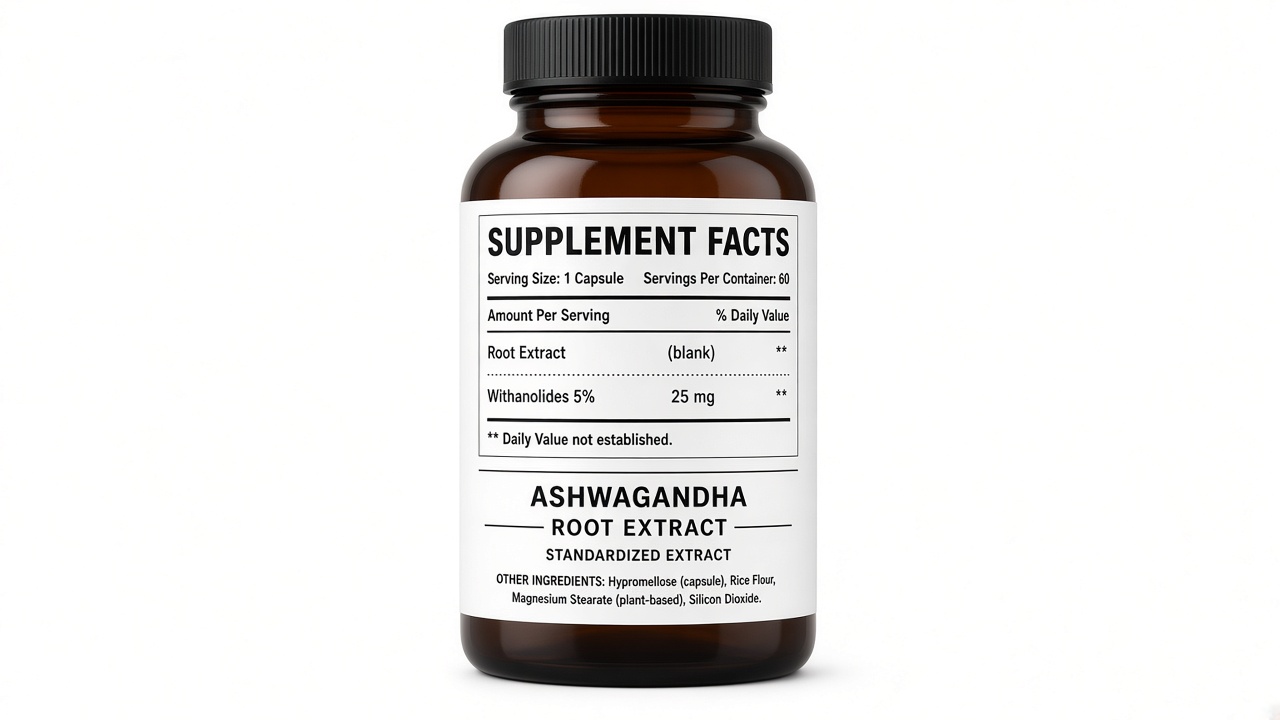
The middle section of an ashwagandha label contains the most critical information. From patented extracts to standardization percentages, here is exactly how to evaluate what is inside the bottle.
Extract Types: KSM-66 vs. Sensoril vs. Generic
Not all ashwagandha is processed the same way. Many high-quality supplements license patented extracts because these specific formulations are the ones actively utilized in double-blind, placebo-controlled human trials.
- * KSM-66®: Developed by Ixoreal Biomed, this is the most heavily researched ashwagandha extract on the market. It is a full-spectrum, root-only extract standardized to 5% withanolides. KSM-66 is extracted using a traditional Ayurvedic method involving pre-treating the roots with milk (though vegan versions now exist). It is generally sought after for daytime stress support, athletic performance, and cognitive support. The clinically studied dose is typically 300mg taken twice daily.
- * Sensoril®: Developed by Natreon, Sensoril uses both the roots and the leaves of the ashwagandha plant. It is highly concentrated and standardized to 10% withanolide glycosides. Because of its higher concentration and unique botanical profile, Sensoril is often reported to have a more calming, relaxing effect, making it popular for evening use and sleep support formulas. The standard clinical dose is lower, usually between 125mg and 250mg per day.
- * Generic Root Extracts: A generic extract will simply list “Ashwagandha Extract” on the label. While these can be effective, they lack the standardized clinical backing of patented versions. If choosing a generic, you must verify the standardization percentage (using HPLC testing) to ensure you are receiving a therapeutic dose of active compounds.
Root vs. Leaf Extracts
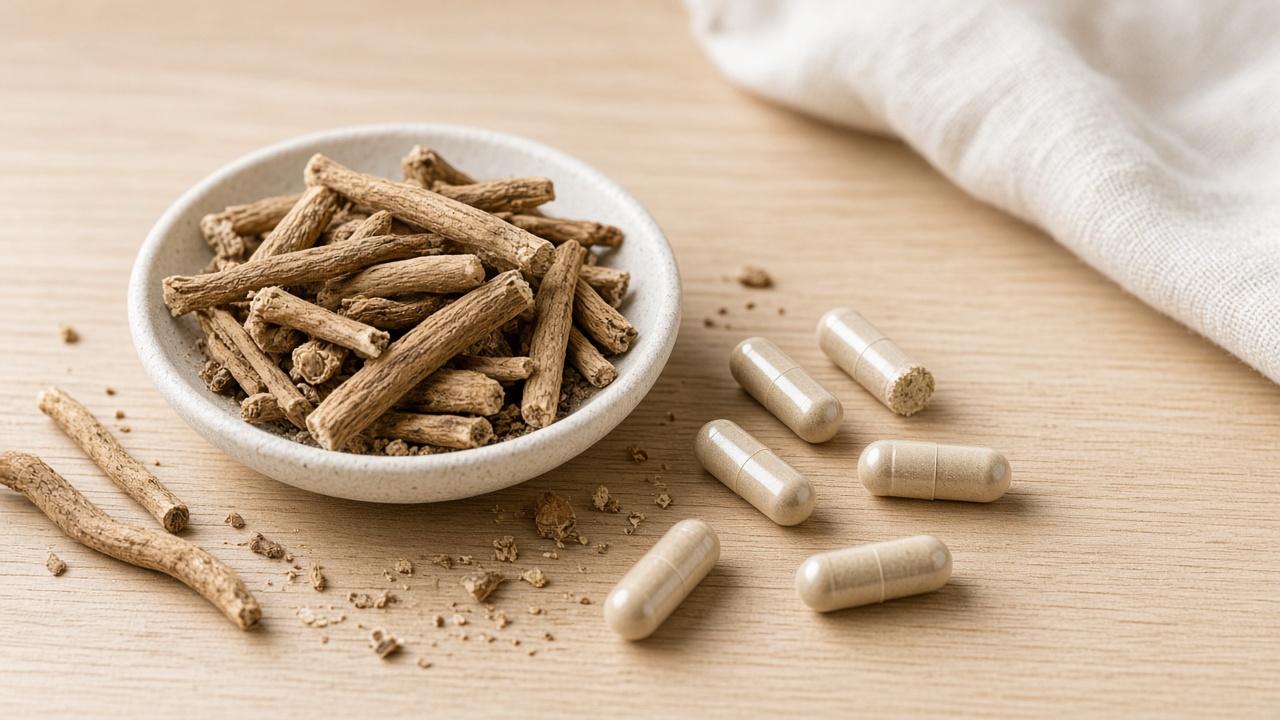
Traditional Ayurvedic practice relies almost exclusively on the root of the ashwagandha plant. The roots contain the specific balance of active compounds (withanolides) associated with the herb’s adaptogenic benefits.
Leaves are sometimes used by budget manufacturers because they are cheaper to harvest and naturally contain higher concentrations of withanolides. However, leaves also contain high levels of withaferin A, a specific withanolide that is cytotoxic and undesirable in high amounts for daily supplementation. Unless you are purchasing a carefully engineered root-and-leaf blend like Sensoril (which specifically controls withaferin A levels), you should prioritize root-only extracts.
Withanolide Standardization %
Withanolides are the primary active steroidal lactones in ashwagandha responsible for its physiological effects.
- * A quality supplement will state exactly how much of the extract consists of withanolides.
- * For root extracts, a standardization of 2.5% to 5% is the industry gold standard.
- * If a product does not list a withanolide percentage, you are likely buying raw, unstandardized root powder. You would need to consume several grams of raw powder to equal the active compounds found in a single 300mg capsule of standardized extract.
Study Doses vs. Label Servings
A supplement is only effective if it provides the dose used in clinical research.
- * For KSM-66, look for 600mg daily (often split into two 300mg capsules).
- * For Sensoril, look for 125mg to 250mg daily.
- * For generic standardized extracts (2.5-5%), look for 300mg to 600mg daily.
Beware of labels boasting “3,000mg equivalent” or “10:1 extract ratio.” These are marketing terms designed to make a low dose look impressive. A 10:1 extract simply means 10 grams of raw root were condensed into 1 gram of extract; it does not guarantee a high percentage of active withanolides. Always look for the actual milligram weight of the extract itself alongside the standardization percentage.
Navigating Proprietary Blends
A proprietary blend is a list of ingredients bundled together under one total milligram weight (e.g., “Stress Support Blend: 1,000mg” containing ashwagandha, rhodiola, lemon balm, and valerian). This is a major red flag. Manufacturers often use proprietary blends to hide the fact that they are using micro-doses of expensive ingredients (like ashwagandha) while padding the rest of the blend with cheap fillers. You should only purchase ashwagandha supplements that transparently list the exact milligram dose of the ashwagandha extract on its own line in the Supplement Facts panel.
Third-Party Testing (USP, NSF, ConsumerLab)
Ashwagandha is a root crop, meaning it absorbs minerals and compounds directly from the soil. Unfortunately, soil in some regions where ashwagandha is traditionally grown can be contaminated with heavy metals like lead, mercury, and arsenic. To ensure safety, only buy products certified by independent third-party testing organizations. Look for seals from USP (United States Pharmacopeia), NSF International, or verification from ConsumerLab.com. These organizations test the product to confirm it contains exactly what the label claims and is free from dangerous levels of heavy metals, pesticides, and microbial contaminants.
Forms: Capsules, Powders, and Gummies
- * Capsules/Tablets: This is the most reliable, precise, and stable way to take ashwagandha. It protects the extract from degradation and masks the naturally bitter, horse-like smell of the herb.
- * Powders: Bulk powders are traditional and cost-effective, allowing you to mix the herb into smoothies or warm milk (moon milk). However, dosing is less precise, and the intensely earthy, bitter taste is difficult for many consumers to tolerate.
- * Gummies: Gummies are increasingly popular but inherently flawed for botanical extracts. The heat required to manufacture gummies can degrade the active withanolides. Furthermore, to make a gummy taste good, manufacturers must mask the bitter ashwagandha with excess sugars, syrups, and artificial flavors. Gummies also frequently underdose the active extract to maintain a pleasing chewy texture.
Timing and Realistic Trial Period
Ashwagandha is not a fast-acting stimulant or an immediate sedative; it builds up in the system over time.
- * Timing: KSM-66 is often taken in the morning or early afternoon to support daytime resilience. Sensoril is frequently taken in the evening with dinner to support nighttime relaxation.
- * Trial Period: You should commit to a 4 to 8 week trial period of consistent daily use before evaluating its effectiveness. Occasional, as-needed use does not align with how this adaptogen functions in the body.
Label Red Flags
When evaluating a bottle, immediately put it back on the shelf if you see:
- 1. Claims of curing disease: Any label claiming to “cure anxiety,” “treat insomnia,” or “heal thyroid disorders” is violating FDA regulations and is illegally marketed.
- 2. No standardization: Missing the “% withanolides” marker.
- 3. Hidden doses: Ashwagandha buried inside a proprietary blend.
- 4. “High Potency” unstandardized ratios: Claims like “5,000mg pure ashwagandha equivalent” without listing the actual extract weight.
Safety and Who Should Skip It
While ashwagandha is generally considered safe for most healthy adults when taken in appropriate doses for short to medium durations (up to 3 months), it is not for everyone. Because ashwagandha may interact with thyroid function, individuals with hyperthyroidism should exercise extreme caution, as the herb may stimulate thyroid hormone production. It also may stimulate the immune system, meaning individuals with autoimmune conditions (such as rheumatoid arthritis, lupus, or Hashimoto’s thyroiditis) should consult a healthcare provider before use. Ashwagandha is strictly contraindicated for pregnant women, as traditional use and preliminary data suggest it may have abortifacient properties. Those who are breastfeeding or preparing for surgery should also avoid it. Always speak with a licensed healthcare provider before adding a new botanical supplement to your routine.
FAQ
1. Should I take ashwagandha on an empty stomach? It is generally recommended to take ashwagandha with food. Taking it on an empty stomach can cause mild gastrointestinal discomfort, including nausea or an upset stomach, in some individuals.
2. Do I need to cycle ashwagandha? Because long-term safety data (beyond several months) is limited, many herbalists and practitioners recommend cycling ashwagandha. A common cycle is taking it daily for 8 to 12 weeks, followed by a 2 to 4 week break, to assess your baseline stress levels and ensure efficacy.
3. Can I take ashwagandha with caffeine? Yes, taking ashwagandha with caffeine is generally safe. Many people use ashwagandha in the morning alongside coffee to help support a balanced, less jittery energy profile, leveraging the herb’s adaptogenic properties to smooth out the caffeine peak.
4. Why does my ashwagandha supplement smell bad? The botanical name Withania somnifera is paired with its traditional Sanskrit name, which roughly translates to “smell of the horse.” The root naturally possesses a very strong, earthy, and somewhat pungent odor. A strong smell in a raw powder or un-coated capsule is entirely normal and indicative of the herb’s natural profile.
Related Guides
Medical Disclaimer
The information provided in this article is for educational and informational purposes only and is not intended as medical advice. Dietary supplements are not evaluated by the Food and Drug Administration. These products are not intended to diagnose, treat, cure, or prevent any disease. Always consult with a qualified healthcare professional before starting any new supplement regimen, especially if you are pregnant, nursing, have a medical condition, or are taking prescription medications.
Sources
- * National Center for Complementary and Integrative Health (NCCIH). “Ashwagandha.” U.S. Department of Health and Human Services, National Institutes of Health. Available at: https://www.nccih.nih.gov/health/ashwagandha