Creatine Monohydrate: What Evidence Supports (Beyond Gym Myths)
Medical note: This article discusses foods and researched botanicals. It does not claim to prevent, treat, or cure disease. Supplements are not a substitute for food, and studied amounts are not personal prescriptions.
Creatine monohydrate is primarily studied for short, intense, repeated physical efforts. According to the NIH Office of Dietary Supplements (ODS), supplementation may help increase strength, power, and performance during maximum-effort muscle contractions. It may also help repeated intermittent activity lasting up to about 2.5 minutes—such as sprinting or weightlifting—and can support training over weeks or months.
It appears to offer little value for endurance sports like distance running, cycling, or swimming. It is not a general-purpose enhancer for every workout style.
Who this guide is for
- Beginners considering creatine for the first time
- Non-bodybuilding shoppers comparing labels
- Women looking for evidence-framed information (not marketing myths)
- Active adults focused on strength or repeated high-intensity work
Creatine is often marketed toward male athletes, but ODS safety framing applies to healthy adults generally. Interest in everyday wellness and cognition is growing; evidence outside athletic performance is still developing and should not be sold as a proven women’s-health or cognitive treatment.
Evidence snapshot
| Claim | What ODS says | Confidence |
|---|---|---|
| Short, intense activity | May enhance repeated short intense intermittent activity (~up to 2.5 minutes). Sports-medicine experts agree it can improve intense effort with short recovery. | High |
| Strength and power | May increase strength, power, and work from maximal effort contractions; helps training adaptations over weeks/months. | High |
| Endurance exercise | Little value for distance running, cycling, or swimming. | High (for limited benefit) |
| Safety in healthy adults | Safe for weeks/months; seems safe for years at typical studied use. | High |
| Water weight | Weight gain from water retention is expected. | High |
| Cognition / women’s wellness marketing | Consumer interest is growing; evidence outside the ODS performance sheet is still developing. | Developing |
How to choose creatine
Start with the most studied form
Creatine monohydrate is the most widely used and studied form in the ODS fact sheet. Other labels (HCl, ethyl ester, buffered, liquid) are not automatically better supported by that source. Prefer products that clearly list creatine monohydrate—not a proprietary blend that hides the amount.
What a useful label shows
- Ingredient: creatine monohydrate
- Amount per serving that can land in the 3–5 g/day range
- Clear serving instructions
- Optional flavors/sweeteners—not proof of better creatine
Food context (not a prescription)
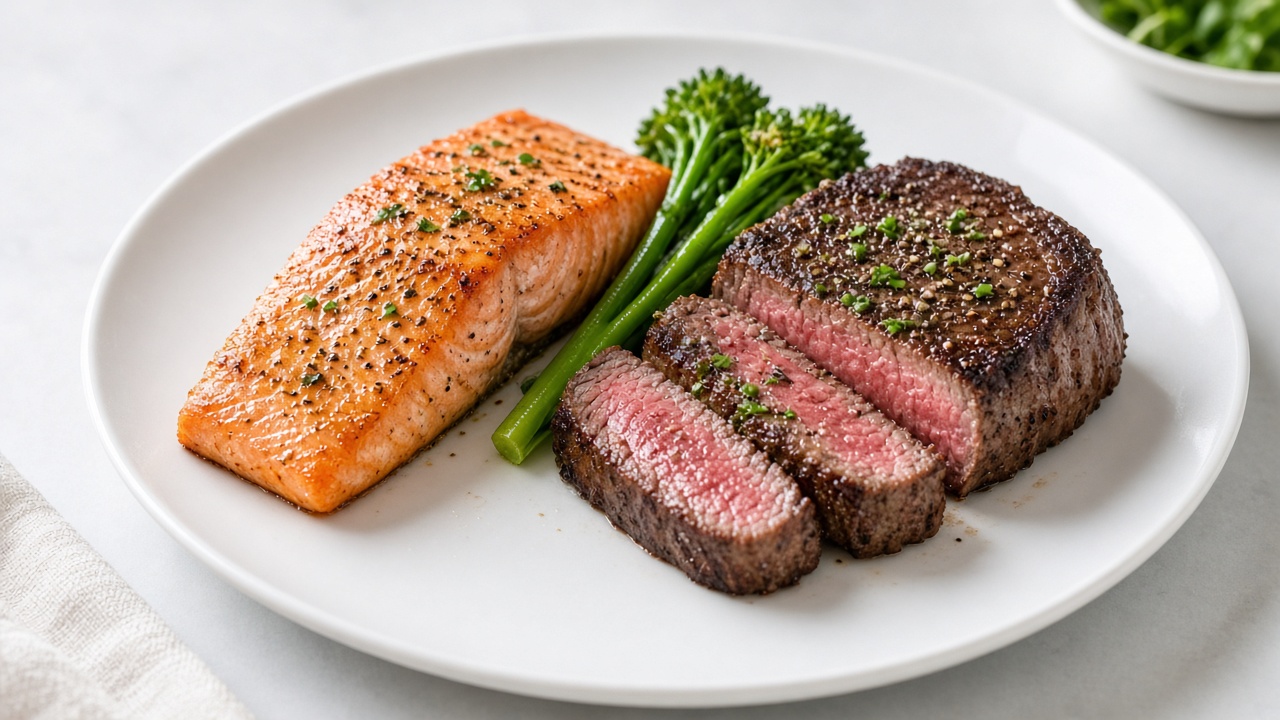
Your body makes about 1 g/day of creatine. Animal foods also provide some—ODS cites roughly 500 mg in a 4-ounce serving of beef or salmon. Food examples give context; only larger supplemental amounts might improve certain performance measures.
Loading vs steady daily use
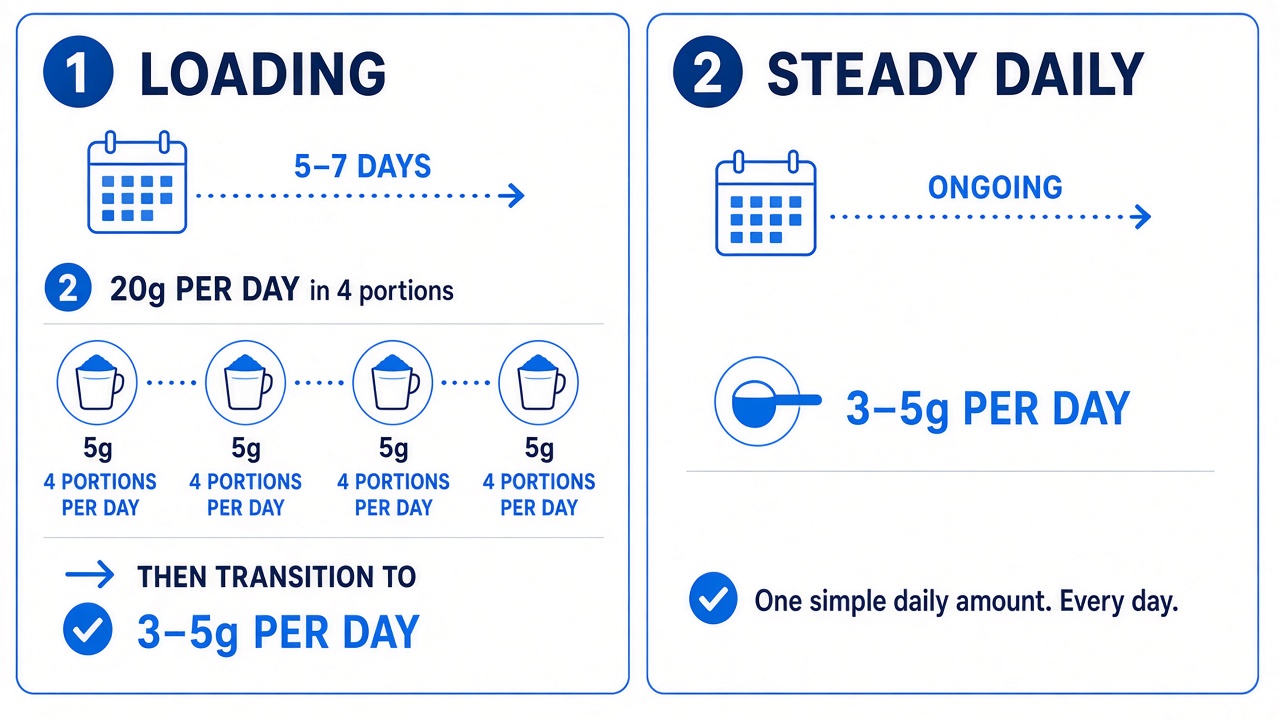
ODS describes a common approach: about 20 g/day in four equal portions for 5–7 days, then 3–5 g/day. Loading is common, not mandatory. Beginners who want a simpler routine can follow a clearly labeled daily 3–5 g serving. Do not treat a larger dose as automatically better.
Expect water weight
Scale weight may rise because of water retention—not because creatine is a steroid or because it guarantees fat gain. Rare effects noted by ODS include muscle stiffness/cramps and GI distress. Stop and seek advice if symptoms persist or concern you.
Safety and when to ask a clinician
ODS reports few safety concerns at typical doses in healthy adults. That does not clear every medical situation. Ask a clinician before use if you have kidney disease or another significant condition, are pregnant or breastfeeding, or take prescription medicines.
Interest in women’s wellness and cognition is expanding, but do not treat creatine as a proven cognitive or women’s-health cure based on the sources used here.
FAQ
Is creatine monohydrate safe for women?
ODS describes creatine as safe for healthy adults—including healthy women—at the studied time frames. That is not a special women’s-health benefit claim. Pregnant, breastfeeding, or medically complex situations need clinician advice first.
Will creatine make me bulky?
It may cause water-related weight gain. It is not a steroid. Supported roles relate to strength, power, and repeated short intense efforts—not guaranteed physique change.
Does creatine help marathon runners?
ODS says little value for endurance activities such as distance running, cycling, and swimming.
What if I skip loading?
Follow a clearly labeled daily serving (often 3–5 g). Loading is a common option described by ODS, not a requirement for every shopper.
Related OTCFood guides
Magnesium Glycinate for Sleep: What Evidence Supports (and What Labels Don’t) · What Ashwagandha Is Studied For (Without the Hype)
Medical disclaimer
Educational information only—not medical advice. Consult a qualified clinician before starting supplements, especially with medical conditions, pregnancy, breastfeeding, or prescription drugs. Dietary supplements are not intended to diagnose, treat, cure, or prevent disease.
Sources
- NIH ODS — Dietary Supplements for Exercise and Athletic Performance (Consumer)
- NIH ODS — Dietary Supplements for Exercise and Athletic Performance (Health Professional)