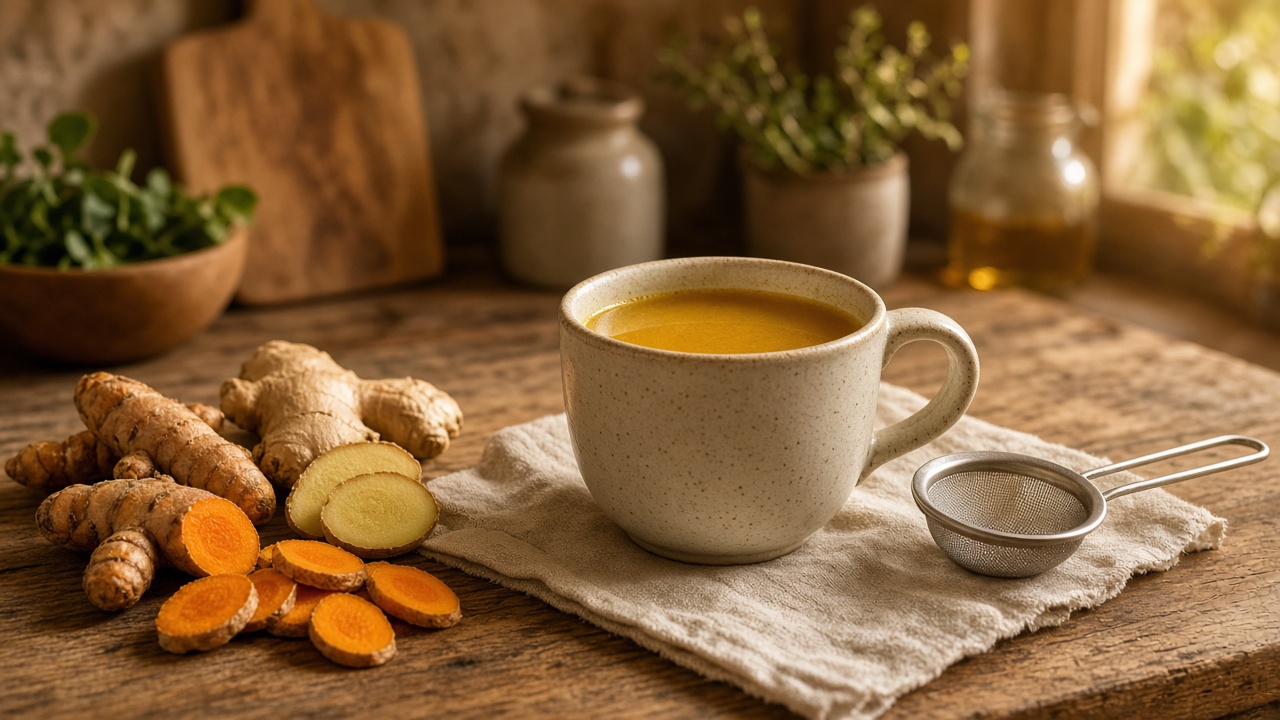
Turmeric-Ginger Evening Tonic: Kitchen Ritual vs Supplement Claims
Medical note: This article discusses foods and researched botanicals. It does not claim to prevent, treat, or cure disease. Supplements are not a substitute for food, and studied amounts are not personal prescriptions.
A homemade turmeric-ginger evening tonic serves primarily as a comforting kitchen ritual supporting general wellness and relaxation, whereas commercial supplements offer highly concentrated doses marketed toward specific health claims. When careful shoppers evaluate a steaming mug of turmeric and ginger tea, they must separate culinary reality from the aggressive marketing of the dietary supplement industry. Evidence cannot establish that sipping a homemade beverage yields the same physiological effects as taking concentrated extract capsules, nor can it confirm these staples cure or prevent medical conditions. A homemade tonic provides gentle warmth, hydration, and a wind-down routine that may help support digestion and overall comfort. Supplements provide isolated compounds in amounts far exceeding reasonable dietary consumption. Understanding this distinction empowers consumers to enjoy evening rituals without falling prey to exaggerated claims, appreciating these roots for culinary merit rather than expecting pharmaceutical alternatives.
The Kitchen Ritual vs The Supplement Industry
Supplements, however, isolate active compounds and deliver them in artificially high concentrations, often utilizing enhanced delivery systems to increase bioavailability. A supplement delivers a targeted payload, whereas a kitchen tonic provides gentle nourishment. You should not expect a kitchen tonic to replicate effects observed in clinical trials using high-dose extracts, just as you would not expect a standardized pill to provide the comforting sensory experience of a warm mug of tea.
Turmeric in the Kitchen: Culinary Reality vs Concentrated Expectations
Turmeric, the vibrant golden-orange rhizome, gives curries their signature earthy flavor. In a homemade evening tonic, turmeric acts as a grounding ingredient, providing a robust base note. The market is flooded with claims regarding turmeric’s active compound, curcumin, making it crucial to understand what scientific consensus supports. According to the National Center for Complementary and Integrative Health (NCCIH), while turmeric has been historically used in traditional systems, evidence regarding health effects in humans is largely inconclusive for many conditions.
The fundamental issue is bioavailability. Curcumin is notoriously poorly absorbed and rapidly metabolized. When consumed as a homemade beverage, the actual curcumin entering your bloodstream is minimal. Expecting a kitchen tonic to provide profound physiological changes is scientifically unfounded. Careful shoppers should appreciate culinary turmeric as a flavorful spice that may help support general wellbeing within a balanced diet. Keeping expectations grounded avoids disappointment.
Ginger as a Culinary Staple: Warmth Without the Hype
Ginger shares a history as a cherished culinary staple known for its zesty flavor. In an evening tonic, ginger provides a bright counterpoint to turmeric’s earthiness, adding comforting heat. From a culinary perspective, ginger soothes and warms the palate. A ginger-infused beverage may help support normal digestive function and provide physical comfort, particularly after a heavy evening meal. The gentle spice of ginger tea remains a traditional kitchen remedy prized for its settling sensation.
However, it is important to distinguish culinary ginger from aggressive supplement marketing. While fresh or dried ginger is an excellent dietary addition, it is not a medical substitute. Active constituents, such as gingerols and shogaols, are present in moderate amounts in a homemade tonic. These amounts are perfect for culinary enjoyment and general dietary support but do not equate to highly concentrated specialized extracts. Enjoying ginger should be about immediate sensory pleasure, providing gentle support for daily well-being.
Practical Middle: Crafting Your Evening Tonic
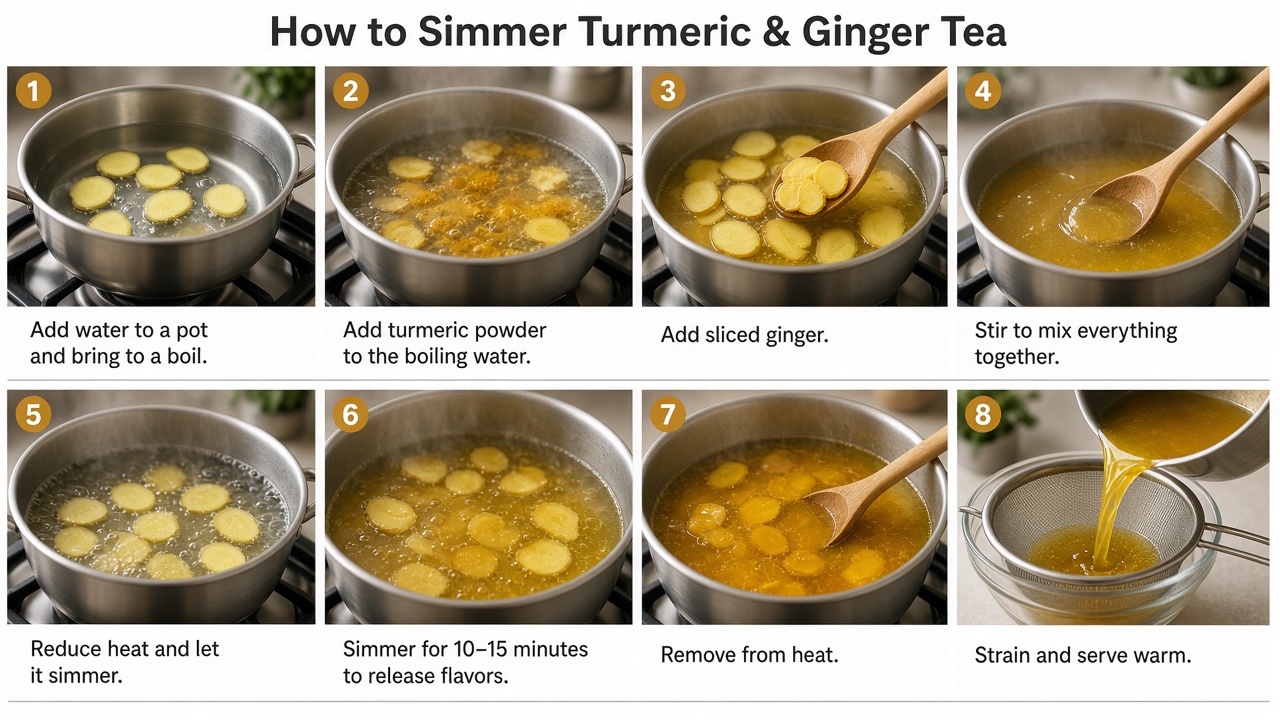
Creating a turmeric-ginger evening tonic is an accessible kitchen ritual. By focusing on whole ingredients, careful shoppers craft a beverage prioritizing flavor, comfort, and general dietary support without relying on heavily processed powders.
Selecting Your Ingredients
Fresh rhizomes offer a vibrant, complex flavor profile. Look for firm, unwrinkled skin indicating adequate moisture. Dried powders provide convenience and a concentrated earthy flavor. Prioritize products from reputable purveyors with high turnover rates for freshness, looking for deep yellow-orange turmeric and pale, sandy yellow ginger.
A Basic Kitchen Recipe
To create a comforting evening tonic, begin with this simple method yielding one serving.
- 1. Preparation: Wash fresh roots thoroughly. Thinly slice one inch of fresh ginger and half an inch of fresh turmeric. For dried spices, measure one-half teaspoon of ground ginger and one-quarter teaspoon of ground turmeric.
- 2. Simmering: Place ingredients into a saucepan with two cups of fresh water. Bring to a gentle boil, then immediately reduce heat to low.
- 3. Steeping: Simmer gently for ten to fifteen minutes. A longer simmer extracts stronger flavor, resulting in a spicier tonic.
- 4. Straining: Remove from heat. Strain the liquid through a fine-mesh sieve into a mug to remove root pieces.
- 5. Additions: Balance earthy notes with fresh lemon, a drizzle of honey, or a splash of milk. A tiny pinch of black pepper complements the flavor profile, though its impact on bioavailability in dilute tea remains minimal.
Scientific Context: Tonic vs Supplement Claims
| Claim | What Studies Suggest | Practical Takeaway | Evidence Strength |
|---|---|---|---|
| High bioavailability of curcumin | Clinical studies highlight extremely poor absorption unless curcumin is chemically altered or paired with high-dose extracts. | A homemade tea provides minimal circulating curcumin. Enjoy the tonic for flavor and hydration, not as a concentrated delivery system. | Strong |
| Broad medical treatment | The NCCIH notes that robust human evidence supporting turmeric for specific disease treatment is lacking. | Do not use kitchen tonics to replace prescribed medical treatments or manage diagnosed conditions. | Strong |
| General digestive comfort | Ginger has been traditionally used and studied for supporting general gastrointestinal comfort and settling the stomach. | A warm ginger beverage may help support normal digestion, especially when consumed after an evening meal. | Moderate |
| Standardized dosages | Dietary supplements provide exact, standardized milligrams of isolated active compounds for targeted physiological effects. | Kitchen tonics vary wildly in composition. Enjoy them as whole foods without expecting precision dosing. | Strong |
Safety Profile and Precautions
While culinary amounts of turmeric and ginger are considered safe for most people when consumed as a mild beverage, careful shoppers must remain aware of potential safety concerns when transitioning to routine daily consumption.
Food Allergy and Sensitivities: Allergic reactions to plants in the Zingiberaceae family can occur. Individuals experiencing itching, swelling, or difficulty breathing after consuming turmeric or ginger should discontinue use and consult a healthcare provider. Some individuals may experience mild gastrointestinal distress, such as heartburn, upset stomach, or diarrhea, especially when consumed in larger quantities on an empty stomach.
Gallbladder and Bile Duct Cautions: Turmeric is known to stimulate bile production. While this may help support normal digestion in healthy individuals, it can pose risks for those with existing gallbladder issues. Individuals with gallstones or bile duct obstructions should exercise caution and consult a physician before incorporating turmeric tonics into their routine.
Anticoagulant, Medication, and Supplement Risks: Both turmeric and ginger possess mild natural blood-thinning properties. When consumed in standard culinary amounts, risk is low. However, individuals taking prescribed anticoagulant medications, those with bleeding disorders, or individuals facing upcoming surgical procedures should closely monitor intake. Combining a kitchen tonic with high-dose commercial turmeric or ginger supplements can inadvertently compound effects, increasing adverse interaction risks.
Frequently Asked Questions
Does a homemade turmeric-ginger tonic provide the same benefits as a curcumin pill? No. A homemade tonic provides culinary amounts of whole turmeric and ginger, containing low levels of active compounds that are poorly absorbed. A pill contains highly concentrated, chemically enhanced extracts designed for specific health interventions, completely distinct from a simple kitchen beverage.
Should I add black pepper to my evening tonic for maximum absorption? Adding a pinch of black pepper enhances the flavor profile of your tonic. While piperine in black pepper increases curcumin absorption in concentrated supplement formulas, the actual amount of curcumin in a homemade, water-based tea is so low that adding pepper will not turn a mild beverage into a high-dose supplement.
Can I drink this tonic every single night? For most healthy adults, consuming a mild, food-grade turmeric and ginger tea daily is safe and serves as a comforting routine. However, if you experience gastrointestinal discomfort, heartburn, or have specific medical conditions, reduce frequency and consult a healthcare professional.
Will boiling the turmeric and ginger destroy their supportive properties? Simmering extracts flavors and water-soluble compounds into the beverage. While prolonged, aggressive boiling might degrade delicate aromatic oils, a gentle simmer of ten to fifteen minutes creates a robust, comforting kitchen tea without destroying the culinary integrity of the ingredients.
Related Reading
Medical Disclaimer
The information provided in this article is for educational and informational purposes only and is not intended as medical advice. This content should not be used to diagnose, treat, cure, or prevent any disease or medical condition. Always consult with a qualified healthcare professional before starting any new dietary routine, especially if pregnant, nursing, taking medications, or managing a health condition.
Sources
- – National Center for Complementary and Integrative Health (NCCIH): Turmeric. https://www.nccih.nih.gov/health/turmeric
- – U.S. Department of Agriculture (USDA) FoodData Central: Spices, ginger, ground. https://fdc.nal.usda.gov/
- – U.S. Department of Agriculture (USDA) FoodData Central: Spices, turmeric, ground. https://fdc.nal.usda.gov/