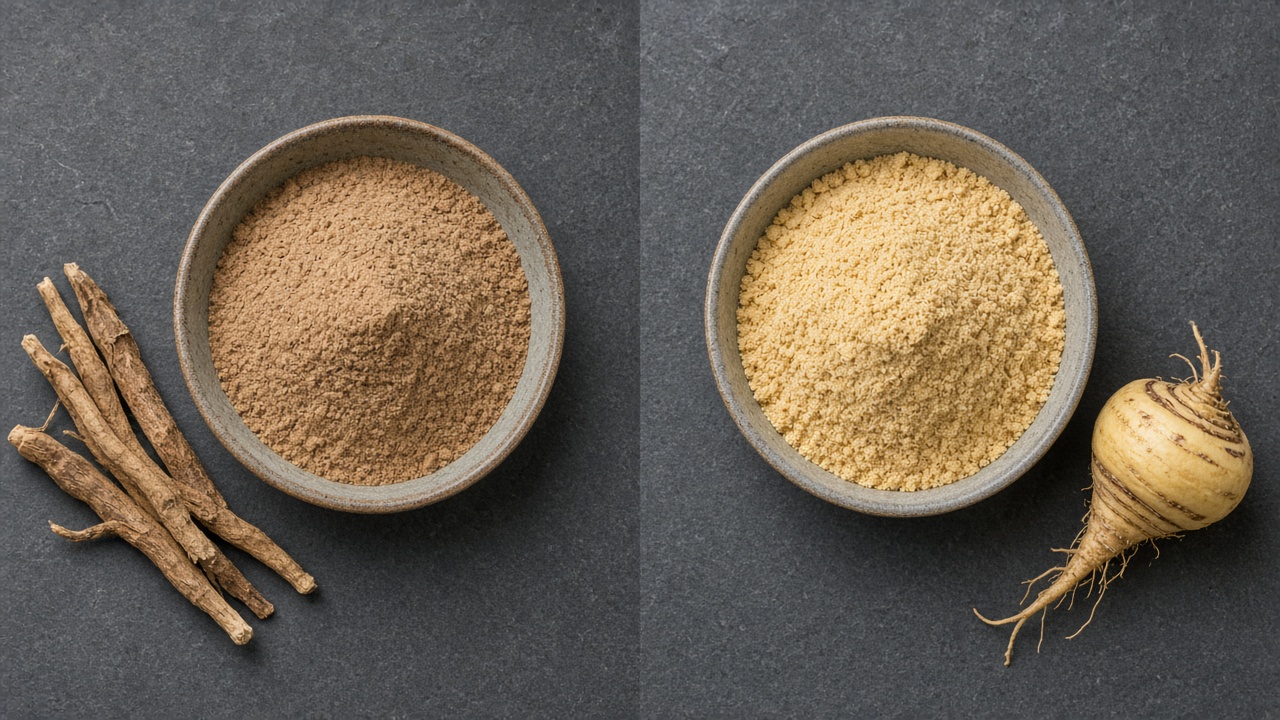
Ashwagandha vs Maca for Stress: How to Compare Without Hype
Medical note: This article discusses foods and researched botanicals. It does not claim to prevent, treat, or cure disease. Supplements are not a substitute for food, and studied amounts are not personal prescriptions.
When comparing ashwagandha and maca for stress support, the clinical evidence heavily favors ashwagandha. Ashwagandha root extract has multiple human randomized controlled trials (RCTs) demonstrating it supports healthy cortisol levels and may help manage daily psychological stress. Maca root, conversely, is an Andean food crop traditionally used for stamina, energy, and fertility. While heavily marketed for stress relief, human evidence for maca directly reducing physiological or psychological stress is highly limited. If your primary goal is stress management, ashwagandha offers a targeted, research-backed profile, whereas maca is better suited for those seeking general physical energy or sexual health support.
Evidence Comparison Table
| Feature | Ashwagandha (Withania somnifera) | Maca (Lepidium meyenii) |
|---|---|---|
| Primary Studied Uses | Stress, sleep quality, cortisol modulation, cognitive support | Libido, energy, sexual function, menopausal mood support |
| Quality of Human Evidence for Stress | Moderate to Strong. Multiple RCTs show improvements in stress scales and cortisol markers. | Very Limited. Little to no direct human RCTs measuring cortisol or primary stress scales. |
| Typical Study Doses | 300 mg to 600 mg daily (standardized root extract). | 1.5 grams (1,500 mg) to 3 grams (3,000 mg) daily (root powder/gelatinized). |
| Key Standardization Markers | Withanolides (typically 2.5% to 5%). | None universally accepted (macaenes/macamides are emerging but rare on labels). |
| Safety Notes | May cause GI upset; may interact with thyroid and immunosuppressant medications. | Generally well-tolerated as a food; raw maca may cause GI upset in some individuals. |
Botanical Origins and Traditional Frameworks
Understanding how these plants evolved in traditional practice provides crucial context for their modern supplement usage. Ashwagandha (Withania somnifera) is a foundational herb in Ayurveda, the traditional system of medicine in India. It is classified as a Rasayana, a rejuvenator believed to promote longevity and physical and mental health. The root is primarily used, known for its distinct, horse-like odor (the literal translation of ashwagandha). Traditionally, it was formulated to calm the nervous system and support resilience in the face of fatigue.
Maca (Lepidium meyenii), on the other hand, is a cruciferous vegetable native to the harsh, high-altitude climate of the Peruvian Andes. Thriving above 13,000 feet, it was historically consumed by indigenous populations not as a medicinal extract, but as a staple dietary crop—often roasted, boiled, or fermented into a beverage. Its traditional use revolves around physical stamina, altitude endurance, and fertility for both humans and livestock. Maca is food first; treating it as a highly concentrated medicinal intervention often misrepresents its historical context.
Analyzing the Human Clinical Research Base
The divide between what these botanicals are marketed for and what they are actually studied for is significant.
For ashwagandha, human clinical research directly targets stress. Several placebo-controlled trials have utilized the Perceived Stress Scale (PSS) and measured serum cortisol levels, demonstrating that daily supplementation with ashwagandha root extract may help blunt the body’s physiological stress response. Additional studies indicate it supports sleep architecture, which is inherently tied to stress recovery. While not a cure for anxiety disorders, the human data for ashwagandha as a daily stress-support supplement is substantial.
For maca, the human research base is entirely different. Most clinical trials involving maca focus on sexual dysfunction (including SSRI-induced sexual dysfunction), libido enhancement, and semen quality. There is a small subset of studies observing mood improvements and reduced psychological symptoms in postmenopausal women, but these studies rarely isolate generalized stress or measure stress hormones like cortisol. Shoppers looking for maca stress evidence will mostly find preclinical (animal or test-tube) studies showing neuroprotective properties or physical endurance in forced-swim tests. Human evidence for maca as a direct stress-modulator is currently scarce.
Deconstructing the “Adaptogen” Marketing Frame
Both ashwagandha and maca are frequently sold under the banner of “adaptogens.” Coined by a Soviet toxicologist in 1947, the term originally described substances that increase the body’s nonspecific resistance to stress. Today, “adaptogen” is primarily a marketing frame rather than a scientifically proven pharmacological mechanism.
Regulatory bodies like the FDA do not recognize “adaptogen” as a valid health claim because it lacks a precise, measurable definition. When a brand calls maca an adaptogen to imply it lowers stress, they are borrowing credibility from the broader category rather than citing maca-specific clinical data. Ashwagandha acts on the HPA (hypothalamic-pituitary-adrenal) axis and GABA receptors, providing a measurable pathway for its calming effects. Maca’s exact mechanisms for supporting energy and libido remain poorly understood, making the adaptogen label highly ambiguous when applied to it.
Standardization Differences: Withanolides vs. Whole Root
Standardization ensures that a supplement contains a consistent, active amount of a specific botanical compound batch after batch.
Ashwagandha is highly standardizable. The accepted active compounds are a group of steroidal lactones called withanolides. Most reputable clinical trials use extracts standardized to contain between 2.5% and 5% withanolides. When you purchase a patented ashwagandha extract (such as KSM-66 or Sensoril), you are getting a verified, predictable concentration of these specific phytochemicals.
Maca presents a different reality. There is no universally accepted marker compound for maca standardization. While researchers have identified unique fatty acids called macamides and macaenes that may correlate with its libido-supporting effects, very few commercial supplements standardize to these compounds. Instead, maca is usually sold as raw root powder or “gelatinized” root powder. Gelatinization simply means the maca has been boiled and pressurized to break down its starch content, making it easier to digest. It does not mean the active compounds are concentrated or standardized.
Comparing Study Doses to Commercial Label Servings
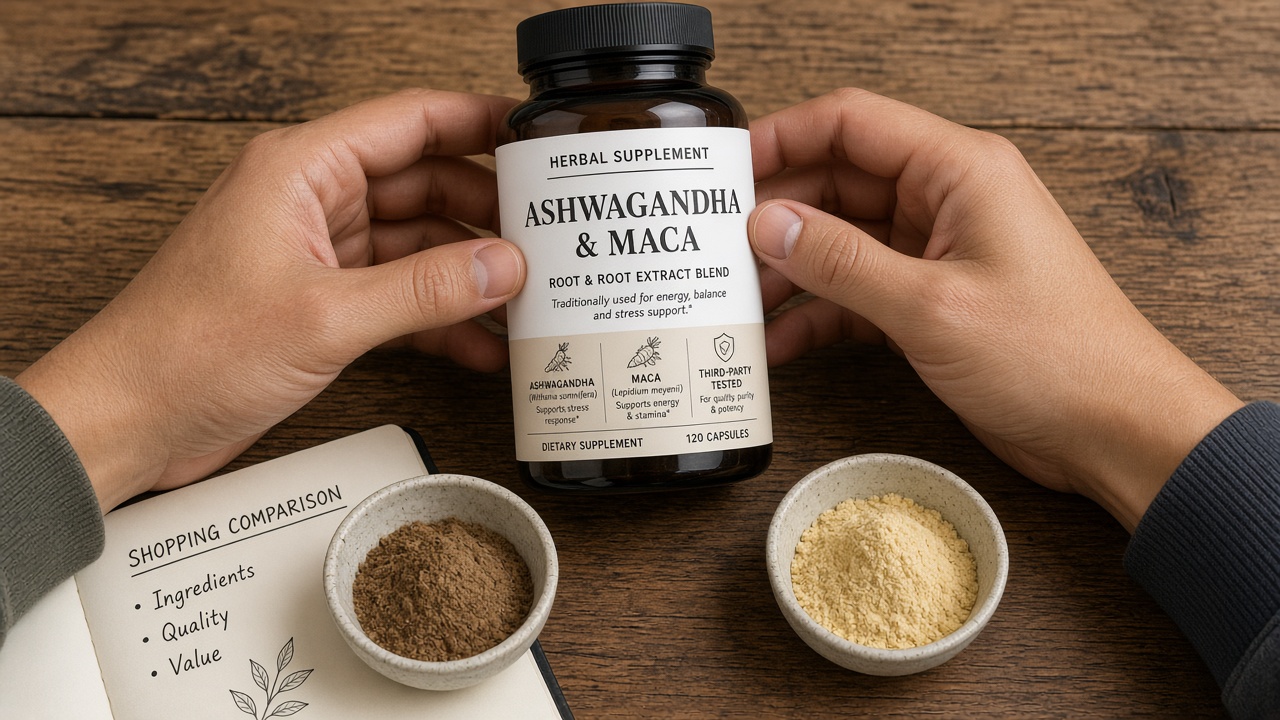
The most common reason a botanical supplement fails to work is underdosing by the manufacturer.
Ashwagandha Dosing: Clinical trials utilizing concentrated ashwagandha root extracts typically administer between 300 mg and 600 mg per day. Most high-quality supplements on the market align with this dosage, offering a single capsule or two-gummy serving that meets the clinical threshold.
Maca Dosing: Clinical trials for maca generally use whole or gelatinized powder at doses ranging from 1,500 mg to 3,000 mg (1.5 to 3 grams) per day. Because maca is fundamentally a root vegetable, it requires a higher volume to achieve physiological effects. However, many combination supplements or generic maca capsules only contain 300 mg to 500 mg per serving. This is a fraction of the clinically studied dose. To match the science, shoppers often need to consume maca in powder form added to smoothies or take multiple large capsules daily.
Quality Control, Third-Party Testing, and Avoiding Hype
Because both of these botanicals are incredibly popular, they are prime targets for adulteration. Ashwagandha supplements have historically faced issues with manufacturers using the leaves of the plant (which are cheaper but less studied for stress) instead of the clinically backed roots. Maca powders, especially those sourced outside of Peru, have faced issues with heavy metal contamination due to poor soil conditions.
To protect yourself, ignore front-label hype (“Instant Zen!” or “Maximum Adrenal Reset!”). Look strictly at the Supplement Facts panel. Seek out brands that provide third-party Certificates of Analysis (COAs) proving the product is free from heavy metals, microbes, and pesticide residues. For ashwagandha, look for specified parts (root only) and a listed withanolide percentage. For maca, look for Peruvian sourcing and gelatinized preparation if you have a sensitive stomach.
How to Conduct a Fair Personal Trial
If you are deciding between the two, conduct a structured personal trial rather than mixing them haphazardly.
- 1. Establish a Baseline: Spend one week logging your daily stress levels, sleep quality, and physical energy on a scale of 1 to 10.
- 2. Single Variable Testing: Choose only one supplement to start. Taking both simultaneously makes it impossible to know which one is supporting you or causing side effects.
- 3. Allow Proper Time: Botanicals are not acute interventions. Ashwagandha studies often measure results after 4 to 8 weeks of consistent daily use. Give the supplement a minimum of one month before deciding if it works.
- 4. Time of Day: Because ashwagandha can be calming, many users prefer it in the late afternoon or evening. Because maca is traditionally used for energy and stamina, it is best taken in the morning to avoid sleep disruption.
Safety Considerations
Ashwagandha: Generally recognized as safe for short-term use (up to 3 months) in healthy adults. However, because it may stimulate the immune system and influence thyroid hormones, it is contraindicated for individuals with autoimmune diseases or hyperthyroidism unless supervised by a doctor. High doses can cause gastrointestinal upset, diarrhea, and nausea. Pregnant individuals should avoid ashwagandha.
Maca: Consumed as a dietary staple for centuries, maca is exceptionally safe for most people. The most common side effect is mild gastrointestinal distress, which is usually mitigated by choosing gelatinized maca over raw maca. Because maca may act on hormone pathways (though it does not contain plant estrogens itself), individuals with hormone-sensitive conditions (like endometriosis or breast cancer) should consult a healthcare provider before use.
Frequently Asked Questions (FAQ)
Can I take ashwagandha and maca together? Yes, there are no known dangerous interactions between the two, and some commercial formulas blend them. However, combining them makes it difficult to determine which ingredient is actually providing benefits, and it may increase the risk of mild stomach upset.
Does maca contain caffeine? No, maca is entirely caffeine-free. While many users report feeling a boost in energy and stamina from maca, this effect is not driven by central nervous system stimulants like caffeine.
Why does my maca supplement say “gelatinized”? Does it contain animal products? Gelatinized maca does not contain gelatin or animal products. Gelatinization is a vegetarian extrusion process involving heat and pressure that removes the starches from the maca root, making it more concentrated and much easier for the human digestive tract to process.
Will ashwagandha work immediately for stress? No. While some users report a mild calming effect shortly after taking it, clinical trials indicate that ashwagandha’s support for the body’s stress response and cortisol modulation is cumulative, typically requiring 4 to 8 weeks of daily supplementation to observe significant differences.
Related Guides
Medical Disclaimer
The information provided in this article is for educational purposes only and is not intended as medical advice. Dietary supplements are not regulated by the FDA to treat, cure, or prevent any disease. Always consult with a qualified healthcare provider before starting any new supplement regimen, especially if you are pregnant, nursing, taking medications, or have an existing medical condition.
Sources
- * National Center for Complementary and Integrative Health (NCCIH). “Ashwagandha.” https://www.nccih.nih.gov/health/ashwagandha
- Gonzales, G. F. “Ethnobiology and Ethnopharmacology of Lepidium meyenii (Maca), a Plant from the Peruvian Highlands.” Evidence-Based Complementary and Alternative Medicine*. https://www.ncbi.nlm.nih.gov/pmc/articles/PMC3184420/