High Blood Pressure Foods to Eat and Limit: A Practical Kitchen Guide
Medical note: This article discusses foods and researched botanicals. It does not claim to prevent, treat, or cure disease. Supplements are not a substitute for food, and studied amounts are not personal prescriptions.
People searching “high blood pressure foods to eat and limit” usually want a clear plate pattern—not a miracle food. Dietary patterns such as DASH-style eating may help support healthier blood-pressure numbers when combined with clinician-guided care, less sodium, more potassium-rich produce, and fewer ultra-processed meals. Food does not replace blood-pressure medicines.
What this guide covers (and what it does not)
This article summarizes foods and meal patterns often recommended in public education from groups such as the American Heart Association (AHA) and the NIH’s DASH (Dietary Approaches to Stop Hypertension) research summaries. It is general kitchen guidance. It is not a diagnosis, a personal meal prescription, or advice to stop or change medication.
Blood pressure responds to many factors: medicines, sleep, alcohol, body weight, stress, and genetics. Diet is one lever among several.
Evidence snapshot
| Claim people hope for | What public sources actually say | Confidence |
|---|---|---|
| “Cut salt and BP will drop” | Lowering sodium is a core AHA message; response varies by person | Moderate (pattern-level) |
| “Eat bananas / potassium foods” | Potassium-rich produce is part of DASH-style patterns; people with kidney disease need clinician advice before high-potassium plans | Moderate for produce pattern; individual dosing needs care |
| “One superfood lowers BP” | Agencies emphasize overall patterns (vegetables, fruit, low-fat dairy, less sodium), not a single food | Insufficient for any one food as a “fix” |
| “Stop all meds if I eat clean” | No reputable guideline frames food as a medication replacement | Do not do this |
Primary public anchors: AHA on managing blood pressure with a heart-healthy diet, NIH NHLBI DASH overview, Mayo Clinic DASH diet.
Foods dietary patterns often emphasize
Build most meals around:
- – Vegetables: leafy greens, broccoli, carrots, tomatoes, cucumbers—fresh, frozen, or low-sodium canned (rinse when possible).
- – Fruit: berries, citrus, apples, bananas, melons—whole fruit more often than juice.
- – Whole grains: oats, brown rice, whole-wheat bread, barley, quinoa.
- – Low-fat or fat-free dairy (if tolerated): milk, yogurt, some cheeses in modest portions—common in classic DASH studies.
- – Protein: fish, skinless poultry, beans, lentils, tofu, unsalted nuts and seeds; limit processed meats.
- – Healthy fats in small amounts: olive oil, avocado, nuts—not deep-fried foods.
These foods support a higher potassium, magnesium, fiber, and lower-sodium pattern that research summaries associate with better blood-pressure support alongside medical care.
Foods and habits to limit
- – Sodium-heavy convenience foods: instant noodles, many packaged soups, salty snacks, cured meats, restaurant sauces. AHA encourages most adults to move toward about 1,500–2,300 mg sodium/day depending on clinical advice—check labels.
- – Sugar-sweetened drinks and desserts: soft drinks, sweet tea, large bakery items—extra calories can work against weight-related BP goals.
- – Alcohol: if you drink, keep within clinician and public guideline limits; excess alcohol can raise blood pressure.
- – Ultra-processed “salty + fatty” combos: fried fast food, heavily seasoned takeout.
“Limit” does not mean one chip ruins a week. It means the weekly pattern matters more than a single meal.
Practical kitchen protocol: a one-week plate reset
1. Read sodium like a skeptic
Compare two similar products and pick the lower sodium option. Season with herbs, garlic, citrus, vinegar, pepper, and unsalted spice blends instead of stacking soy sauce + bouillon + salty sauces.
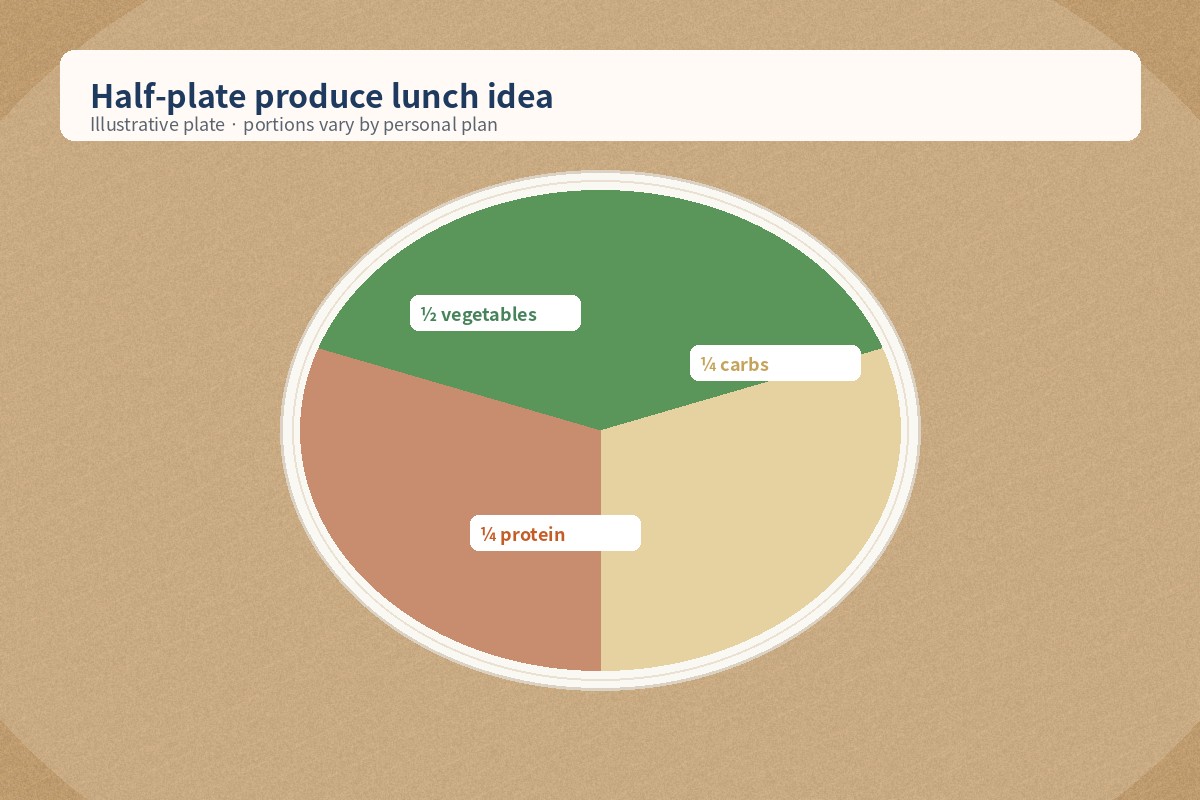
2. Build a “half plate produce” lunch
Half vegetables/fruit, one-quarter whole grain or starchy vegetable, one-quarter lean protein. This mirrors DASH-friendly proportions without weighing every gram.
3. Swap three high-sodium defaults
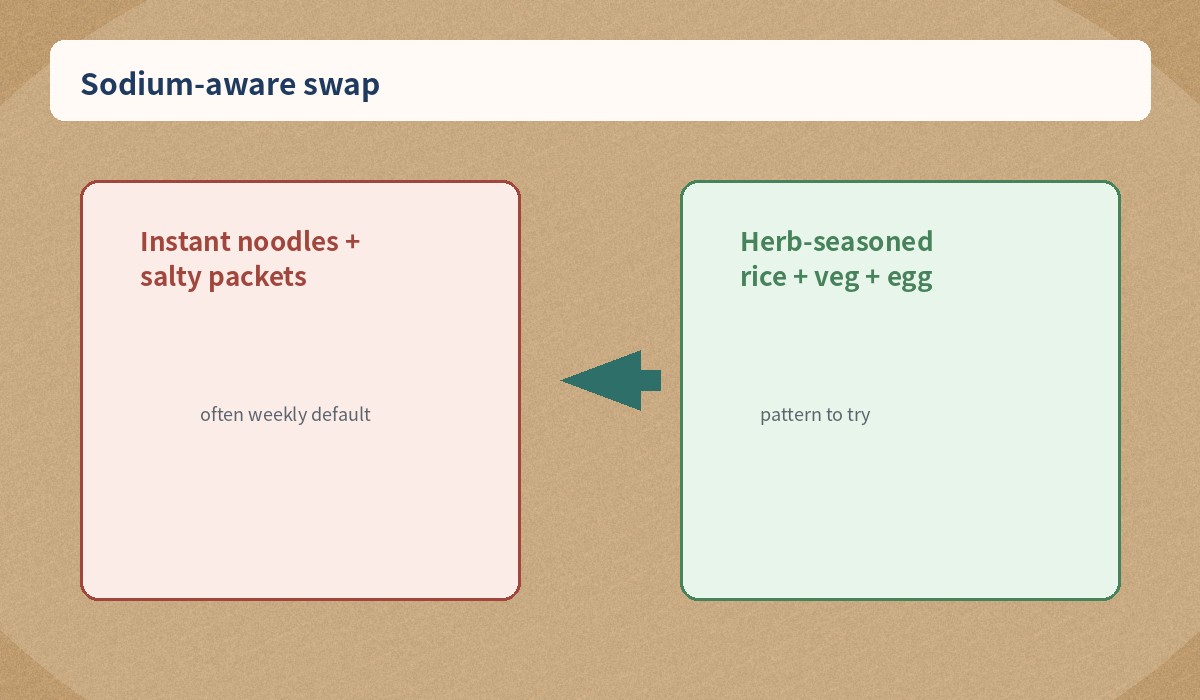
- – Instant noodles → oatmeal or rice bowl with eggs/tofu and vegetables
- – Deli sandwich → home-cooked chicken or bean wrap with salad
- – Restaurant soup → homemade soup using low-sodium broth
4. Keep a simple shopping list
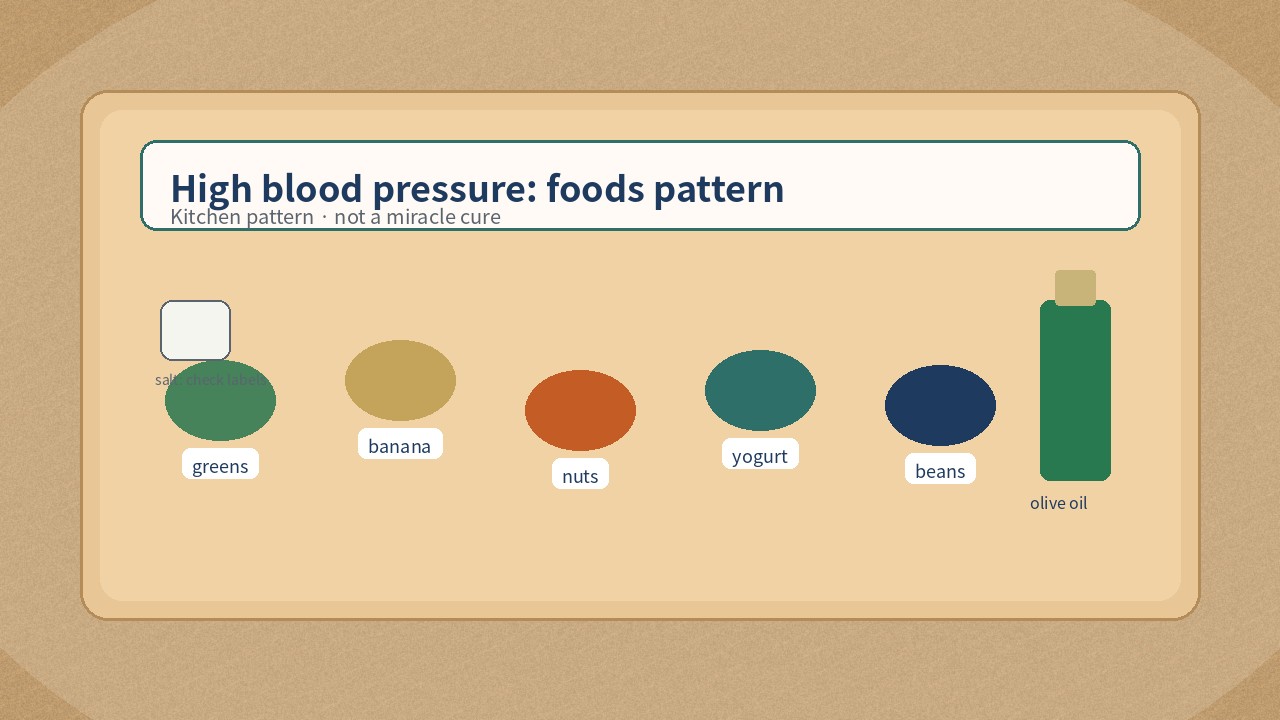
Spinach, bananas, beans, plain yogurt, oats, frozen mixed vegetables, olive oil, unsalted almonds, canned tuna in water, brown rice.
5. Track what you can measure
Home BP logs (if your clinician recommends them), sodium label totals for a few days, and alcohol servings. Patterns beat perfectionism.
Sample day (illustrative, not personalized)
- – Breakfast: oatmeal cooked in low-fat milk or fortified soy milk, topped with berries and a spoon of unsalted walnuts; herbal tea or coffee if tolerated.
- – Lunch: large salad with mixed greens, chickpeas, cucumber, tomato, olive-oil lemon dressing; side of whole-grain crackers (check sodium).
- – Snack: plain yogurt with fruit, or an apple with a small handful of unsalted almonds.
- – Dinner: baked fish or tofu, steamed broccoli, brown rice; herbs instead of salty sauces.
- – Evening: fruit or unsalted popcorn if hungry—skip late salty takeout.
Repeat variations across the week rather than hunting for a perfect “BP food.” Consistency of sodium awareness and produce volume usually matters more than exotic ingredients.
Restaurant and takeout tactics
Ask for sauces on the side, choose grilled over fried, and split oversized portions. Soups, bread baskets with salted butter, and “seasoned” fries often hide sodium. When ordering Asian-style dishes, request less soy sauce and skip extra MSG-heavy seasoning packets if your clinician has flagged sodium sensitivity—though individual tolerance varies.
If you eat out often, treat two dinners per week as “label-free unknowns” and keep the other meals deliberately lower sodium so the weekly average still moves in a helpful direction.
Safety, interactions, and who should ask a clinician first
- – Kidney disease or potassium-restricted diets: high-potassium foods (bananas, orange juice, potatoes, tomatoes in large amounts) may not be appropriate—follow your renal dietitian or clinician.
- – Salt substitutes: many contain potassium chloride; ask before using if you have kidney issues or take certain medicines (including some blood-pressure and heart drugs).
- – Licorice root / black licorice: excess can affect blood pressure and potassium; not a casual “health candy.”
- – Supplements marketed for BP: evidence and safety vary; they can interact with medicines. Prefer food-pattern changes unless your clinician agrees otherwise.
- – Do not stop antihypertensives because eating improved. Discuss any taper only with the prescribing clinician.
Seek urgent care for severe headache, chest pain, shortness of breath, neurological symptoms, or readings your clinician has flagged as emergency-level for you.
FAQ
Can I lower blood pressure with food alone? Some people with elevated readings improve with lifestyle change; many still need medication. Food may help support numbers—it is not a guaranteed standalone fix.
Is Himalayan salt better than table salt? For blood pressure, sodium is sodium. Specialty salts are not a free pass.
Do I need a low-carb or keto plan for BP? Not specifically. DASH-style and Mediterranean-style patterns are the ones most often cited in heart-health education. Extreme restriction should be clinician-supervised.
What about coffee? Caffeine can raise BP short-term in some people. If you monitor at home, note timing relative to coffee. Discuss personal limits with your clinician.
How this differs from related OTCFood topics
This page is a disease-bound diet pattern guide for hypertension searchers. It is not a supplement review (pomegranate juice and blood pressure) and not a single-ingredient deep dive (garlic supplements and cholesterol). Those articles discuss limited evidence for bottled extracts; this one focuses on everyday foods.
Medical disclaimer
Medical disclaimer: This article is for general information only. It is not medical advice, diagnosis, or a treatment plan. Dietary patterns can interact with medicines and medical conditions and are not appropriate for everyone in the same way. Talk with a licensed clinician before starting, stopping, or changing any eating plan or medication—especially if you are pregnant, nursing, have kidney disease, heart disease, or take prescription drugs.