Lion’s Mane Mushroom (Hericium erinaceus): What Evidence Supports for Focus Claims
Medical note: This article discusses foods and researched botanicals. It does not claim to prevent, treat, or cure disease. Supplements are not a substitute for food, and studied amounts are not personal prescriptions.
The short answer is that current scientific evidence does not show significant cognitive enhancement in humans to a great extent. While Hericium erinaceus (commonly sold as lion’s mane) is widely marketed for focus, memory, productivity, and mental clarity, clinical trials in healthy human adults show mixed and largely modest outcomes.
In controlled human research, single acute doses fail to produce statistically significant improvements in global cognitive performance, overall executive function, or baseline mood compared to placebo. Isolated dexterity or speed sub-metrics have occasionally registered minor changes in laboratory settings, but broad focus breakthroughs have not materialized in rigorously tracked cohorts.
Much of the popular narrative surrounding neurogenesis, focus optimization, and nerve growth factor (NGF) stimulation originates in rodent models and in vitro cellular cultures, not robust human trials. Lion’s mane is an edible, culinary mushroom that is generally recognized as safe and may support general well-being, but trending social media popularity should not be confused with established clinical proof.
What Is Lion’s Mane (Hericium erinaceus)?
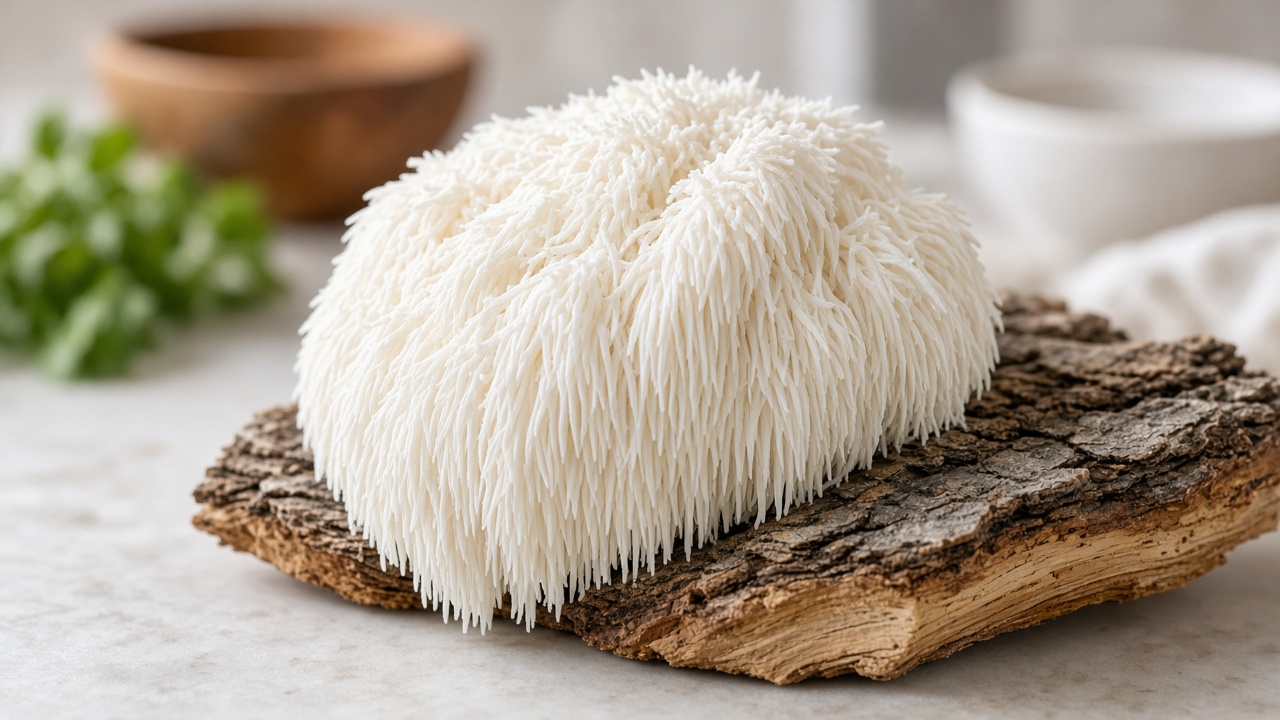
Hericium erinaceus is an edible mushroom with a distinctive white, cascading-spine fruiting body. It is sold as food and as a functional-mushroom supplement in powders, capsules, and extracts.
Beyond culinary applications, lion’s mane occupies a prominent position in commercial herbalism and the functional mushroom category. The fungus produces two distinct groups of bioactive secondary metabolites that drive scientific interest:
- Hericenones: Low-molecular-weight aromatic compounds isolated primarily from the fruiting body (the visible mushroom cap and spine structure).
- Erinacines: Diterpenoid compounds concentrated heavily within the mycelium (the root-like underground or substrate-bound fungal network).
In preclinical laboratory environments, certain hericenones and erinacines have stimulated the synthesis of nerve growth factor (NGF) in cultured animal astrocytoma cells and exhibited neuroprotective properties against oxidative stress in rodent neural pathways. Marketing materials sometimes extrapolate these findings to suggest cognitive or restorative effects in people, but those outcomes are not established by clinical evidence.
However, laboratory biochemistry does not automatically translate to human pharmacology. The human blood-brain barrier, gastrointestinal breakdown, oral bioavailability, and metabolic transit times differ substantially from cell cultures bathed directly in concentrated fungal fractions. The mushroom is not approved by the U.S. Food and Drug Administration (FDA) to diagnose, treat, prevent, or cure any disease or medical condition.
Clinical Evidence Summary: What the Data Shows
| Evidence question | What the cited sources support | Practical reading |
|---|---|---|
| Acute focus and mood | In the 2025 acute RCT in healthy younger adults, one dose produced no significant overall improvement in global cognition or mood versus placebo. One individual pegboard task improved. | A single serving is not proof of a focus boost. |
| Human cognitive enhancement | LiverTox says human evidence for cognitive enhancement has not been shown to a great extent. | Claims remain limited and should be framed as possible, not proven. |
| Neuroprotective or NGF claims | LiverTox says these claims are largely based on animal data. | Animal mechanisms cannot be presented as confirmed human outcomes. |
| Safety context | LiverTox describes lion’s mane as an edible mushroom generally recognized as safe and not linked to liver injury in that source. | “Generally recognized as safe” does not mean risk-free for every person or product. |
The 2025 paper therefore supports a restrained conclusion: a single dose did not improve overall cognition or mood, despite improvement on one individual task. More chronic studies are needed before stronger focus claims can be assessed.
Consumer Buying Guide: Deciphering Labels, Extraction Methods, and Fungal Anatomy
The retail category mixes whole powders, extracts, and mycelial products under one name. Read the label for the actual material, processing, and testing.
1. Fungal Anatomy: Fruiting Body vs. Mycelium on Grain
The most important distinction when shopping for lion’s mane is which part of the organism was harvested:
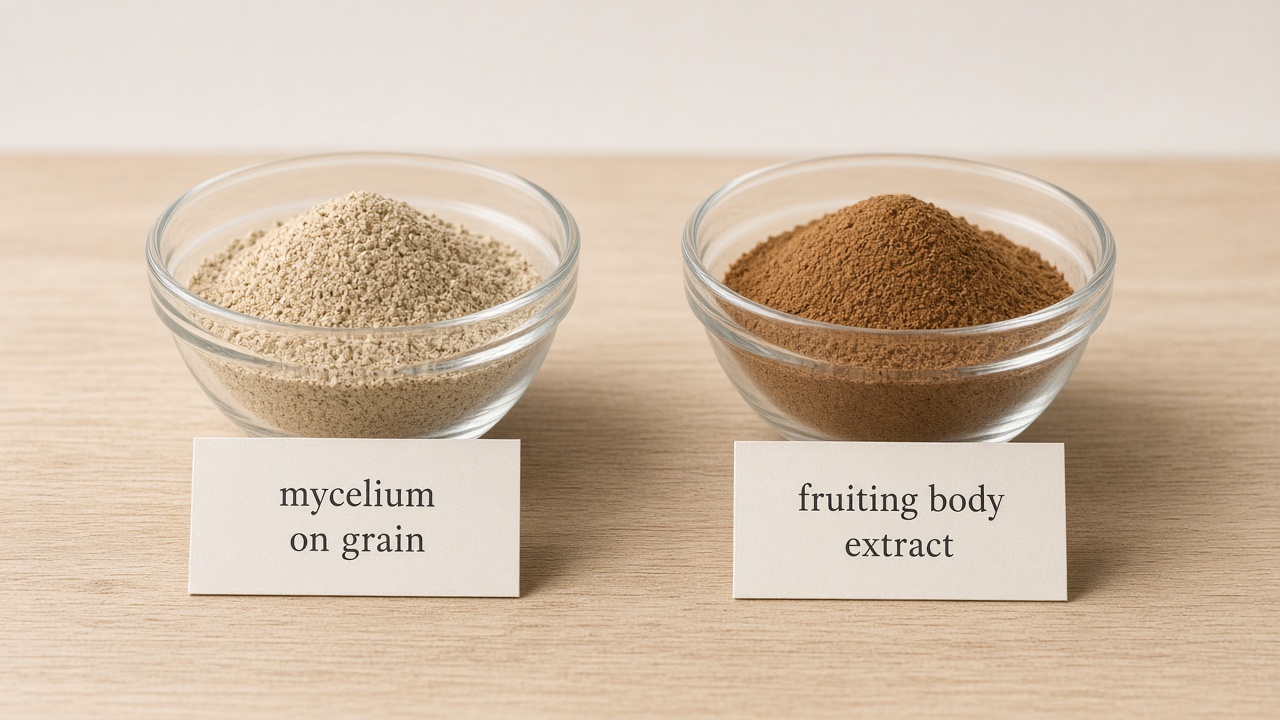
- Fruiting Body (Basidiocarp): This is the physical, above-ground mushroom cap with cascading spines. It naturally develops higher concentrations of hericenones and immune-associated fungal beta-glucans. In traditional wild foraging and standardized commercial cultivation, the fruiting body grows on decaying hardwood logs or sterilized sawdust blocks.
- Mycelium (Vegetative Biomass): This is the subterranean or internal network of fungal filaments (hyphae). While mycelium naturally contains erinacines, commercial production methods vary widely.
Mycelium may be grown on grain, and the packaged material may include the growth substrate. Read whether the label says fruiting body, mycelium, or mycelium grown on grain; these are not interchangeable descriptions. Do not treat a fruiting-body label as proof of a focus effect—product identity and clinical efficacy are separate questions.
2. Processing Methods: Raw Powders vs. Standardized Extracts
Extraction is another label distinction. Hot-water processing targets water-soluble material; alcohol processing targets other soluble fractions; dual extraction combines approaches. An extract label describes processing, not a clinically proven focus outcome. Raw powder, tincture, and capsule are delivery formats, so compare the stated mushroom material and testing rather than assuming one format works best.
3. Reading the Supplement Facts Panel: Avoiding “Proprietary Blends”
Label scrutiny matters more than a marketing slogan:
- Look for the full species name, Hericium erinaceus, and a clear statement of fruiting body, mycelium, or both.
- Prefer a transparent Supplement Facts panel over a proprietary blend that hides the amount of each ingredient.
- Treat claims about polysaccharides, beta-glucans, or extraction strength as label information—not proof of better focus—and look for batch-specific testing when available.
4. Heavy Metal and Contaminant Testing
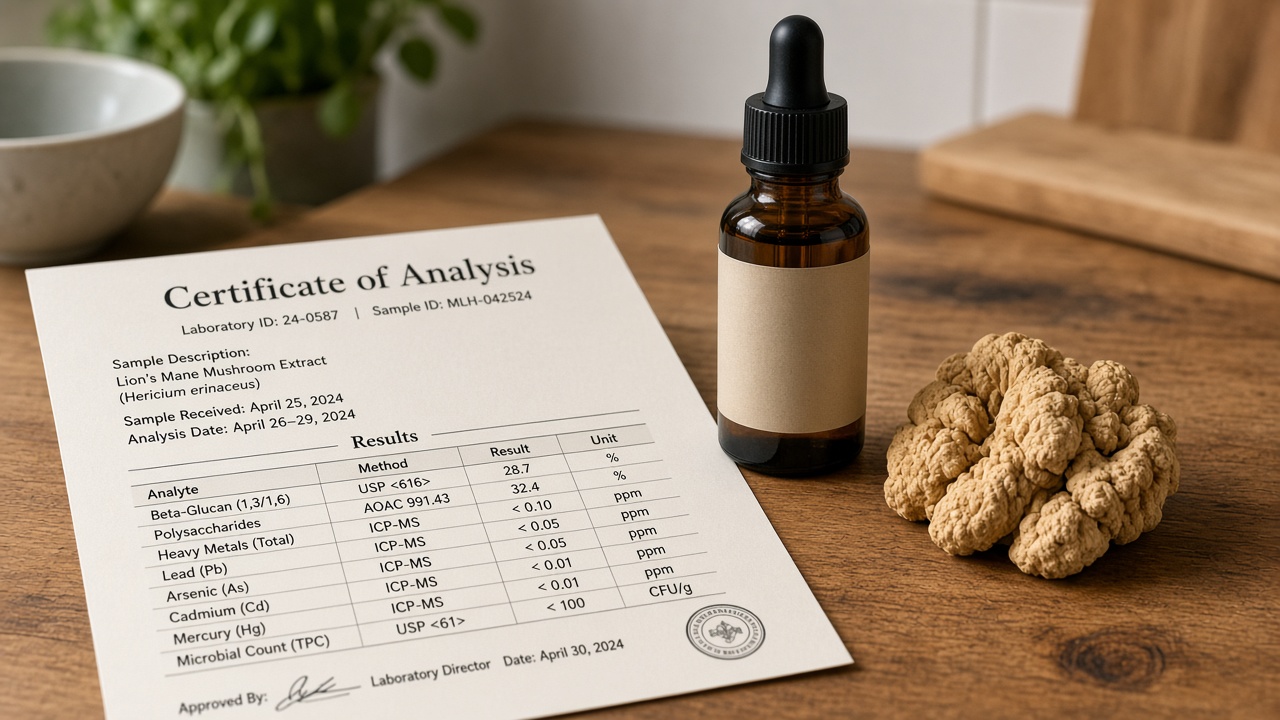
Ask whether the maker provides an accessible, batch-specific Certificate of Analysis (CoA) from an independent laboratory. Testing can help a shopper assess contaminants and whether the product matches its label. A CoA still does not turn limited human evidence into a proven focus benefit.
Safety, Tolerability, and Clinical Contraindications
According to the National Institutes of Health (NIH) LiverTox database, Hericium erinaceus is an edible mushroom that is generally recognized as safe for food and dietary use. Importantly, lion’s mane has not been linked to instances of clinically apparent acute liver injury or hepatic dysfunction in monitored cases within the LiverTox registry.
Observed Adverse Effects
While severe toxicity is rare, documented clinical trials and case reports highlight key safety parameters:
- Gastrointestinal Symptoms: Mild gastrointestinal complaints—such as nausea, abdominal discomfort, loose stools, and transient digestive bloating—occur in some clinical trials, affecting fewer than 10% of participants.
- Hypersensitivity and Allergic Reactions: While uncommon, hypersensitivity cases have been reported in clinical literature. Individuals with pre-existing allergies to edible fungi or environmental molds may experience acute allergic manifestations, ranging from cutaneous skin rashes and hives to respiratory distress or contact dermatitis. Anyone experiencing allergic symptoms should immediately discontinue use.
- Dosing Guidelines: Marketed commercial supplement doses vary widely across capsule formulations, standardized liquids, and culinary bulk powders. Because scientific authorities have not established a standardized medical dosage for treating human conditions, consumers should never attempt medical self-dosing. Follow the serving sizes listed on product packaging or consult an integrative physician, registered dietitian, or primary care clinician for individualized guidance.
Contraindications and Interactions
If you have a mushroom allergy, take medicines, are preparing for a procedure, or have a health condition, ask a clinician before using a supplement. Stop and seek care for signs of hypersensitivity.
Frequently Asked Questions (FAQs)
1. Does lion’s mane work immediately after taking a single dose?
No. High-quality human research, including a 2025 acute randomized controlled trial in healthy young adults, shows that a single dose does not produce a significant overall cognitive or mood improvement compared to a placebo. Lion’s mane does not act as an immediate central nervous system stimulant like caffeine or prescription focus medications.
2. Can lion’s mane prevent or treat neurodegenerative diseases?
No. Lion’s mane is an over-the-counter dietary supplement and edible food; it is not approved by the FDA to treat, cure, or prevent neurodegenerative conditions or any other disease. Preclinical research showing neuroprotective mechanisms reflects animal and cell-culture environments that have not been substantiated as clinical treatments in humans.
3. Which is more effective: lion’s mane liquid tinctures, powders, or capsules?
The delivery format (liquid, powder, or capsule) is less critical than the underlying raw material and processing method. A product’s format is less important than a clear label describing the mushroom material, extraction method, and testing. No format has been shown by the cited evidence to guarantee better focus.
4. What is the recommended medical dose of lion’s mane for focus?
There is no established medical dose for lion’s mane. Dosages in retail supplements vary considerably depending on the extraction ratio and compound standardization. Rather than attempting to establish a clinical dosage, follow the recommended serving size on the manufacturer’s label or seek guidance from a qualified healthcare practitioner.
Related Guides & Deep Dives
- Reishi Mushroom Tea: Bitterness, Extracts, and Realistic Expectations
- Creatine Monohydrate: Evidence Beyond Gym Myths
Medical Disclaimer
This guide is published for educational, journalistic, and informational purposes only. It is not intended as medical advice, diagnosis, or treatment. Dietary supplements, including functional mushrooms, are not evaluated or approved by the FDA to diagnose, cure, treat, or prevent any illness. Always consult a licensed healthcare professional prior to initiating any new dietary supplement, botanical regimen, or nutritional intervention.
Sources & Academic References
- LiverTox: Clinical and Research Information on Drug-Induced Liver Injury [Internet]. National Institute of Diabetes and Digestive and Kidney Diseases; Bethesda (MD). Lion’s Mane (Hericium erinaceus) summary profile, safety evaluations, and clinical context: https://www.ncbi.nlm.nih.gov/books/NBK599740/
- PubMed National Library of Medicine. Acute effects of Hericium erinaceus supplementation on cognitive performance, mood, and psychomotor speed in healthy young adults (2025 Randomized Controlled Trial): https://pubmed.ncbi.nlm.nih.gov/40276537/